Adernats Wine Cathedral
During a recent press trip to Spain for the International Food Tourism Conference (IFOODTC), I visited Adernats, a wine cooperative near Tarragona with a remarkable history and an even more remarkable building.
From the outside, the winery hardly resembles a conventional agricultural facility. Its imposing ocre-colored brick façade belongs to a style of architecture often called a Wine Cathedral.
But what intrigued me most was the story behind those bricks.
Built by Villagers
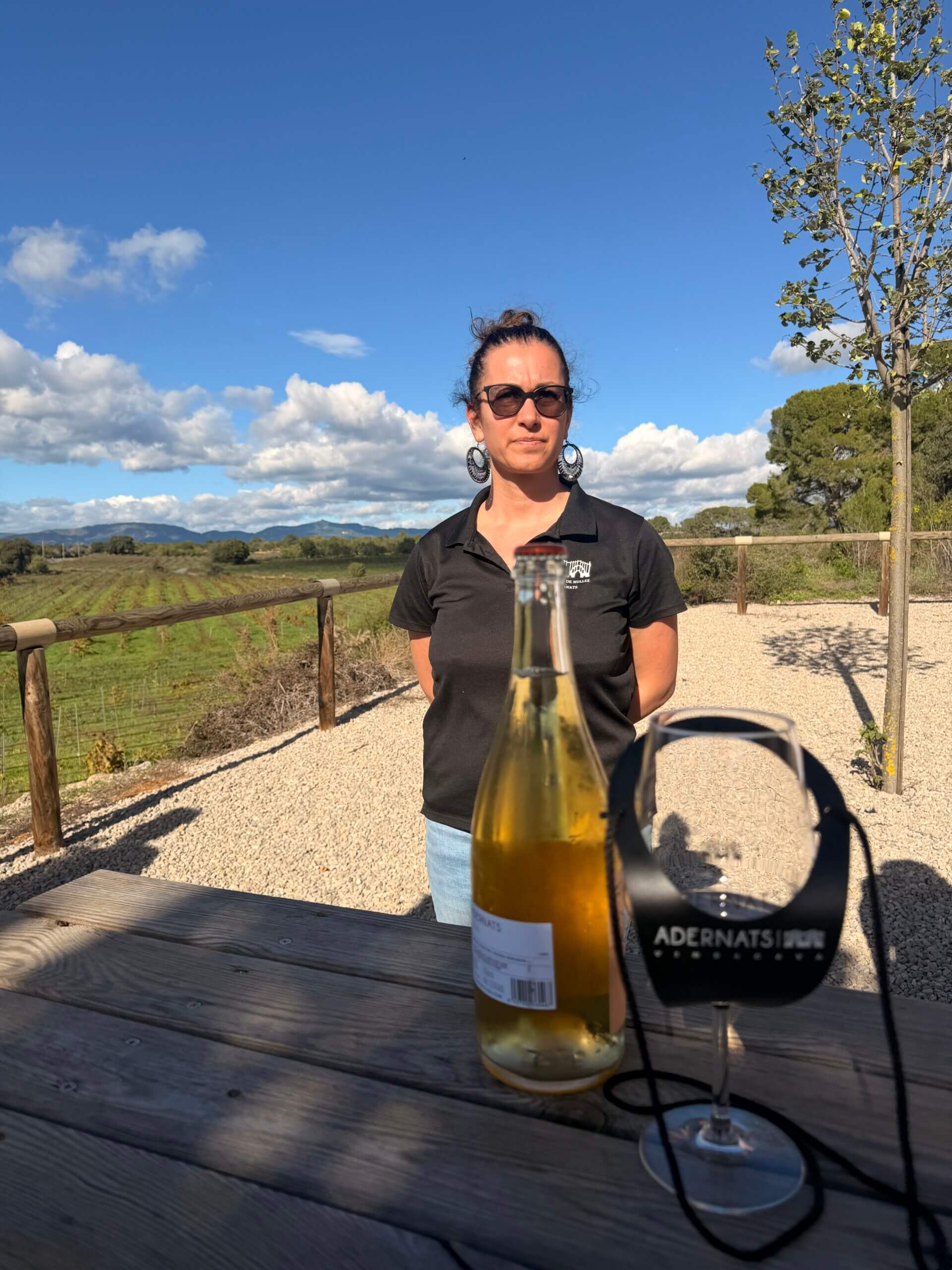
Our visit began with a short introduction at the winery’s visitor center, followed by a glass of wine overlooking the vineyards.
The cooperative dates to 1917, when local families joined forces to produce wine and secure their economic future.
The project was ambitious. They commissioned architect Cèsar Martinell, a disciple of Antoni Gaudí, to design a building that would serve as both an efficient winery and an architectural landmark.
The result was a magnificent structure featuring soaring brick arches, high ceilings and enormous wine vats.
But here’s what surprised me.
According to our guide, the villagers themselves helped build it. Men, women and older residents contributed their labor, laying bricks and working together to bring the project to life.
As I listened, I tried to imagine these farmers and their families constructing something so architecturally complex. Especially because these were ordinary people building a future for their village.
In 1920, the first harvest filled the new winery’s tanks.
More than a century later, those same families’ descendants continue the cooperative tradition.
An Italian Surprise
Our guide, an Italian woman whose enthusiasm for Adernats was infectious, accompanied us through the building and up to its upper level.
Standing among the immense brick arches, she told us a story about her introduction to the winery.
She had been hired partly because she spoke German. A large group of German visitors was scheduled to arrive within two weeks, and the cooperative needed someone who could conduct their tour. From what I understood, the end of the tour was to end in the Cathedral for a tasting.
The guide and the German were having a great time when suddenly the lights went out.
Our guide had no idea what was happening.
Then, seemingly out of nowhere, several young people appeared, dressed in nineteenth-century costumes and carrying candles.
It was a theatrical reenactment performed by local villagers as part of an annual celebration.
The winery’s management had deliberately kept the event a secret from their new employee.
What a way to welcome someone to a new job!
Listening to her tell the story, I could imagine the bewilderment of this newly hired Italian guide, responsible for her German guests, suddenly confronted by an army of costumed villagers.
She could laugh about it now.
The story also revealed something about Nulles. This was a community where the winery was more than a place to produce wine. It was also a gathering place for celebrations and shared traditions.
A Taste of Nulles
Our tour concluded with a tasting of Adernats wines, accompanied by locally made bread and olive oil.
It was a simple presentation, but entirely appropriate for a cooperative rooted in the agricultural life of its village.
Today, Adernats welcomes visitors for guided tours, tastings, vineyard excursions and even dinners inside its historic winery.
The cathedral itself remains a working production facility rather than a museum.
For me, the most memorable part of the visit was imagining generations of villagers laying bricks to create this extraordinary structure. And meeting a guide who clearly loved telling its stories.