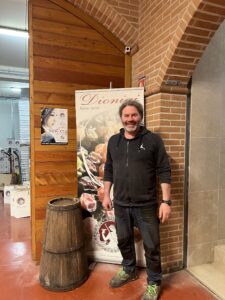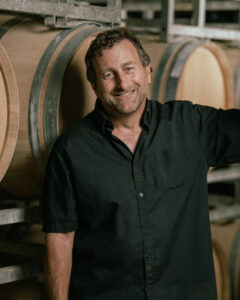

Antonelli Winery in Montefalco
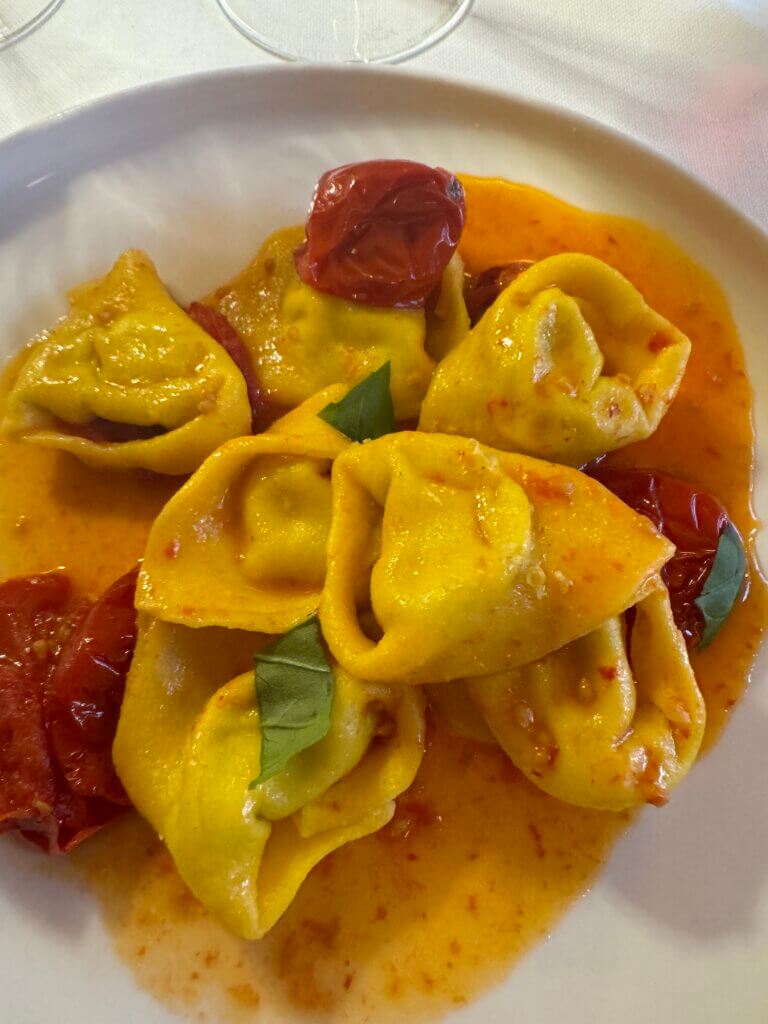
Antonelli San Marco is gorgeous, well-established winery in Montefalco who played host for our first formal evening in this quaint wine-producing region.
The evening opened with glasses of sparkling wine from Montefalco, enjoyed under an open sky on the family estate.
What followed was one of the most elegant—and, unexpectedly, entertaining—dinners I had on this trip. A long table was set inside the winery, beautifully arranged right down to the lighting. It felt like a moment suspended outside of time.
Then came a twist: two striking young women floated through the dinner with effortless grace. It didn’t take long to discover that they weren’t models or guests — they were Filippo Antonelli’s twin daughters. They’re now stepping into the family business, working trade fairs, and adding a new generation’s vision to a very historic winery.
Antonelli San Marco is a pillar of the Montefalco region. The family has owned the estate since 1883, making it one of the longest standing wineries in Umbria’s DOCG wine zone. With nearly 190 hectares under its care — 60 of them vineyards, another 13 planted to olive trees — the estate is large, but it doesn’t feel corporate. Everything is kept in-house, from the vineyard to winemaking to bottling. Since 2009, the entire estate has been farmed organically.
Montefalco is best known for its bold, brooding red wine made from the native grape Sagrantino. It’s a grape with structure, tannins, and, in the wrong hands, a fair amount of attitude. At Antonelli San Marco, it’s handled with precision.
If one is lucky enough to walk through their gravity-flow fermentation cellar—designed cleverly underground to minimize energy use and protect the grapes—one would find that gravity replaces pumps during fermentation and racking.
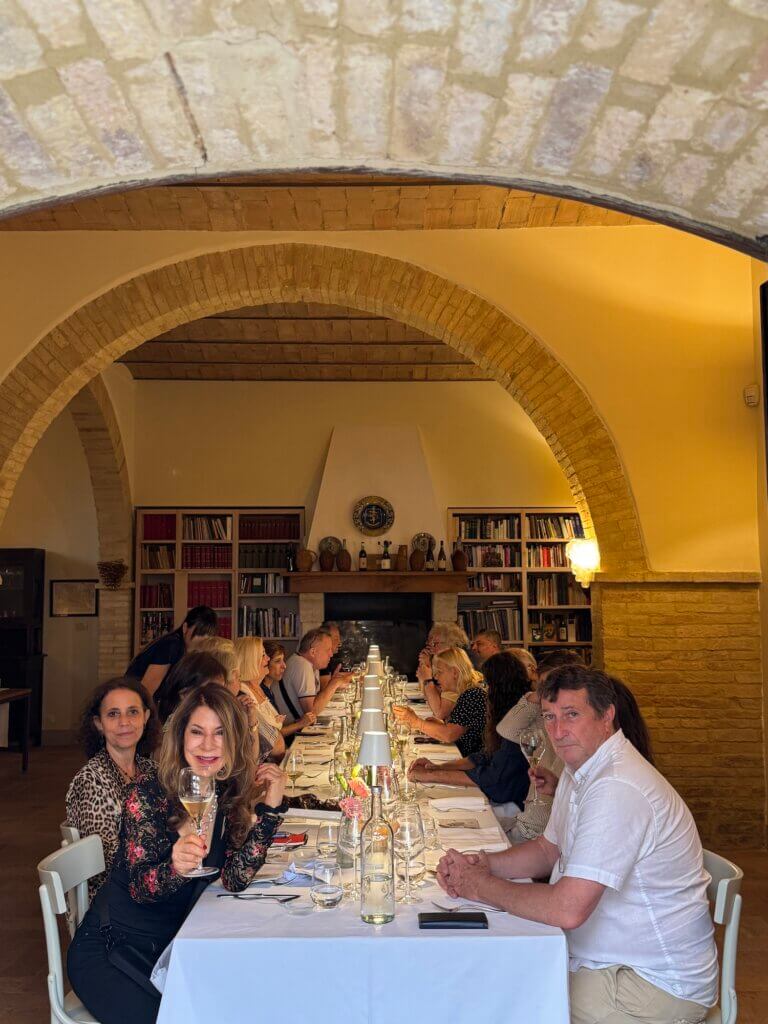
One thing I particularly appreciated during the dinner was the freedom to pour our own wines from the family cellar. Different vintages of Sagrantino and Montefalco Rosso were lined up, with the white wines on ice.
It was a great opportunity to taste the wines at one’s own pace, compare vintages side-by-side, and talk with others at the table about what you were finding in the glass. That kind of self-guided curiosity speaks volumes about their hospitality.
Trebbiano Spoletino, a white grape native to the area between Montefalco and Spoleto, also plays an important role here. It’s one of the most exciting white varieties in Italy right now, and Antonelli’s version is clean, savory, and textural — a great contrast to the structure of their reds. The combination makes a statement: Montefalco isn’t just a one-grape town.
Filippo Antonelli has been running the estate since 1986. Born in Rome, but shaped by these hills, he also manages another family property, Castello di Torre in Pietra, outside the capital. But Montefalco is what anchors the story.
Over five generations, the Antonelli family helped shape both the region and its wines — Filippo himself has served multiple terms as president of the Consorzio Tutela Vini Montefalco, the governing body that helps promote and protect the region’s wines.
What’s notable is how the Antonelli legacy combines long-standing traditions with thoughtful updates. It’s not just about replanting vineyards or expanding cellars — though they’ve done both. It’s about seeing what the land can really offer, and adapting each decision with care.
The hillside vineyards, rich in clay and limestone, benefit from varied elevations and exposures. Some parcels are rocky and shallow, others deeper and richer. All of that shows up in the glass.
Like most producers in Montefalco, they work almost exclusively with native varieties: Sagrantino and Sangiovese for the reds, Trebbiano Spoletino and Grechetto for the whites. Montefalco Rosso, made with Sangiovese as its base, is often the region’s entry point.
Yet it’s the Sagrantino that defines things. Antonelli’s version, aged in oak and then refined in bottle before release, is built for longevity but designed to be understood. It’s deeply Umbrian — earthy, structured, slightly wild — but always driving toward balance.
Beyond wine, Antonelli San Marco also produces olive oil and even raises semi-wild pigs in the woods near the estate, using them for their own cured meat products. Plans are underway to open hospitality soon, meaning future visitors will be able to stay among the olive trees and vines, taste the full range of products, and maybe even join in a cooking class or a truffle hunt.
It’s these layers — history, land, family, and the subtle evolution between them — that give weight to a visit here. Montefalco as a region is increasingly on the radar of wine travelers looking for depth without the crowds, legacy without the performance. If you find yourself in Umbria and want to understand why these wines matter — and why this place carries so much quiet pride — Antonelli San Marco is a good place to start.