Chianti Classico Collection
Here I am at the Stazione Leopolda, reporting on the first official day of the Chianti Classico Collection. This is an event where Tuscan wine and olive oil producers meet journalists, sommeliers, and other members of the trade.
For readers new to this event, Chianti Classico Collection is part of Anteprime Toscana, the annual preview week in which Tuscan consortia present new vintages to the press and trade before the wines reach the global market.
Chianti Classico refers specifically to wines produced in the historic zone between Florence and Siena under strict DOCG regulations — Italy’s highest quality designation, which governs grape varieties, aging, and production standards.
As always, all the major star players are here. It is fun being inside this historic Neoclassical railway station, which once served as an important transit hub for the Grand Duchy of Tuscany.
Once one enters the venue, there are three key activities. One can attend lectures, visit the stands of olive oil and wine producers, and taste wines in self-designed flights with personalized sommelier service.
Personalized sommelier service requires a bit of explanation.
You take a seat and choose a flight of up to six wines from the full digital list of available bottles. After submitting your selection electronically, a beautifully uniformed Italian sommelier brings your wines and pours them one by one.
This personalized tasting format is one of the great highlights of the event because you can be highly intentional in your choices. I have created comparative tastings between vintages, between quality levels such as Annata, Riserva, and Gran Selezione, and even between subzones. It allows for focused evaluation without having to physically move from stand to stand.
Mingling at Chianti Classico Lunch
Monday and Tuesday lunches are a fantastic way to meet new producers and reconnect with others at the fair. Today I met a 29-year-old producer from Sweden who was traveling with a group of sommeliers on a study program of their own. They spent the day visiting producer tables, tasting wines that may be important additions to their restaurant lists, and exploring what makes Tuscan wines so globally respected.
These informal conversations are often just as informative as the structured tastings.
The Welcome Dinner
Capping off the first day is the welcome dinner, usually held at the Teatro del Maggio and beginning with an aperitivo of Italian sparkling wines.
Last year, the tables were round and intimate. This year, they were long, extending across half the room. The long format made me feel less enclosed in a small circle and more part of a large collective group — less intimate, but more communal.
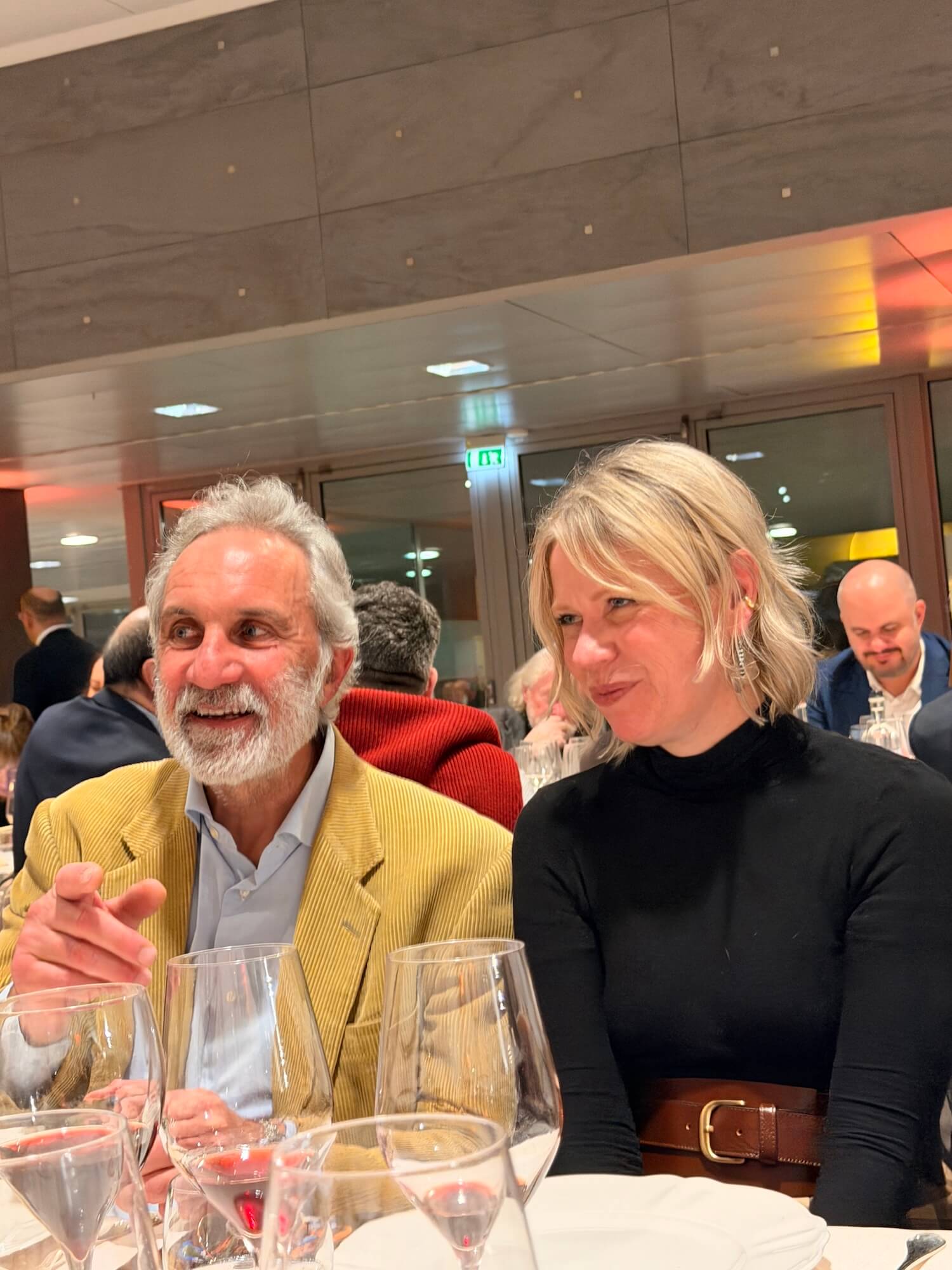
I deliberately chose a place setting that positioned me between two producers, maximizing accessibility on both sides.
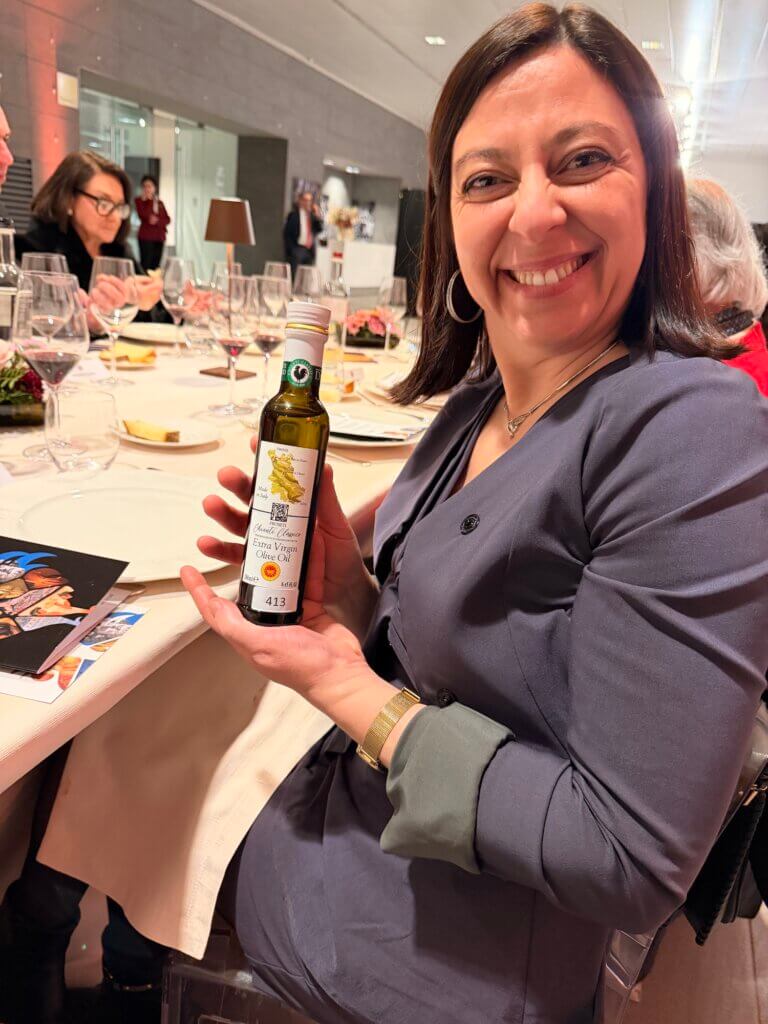
To my right was the wife of one of the two brothers who own Pruneti olive oil, created by their grandparents two generations ago. We had a great discussion about quality definitions in olive oil and the different ways to communicate those distinctions to consumers. DOP olive oil, for example, carries a protected designation of origin that guarantees the oil was produced, processed, and bottled within a specific geographic area according to strict standards.
Pruneti operates a hospitality center where guests can attend specialized tastings. During the evening, her husband brought a bottle of their olive oil to the table so we could taste it together — an excellent way to move the discussion from theory to practice.
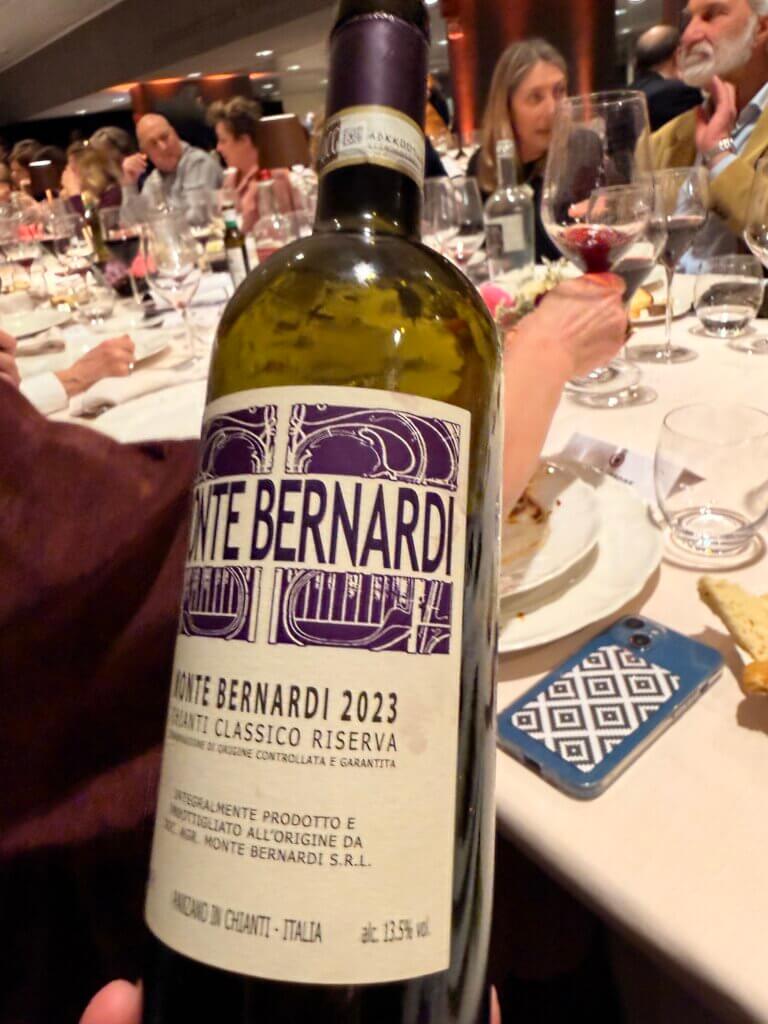
To my left was Jacy Farrell, Managing Director of Monte Bernardi, a winery focused on Sangiovese in the Chianti Classico region. Monte Bernardi is known for producing terroir-driven wines that emphasize transparency of site, from traditional Annata bottlings to structured Gran Selezione. Jacy, American by birth, moved to Italy years ago for her husband. It was enjoyable to speak with her about both Italian wine and the experience of building a life here.
Her responsibilities at the winery are broad. She oversees the guest experience, tastings, retail operations, and many of the practical elements that connect the wine directly to visitors. These roles are increasingly important as wine tourism continues to grow in Tuscany.
Welcome dinners like this are valued because they shift the dynamic of the day. During the tasting hours at Stazione Leopolda, journalists circulate quickly, evaluating dozens of wines in succession.
In the evening, the pace changes. Instead of standing at producer tables, we sit with them. Conversations extend beyond vintage notes and technical sheets. Breaking bread together allows for a different level of exchange — not dramatic, not ceremonial — simply direct, human conversation within the larger Tuscan wine community.