Pieve System in Montepulciano
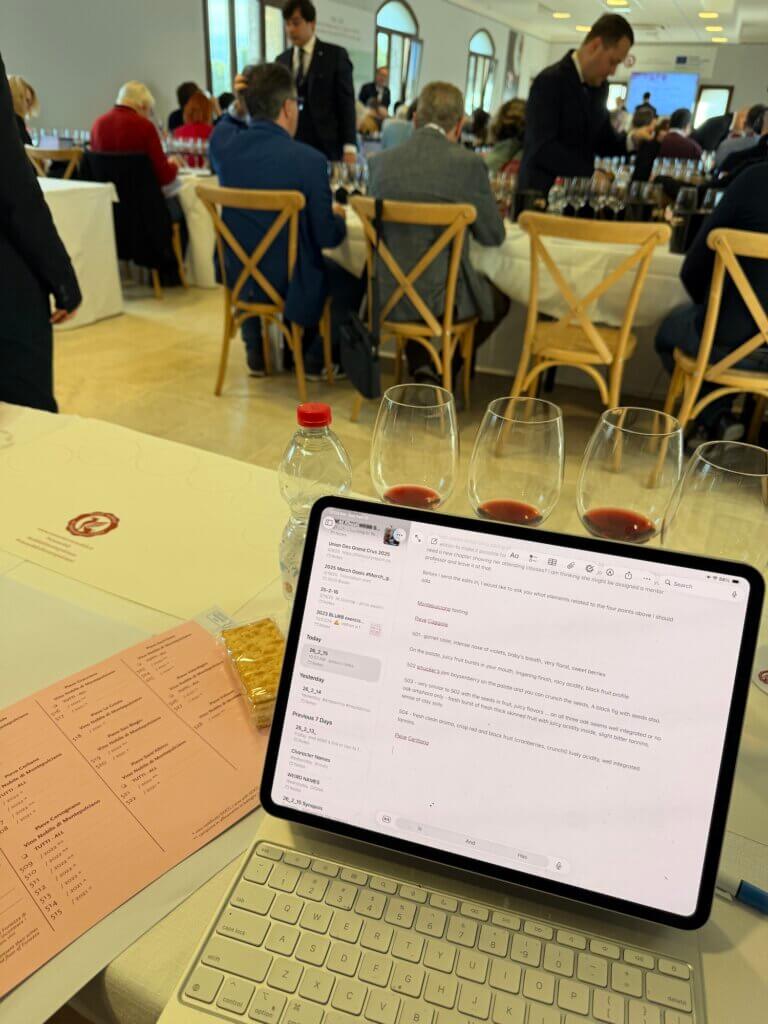
I am in Montepulciano for Anteprima Toscana 2026, the week when journalists and the wine trade descend on Tuscany to taste new vintages straight from the source.
Here the focus is Vino Nobile di Montepulciano 2023, Riserva 2022 and the top tiers of the denomination, from the newer Gran Selezione category to an even more recent arrival.
This is the “Pieve” wines, a set of bottlings that turn twelve historic parish areas around the town into clearly defined, terroir‑driven expressions of Sangiovese.
Yesterday I work my way through the classic styles of Vino Nobile; today, in the fortress above the old stone streets, it is Pieve only.
And even though these wines have only been on the market since the 2021 vintage, the personalities of the different Pievi already feel sharply drawn in the glass.
What “Pieve” means, in a glass
If you love wine but Italian geography feels like a blur, a quick orientation helps. Vino Nobile di Montepulciano comes from a small hill town in southern Tuscany.
Despite the name it is based on Sangiovese (locally called Prugnolo Gentile), not on the Montepulciano grape used in Abruzzo.
For centuries this area has been recognized as a source of serious red wine, but until now most bottles simply said “Vino Nobile” with only the producer and maybe a vineyard name to hint at where, exactly, on the hillside the grapes were grown.
The Pieve project changes that. Historically, a pieve was a country parish church and the cluster of hamlets and fields around it, used as a kind of administrative “neighborhood” in the Tuscan countryside.
The Consorzio has taken twelve of these historic parish areas and turned them into officially recognized sub‑zones—Pievi—each with its own boundaries, rules and name on the label.
In practice, that means you can now drink “Vino Nobile di Montepulciano Pieve Caggiole” or “Pieve Cervognano” and start to learn how different corners of the same small territory taste.
To qualify as Pieve, a wine has to come from one of these twelve areas and meet stricter rules than a standard Vino Nobile.
The blend must be at least 85% Sangiovese from older vines (minimum 15 years), yields are lower, and aging is longer—three years before release instead of two.
This means you are firmly in the “serious, site‑driven” camp rather than easygoing everyday red.
The first vintage on the market is 2021, so these are still early days, but as I taste blind through the flight, the idea of “twelve neighborhoods, twelve accents” feels very real.
A quick word on terroir (without a geology exam)
You don’t need to memorize soil series to get the basic picture.
Montepulciano sits on a ridge that falls away toward different valleys, and over millions of years this landscape has collected layers of old sea beds, clays, sands and stones.
In simple terms, lighter, sandier sites tend to give more perfume, higher‑toned red fruit and brisk acidity.
While heavier clays and more calcareous, stony soils tend to produce deeper fruit, firmer tannins and a more “grounded” feel.
The Pieve names trace a rough circle around the town. Some, like Caggiole and San Biagio, cling close to the slopes under Montepulciano itself.
Others, like Sant’Albino and Valiano, stretch out toward the Val di Chiana; still others, like Valardegna, look more toward the wilder, cooler side facing the Val d’Orcia.
When I taste, I keep this in mind not as a map to memorize, but as a way to understand why one wine feels like biting into a crunchy cherry. And another feels like sinking into a soft velvet chair.
The twelve Pievi, in turn
Pieve Caggiole
Caggiole sits on the slopes around the old pieve of San Vito in Caggiole, just outside the town, on soils that mix sands and clays of marine origin with a good dose of limestone.
That combination tends to give wines that are floral and “vertical”: lots of violet and fresh red fruit, fine acidity and a marked mineral streak.
As I taste, Caggiole feels like one of the most “uplifted” expressions—red cherries and berries with racy acidity and a sense of energy more than weight, even when the fruit is ripe.
Pieve Cerliana
Cerliana (often linked to the Ciarliana area) lies on softer slopes influenced by the Ciarliana and Salcheto valleys, with clay‑sandy soils and pockets of small siliceous pebbles.
In the glass, Cerliana tends to be gentler and more enveloping: ripe red cherry and plum, soft, velvety tannins and a caressing texture that makes the wines feel almost creamy without losing freshness. As I wrote in my notes, the impression is often one of “soft fruit and velvet tannin”, a style that will appeal if you like your Tuscan reds to be comforting and easy to sink into.
Pieve Cervognano
Cervognano is one of the most historically prized corners of the appellation, on the south‑eastern side of Montepulciano around the parish of Sant’Andrea a Cervognano.
Here the soils are predominantly sandy and alluvial with calcareous elements, plus layers of silt, clay and small pebbles, giving good drainage but also depth.
The wines often show both red and darker cherry, plum, and a distinctive earthy‑iron note—what many tasters describe as a ferrous or blood‑orange twist—wrapped in fine, dusty tannins and lively acidity.
For me, Cervognano comes across as particularly complete: not as taut as Caggiole, not as plush as Cerliana, but poised in the middle with a noble, savory backbone.
Pieve Gracciano
Gracciano stretches out on the lower, more open terrain toward the Val di Chiana, historically an important source of Vino Nobile and today home to several reference estates.
The soils mix clay and silt with alluvial deposits and pockets richer in iron, which can translate into more structured tannins and a slightly more robust, spicy profile. In blind tasting,
I often find wines from Gracciano a touch firmer, with red cherry and floral notes framed by a subtle ferrous, almost “rusty” undertone and a savory, lingering finish.
Pieve Le Grazie
Le Grazie lies close to the town, in gently rolling terrain that mixes clays and sands with calcareous elements, in a sort of transition between fresher and more generous sectors.
The Pieve wines from Le Grazie tend to be quite generous and savory: a mix of red and black fruit, broad mid‑palate and tannins that feel more like suede than sandpaper.
As I wrote in my notes, “savory” is the key word here—think cherry, plum, subtle leather and dried herbs, with enough freshness to keep it all moving.
Pieve San Biagio
San Biagio is anchored around the iconic Tempio di San Biagio, the Renaissance church that sits just below the town on its western flank.
The area is characterized by relatively well‑drained, often sandier soils that favor elegance and aromatic lift rather than sheer power.
In the glass, I tend to find fragrant red berries, licorice‑tinged spice and medium body, with silky tannins and a refreshing line of acidity. The wines feel composed and balanced, a good entry point if you are exploring Pieve for the first time.
Pieve Sant’Albino
Sant’Albino stretches down toward the thermal village of the same name in a broad east‑facing valley.
Upper slopes show sandy, brown‑red soils over marine calcarenites, while lower areas rest on thick Pliocene sands and underlying blue‑grey clays.
The result in the glass is often vivid red fruit—cherry, raspberry, sometimes cranberry—high‑strung acidity and a distinct salty, stony edge.
As I taste, Sant’Albino feels “bright and a bit wild”: crunchy fruit, lively freshness and dusty, slightly rustic tannins that make you think of food straight away.
Pieve Sant’Ilario
Sant’Ilario occupies a band of vineyards that look toward the Val di Chiana but sit on somewhat warmer, gently rolling exposures, with mixed clay‑sandy soils and patches of limestone.
The wines here tend to a ripe red‑fruit profile—cherry, strawberry, sometimes a touch of darker berry—wrapped in supple tannins and a rounded, approachable texture.
Acidity is present but less “nervous” than in the coolest Pievi, so Sant’Ilario often reads as friendly and open, a style that could work very well at the table with a wide range of dishes.
Pieve Valardegna
Valardegna lies on the side of Montepulciano that leans more toward the Val d’Orcia and the wilder, hillier landscape beyond.
Soils here include more structured clays and marls mixed with calcareous and sometimes stony layers, and the exposures can be a touch cooler and breezier. In the glass,
Valardegna often feels taut and vertical: bright red fruits, marked acidity, firm but linear tannins and a distinct mineral/savory twist on the finish.
For a taster, this can come across as one of the more “serious” or gastronomic Pievi, not because it is better, but because it calls for food and a bit of patience.
Pieve Valiano
Valiano stretches out toward the lower, sunnier parts of the Val di Chiana side, with warmer exposures and soils that mix clay, silt and sand with patches of limestone and stones.
Wines from Valiano tend to feel more sun‑kissed: ripe cherry and plum, slightly darker fruit notes, smooth tannins and a generous, rounded palate shape.
Acidity is still Tuscan and present, but the impression is of warmth and ease, the kind of Pieve that could appeal to those who love the richer side of Sangiovese without losing balance.
The remaining two Pievi
To complete the circle, the map also includes the Pievi associated with Ascianello and Argiano/Badia.
These sit in intermediate positions around the hill, often on mixed clay‑sandy soils with calcareous elements, and early tastings suggest styles that bridge nearby neighbors: combining freshness and perfume with a bit more depth and structure.
As more vintages arrive, I expect their personalities to sharpen in the same way Caggiole, Cervognano or Sant’Albino are already doing.
Why this matters if you “don’t understand wine”
If you are used to thinking of Italian wine as Pinot Grigio and Prosecco, the idea of twelve micro‑zones within one small Tuscan town might sound intimidating.
In reality, the Pieve system is meant to do the opposite: it gives you a way to explore Vino Nobile di Montepulciano by “neighborhood”, not by technical sheet.
You don’t have to learn every soil type or law; you can simply notice that you enjoy the floral, energetic Caggiole style, or the velvety, enveloping feel of Cerliana, or the salty, high‑toned edge of Sant’Albino, and follow those names on future labels.
As I taste blind at Anteprima, I am reminded that these are early days for the category: only one vintage on the market, with more to come and producers still fine‑tuning their interpretations.
But the fact that, even now, the differences between Pievi are already so clear in the glass suggests that the project is not just marketing; it is a structured way of letting Montepulciano show the nuances it has always had.
If you love wine and you are curious, this is an excellent time to start listening to how each of these twelve “parishes” speaks