Madeira Comes to NYC
Madeira – both the wine style and the island, are a personal passion.
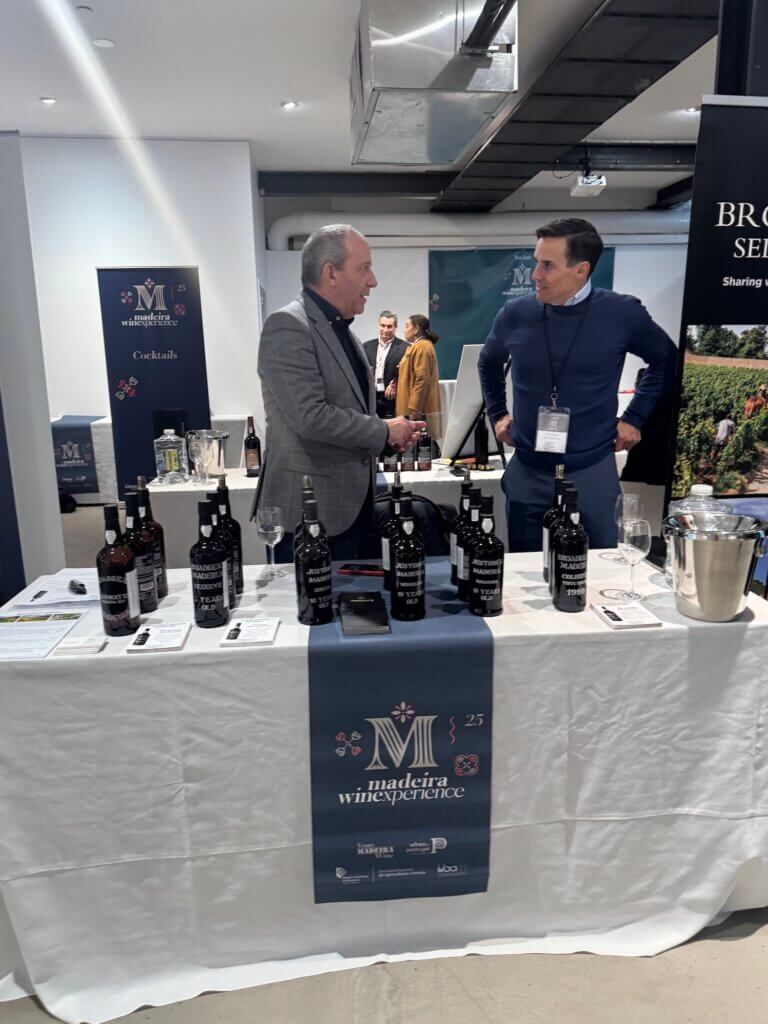
That’s why I was so excited to taste this delicious fortified wine at the Wine Experience in New York today.
For a wine that once sailed the Atlantic and helped toast the birth of a nation, its journey into my glass felt long overdue.
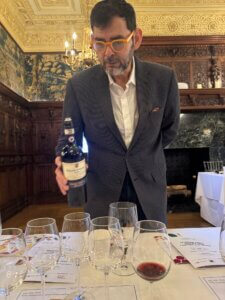
I experienced two back-to-back seminars led by Eugénio Jardim—sommelier, educator, and Wines of Portugal ambassador—to explore the layers, legacy, and unexpected culinary versatility of Madeira.
It was part lecture, part sensory experience, and the highlight of the season.
Geography Deep Dive
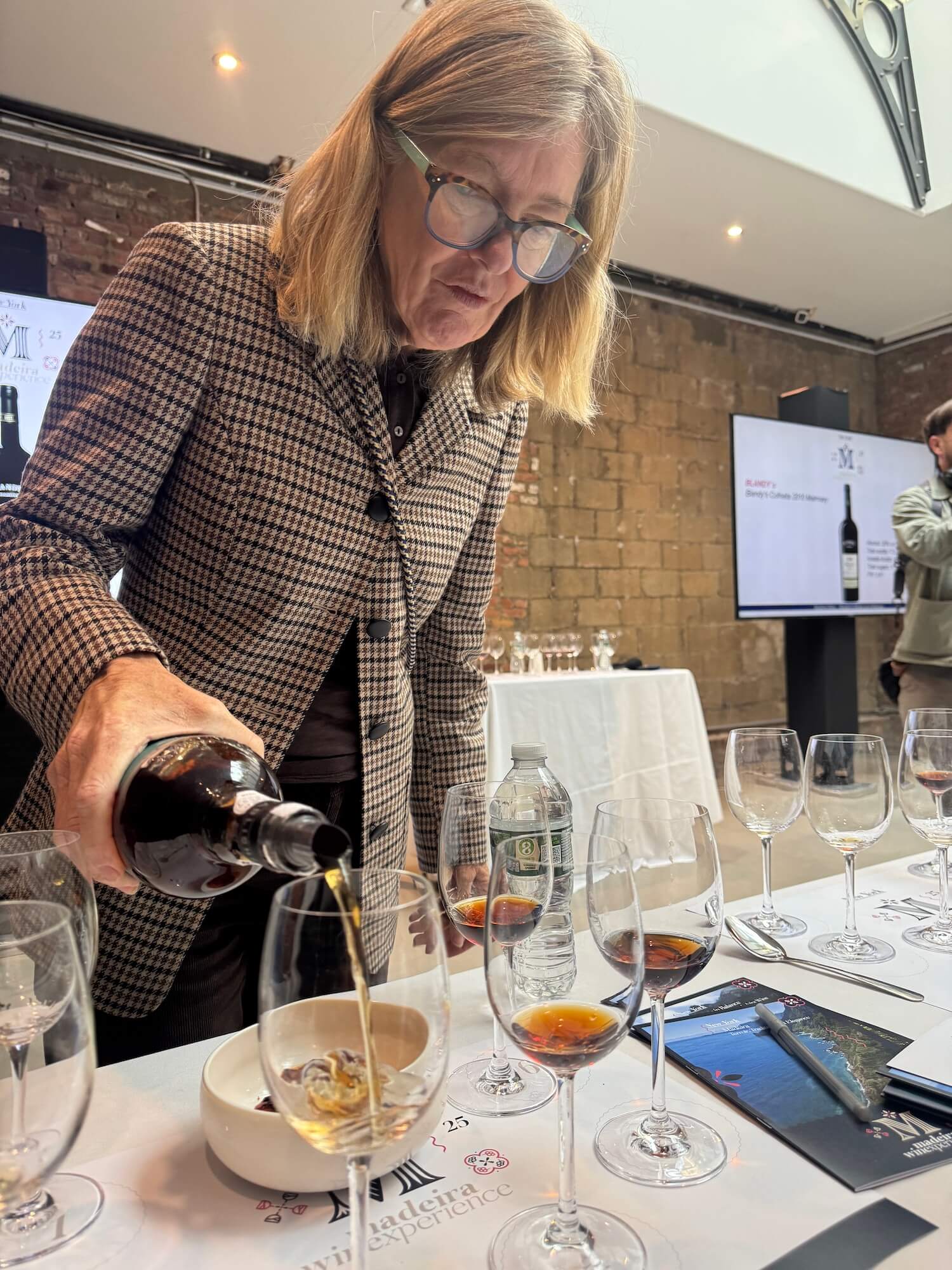
The event unfolded across two illuminating sessions: a deep dive into the geography and process behind the island’s world-renowned fortified wines. And a tutored tastings of some of the regions most valued wines
Then, a tasting of six more Madeiras paired with inventive bites from rising culinary star Chef Nuno of Leitão. This esoteric wine event turned electric—alive with flavor, expressive storytelling, and a genuine sense of discovery.
Jardim, a Brazilian native and longtime Madeira advocate now based in San Francisco, set the tone early with humor, geology, and history.
“Madeira,” he said, “was discovered by accident.”
The original Madeira barrels that traveled to the New World with Portuguese explorers were only fortified so the wine could survive the journey. But that journey—brined by sea spray, aged by ship heat, and jostled on ocean waves—made the wine better.
“This was the original round-trip wine,” Jardim joked. Even today, modern Madeira mimics that accidental evolution through carefully controlled oxidative aging.
Jardim explained that Madeira’s acidic, magnesium-rich volcanic soils—combined with steep vineyards carved into terraces on high-altitude slopes—create intensely structured and age-worthy wines.
The key grapes—Sercial, Verdelho, Bual, and Malvasia—each account for a signature style, from dry and nutty to lusciously sweet. Tinta Negra, often classified as the island’s workhorse variety, is actually everywhere, versatile enough to express a full stylistic range when treated with care.
Jardim emphasized the two methods of aging that cement Madeira’s identity.
The traditional “Canteiro” method—aging casks in warm, sunlit lofts near the windows—builds nuance over decades. The modern “Estufagem” method replicates this with controlled heat, allowing for easier access to Madeira’s core attributes in less time.
What stuck with me most, though, was Jardim’s personal descriptions of the wines, such as referring to a 1995 Tinta Negra from D’Oliveira as having “mascerated cherries and a kind of creamy luxury.” His enthusiasm was contagious.
Among my favorite wines of the day was a Single Vineyard 2017 Sercial from Barbeito—only 36 grams of sugar per liter—and layered with savory, salted caramel and citrus zest. Its tang and structure were a master class in balance.
Later, the 2000 Single Harvest Boal from Henriques & Henriques revealed spiced prune notes with a whisper of bitterness on the finish. Despite having 87 grams of residual sugar, it somehow tasted almost dry, demonstrating the levity that Madeira’s high acidity offers, no matter the sweetness level.
After the seminar came real alchemy: a guided food and wine pairing created by Chef Nuno, who looked more like a young rockstar than a culinary scholar.
But make no mistake—he took this task seriously. Standing on the edge of the presentation stage, he seemed visibly charged, as though he had mulled over the possibilities of each pairing for days.
His intensity and focus paid off as the pairings were stellar.
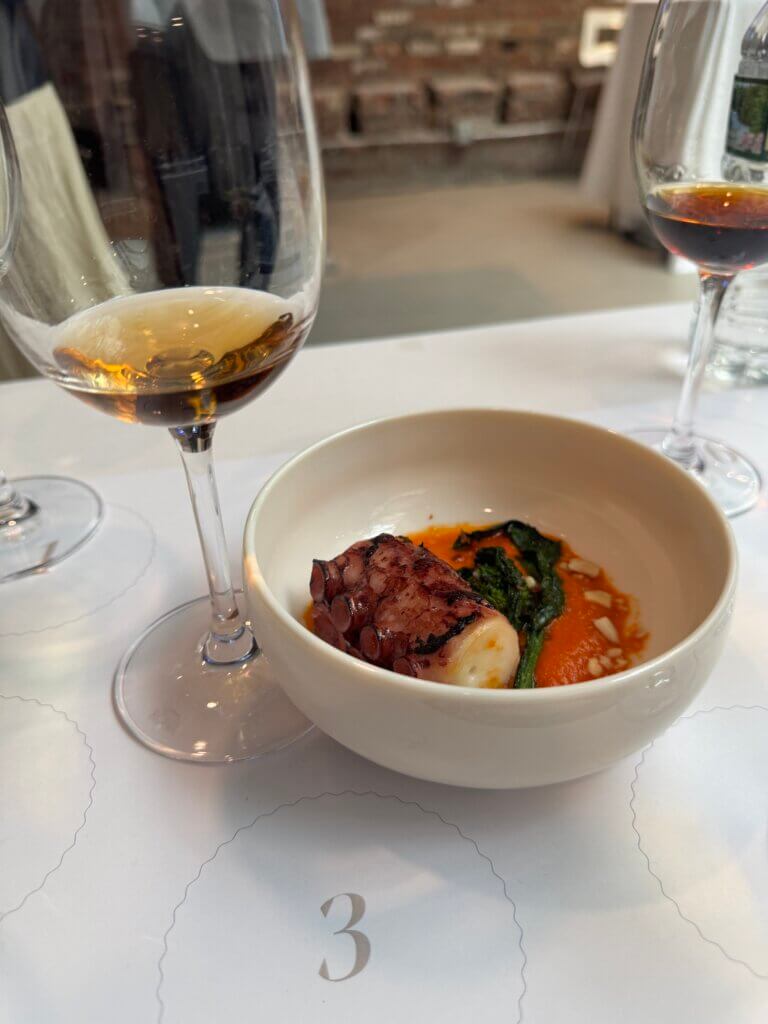
A standout dish featured octopus served with a red pepper sauce dusted subtly with paprika, paired with a 10-year Verdelho. The salt, smoke, and sweet heat played perfectly off the Madeira’s spice and briny elegance.
A pork dish paired with Malmsey offered a rewarding richness—robust enough to handle 121 grams per liter of sugar, yet never veering into syrupy territory. “This wine is almost floating,” Jardim said of the Blandy’s 2010 Malmsey. And he was right. These wines defy gravity.
The entire day felt like a multi-sensory immersion into an underappreciated world. While Madeira may have a reputation among collectors and historians—it was reportedly used to toast the signing of the U.S. Declaration of Independence—it’s far from dusty. It’s alive, complex, and wildly food-friendly.
At a time when we ask more and more from our wines—versatility, sustainability, age-worthiness—Madeira overdelivers. The same bottle can be poured as an aperitif, used in a cocktail, matched with a main course, and still shine with dessert.
Better yet, an opened bottle keeps for months. It’s a wine of permanence in a world that’s constantly shifting.
Leaving the seminar left me eager to visit Madeira again soon – or at least, buy a bottle on my way home.