Attending the Old Wine Conference was a whirlwind of flavors, stories, and history.
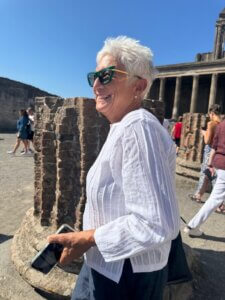
The first day began with a morning walk through the ruins of Pompeii.
I enjoyed wandering past the remains of grand houses, frescoed walls, and ancient dining rooms.
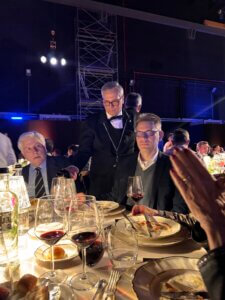
It was fantastic to imagine the people who once lived there — families who celebrated beauty, art, and the pleasures of life. Wine was at the heart of those pleasures, flowing freely at the banquets that were so common at the time.
As I stepped into one villa, I caught myself envisioning an imaginary sofa, reclining with a goblet in hand, just as Romans might have done nearly two thousand years ago.
That sense of history flowed naturally into the conference tasting. The room buzzed with energy as winery representatives — many of them family members — proudly poured their wines.
What stood out most was the pride they felt seeing international journalists and buyers sampling the wine in their bottles. This wasn’t only about commerce — it was about heritage, and about sharing something deeply personal.
Fonzone (founded 2005) showcased wines grown at high altitude, where freshness and lift are natural hallmarks. The wines carried notes of citrus, underpinned by a lively acidity that gave them a graceful edge.
Campatelli (established 1987), now run by siblings Julia and Antonio, poured their Aglianico with enthusiasm. It was well-structured, with aromas of dark cherry and spice, and supple tannins that suggested both tradition and longevity.
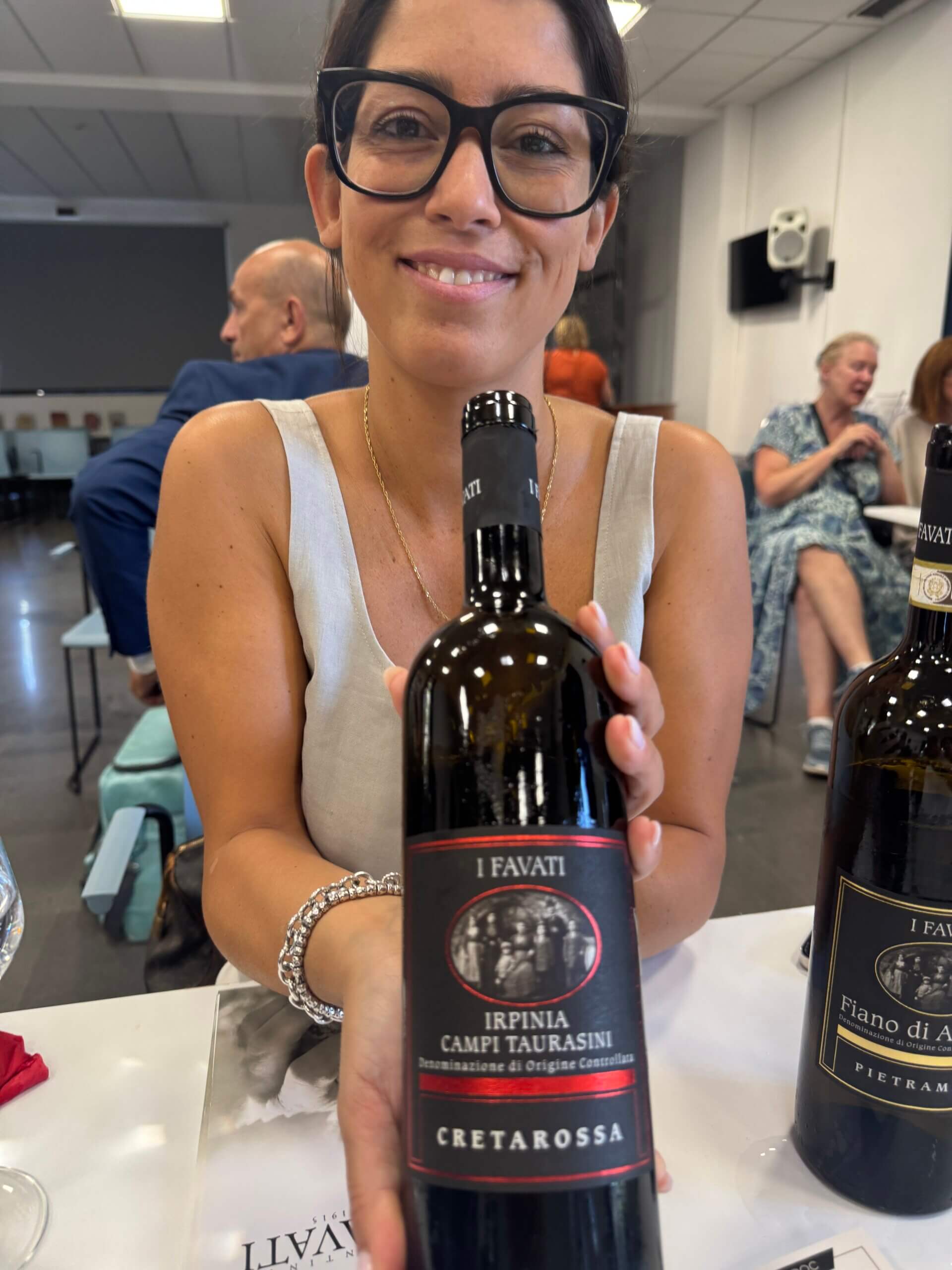
Favati (founded 1987) presented Taurasi wines aged extensively in oak. The result was depth and polish, with layered aromas of plum, leather, and tobacco leaf, balanced by a long, elegant finish.
Massesi (established 2023, with five generations of family history) focused on varietal purity.
Their wines highlighted the character of each grape: vibrant aromatics, clean fruit expression, and a youthful brightness that spoke to their confidence as a new label with deep roots.
Casa Setaro stood out with its bold label featuring a giant eye, a symbol of making wine fun and memorable.
The wines themselves were equally expressive: the white lively with floral notes, the rosé delicate with red berry fruit, and the red balanced with soft tannins and ripe plum flavors.
Il Poggio (founded 1999 in Campagna) poured two strong southern Italian reds. The Aglianico del Taburno Rosso 2020 DOCG showed black fruit, firm tannins, and a hint of earth, while the Piedirosso 2022 was more supple, with red cherry and a subtle floral lift.
Corte dei Venti (Montalcino, founded 1943) brought Tuscan elegance to the table.
Their Rosso di Montalcino 2023, made from 100% Sangiovese, showed red currant, spice, and a touch of oak, while the Brunello di Montalcino 2020 offered more depth with dark fruit, leather, and a lingering finish. The family reserves its Riserva for only the best years, with the last release in 2019.
Piera (founded 1899) combined heritage with innovation. Their Merlot 2018 carried plush dark fruit and a velvety texture, while the Pinot Nero 2023 was lighter, with bright red berries and a clean, refreshing finish. Their motto — “Land discovers. Wine authors. Experience creators.” — captured their philosophy of combining tradition with creativity.
And finally, the tasting closed on a playful note with Alma de Lux, a brand of liqueurs inspired by limoncello but expanded into 32 flavors.
The range included lemon, licorice, and even an unexpected tomato version — a flavor that cleverly evoked the profile of a Bloody Mary cocktail.
The Old Wine Conference was more than a tasting; it was a reminder that wine is about people, history, and stories as much as what’s in the glass.
From Pompeii’s ancient banquets to today’s family-run wineries, the thread of appreciation runs unbroken — a celebration of heritage, beauty, and the joy of sharing wine together.