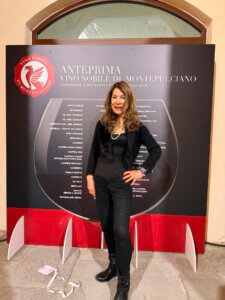

Celebrating Tuscan Wine
In Florence this week, PrimAnteprima opened Tuscany’s annual preview season with a message of clarity and confidence. The data presented at the official launch of Anteprime 2026 revealed a powerful signal.
That signal was the new data showing that Italian consumers aged 35 to 45 increased their spending on Tuscan DOP wines by 24 percent.
At a time when global drinking habits are evolving, this generation is moving decisively toward certified origin and sustainability. They want wines rooted in landscape and history. Tuscany is meeting them there.
A Generational Shift Toward Value
The 24 percent increase in spending among 35–45 year olds marks one of the most compelling developments in the Tuscan wine economy. While purchasing patterns across markets are becoming more selective, this demographic is choosing to invest in quality. The trend confirms a broader cultural shift: drink less, drink better.
For TuscanyMontepulciano First Vintage of Elite Classification, this is a natural alignment. With 97 percent of its vineyards registered under DOP designations—far above the national average—origin and certification are not marketing tools; they are structural foundations.
Younger buyers are responding to that transparency. They are choosing wines that express place, heritage, and agricultural integrity.
Sangiovese remains the backbone, covering 60 percent of vineyard area, yet the region’s diversity from Siena to the coastal zones a mosaic of microclimates. That range provides stylistic nuance while reinforcing the unified Tuscan identity.
Structural Strength and Tuscan Strategic Vision
The production outlook for 2025, projected at 2.2 million hectoliters, reflects disciplined agronomic management following the record 2024 harvest. Regional leaders emphasized quality selection and long-term value protection.
More than half of the Tuscan vineyards are now under 20 years old, thanks in part to effective restructuring measures that have modernized 61 percent of the vineyard area. The result is a young, efficient vineyard base positioned to meet contemporary international tastes.
Investment extends beyond the vines. Approximately €10 million has supported winery renewal and innovation, with new structural programs and EU “wine package” measures offering increased procedural flexibility.
Sustainability as Competitive Advantage
If authenticity attracts younger consumers, sustainability strengthens their loyalty. Tuscany now cultivates more than 23,000 hectares organically, translating to38 percent of its vineyard area. This renders it one of Europe’s greenest wine regions. It accounts for 17 percent of Italy’s total organic vineyard surface and is already aligned with key EU Green Deal objectives.
For North American and Northern European markets in particular, organic production has become a benchmark expectation. Tuscan organic wine increasingly represents a new standard. Sustainability here is both ethical commitment and strategic asset.

Exports: Brand Tuscany Holds Its Ground
Internationally, Tuscan DOP red wines represent 96 percent of regional exports. This shows showed solid volume growth within the European Union (+3.5 percent) and in the United States (+2.9 percent), which remains the region’s leading foreign market.
Tuscany continues to represent 10 percent of the total value of Italian IGP wines worldwide, reinforcing its role as a premium ambassador for Italian quality.
The emphasis throughout PrimAnteprima was not on expansion at any cost, but on balanced positioning. The goal is to maintain value while strengthening long-term presence in key markets including Canada, Northern Europe, Latin America, and emerging Asian economies.
Wine Tourism: From Experience to Direct Value
Perhaps the most dynamic pillar of Tuscany’s strategy is wine tourism. In 2024, the region welcomed 15 million arrivals and recorded more than 46 million overnight stays, with international visitors accounting for 58 percent of the total.
Tuscany holds the national record for rural hospitality, with over 6,000 agriturismo properties, this is nearly a quarter of Italy’s total.
Wine tourism has evolved into a central economic driver connecting agriculture, community, and visitor experience. Tuscan wineries now offer far more than tastings: contemporary art installations in cellars, vineyard trekking, cooking classes (offered by 32 percent of wineries), and immersive harvest participation.
According to research presented at the event, 63 percent of Tuscan wine businesses provide a family-style welcome, while 95 percent place landscape at the center of their offerings and 74 percent foreground culture.
These experiences strengthen brand identity while encouraging direct-to-consumer sales—transforming visitors into long-term ambassadors. For the 35–45 demographic in particular, travel and purchase are intertwined. The memory of place becomes part of the wine itself.
A Cohesive Model
PrimAnteprima also underscored the collaborative framework between regional institutions and consortia. Leaders including Eugenio Giani, Stefania Saccardi, and Leonardo Marras emphasized governance, research, and territorial identity as guiding principles.
Presentations by industry figures—from ISMEA’s market analysis to voices such as Donatella Cinelli Colombini of the Movimento del Turismo del Vino—reinforced a unified narrative: Tuscany intends to lead through quality, sustainability, and experience.
The week continues with individual previews from Nobile di Montepulciano, Chianti Classico, and other denominations. This is followed by BuyWine Toscana in March, where 190 Tuscan companies will meet 175 buyers from 49 countries.
North America remains strongly represented, alongside growing interest from Latin America and Asia.
The Tuscan Way Forward
The data shared in Florence points toward a confident trajectory. A new generation is moving into premium Tuscan wines.
Organic leadership reinforces credibility. Wine tourism converts cultural capital into direct economic strength. Structural investment keeps vineyards and wineries modern and resilient.
The Tuscan wine economy in 2026 is defined by value, by authenticity grounded in landscape, and by consumers who recognize it.
For the next generation of wine buyers, the Tuscan hills offer more than a label; they offer a place, a story, and an experience that continues long after the glass is empty. 🍷