Valdarno di Sopra’s Sette Ponti

Valdarno di Sopra’s Sette Ponti
From hunting estate to historic vineyard: Tenuta Sette Ponti in Valdarno di Sopra
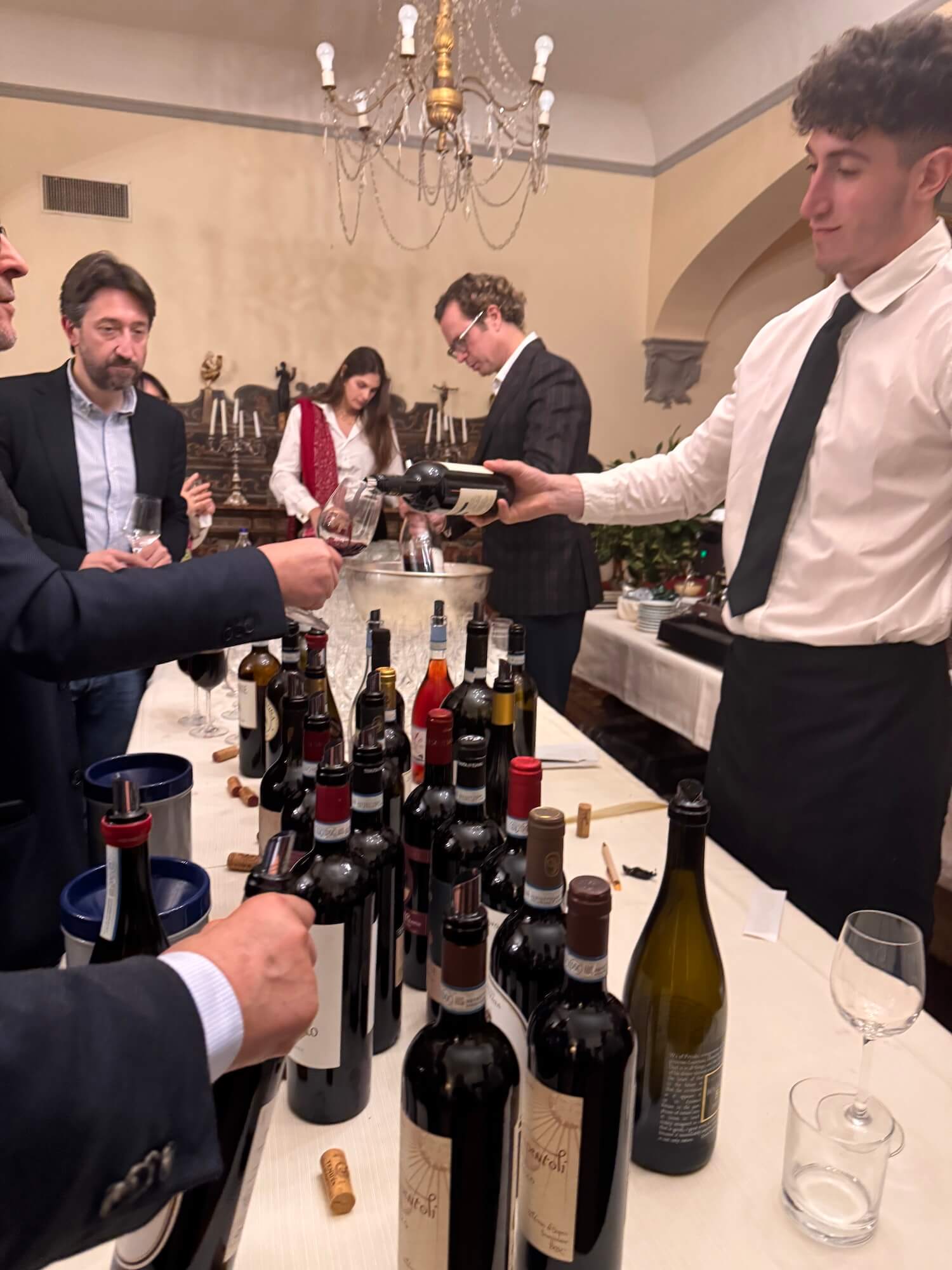
As part of the Anteprime di Toscana, the Valdarno di Sopra DOC invited journalists to attend Valdarno di Sopra day, where international wine journalists could meet with the regions producers and taste their wine.
Last year, Susan Hulme, Master of Wine, gave an excellent tutored tasting of Valdarno di Sopra wines. Journalists were able to tastes wines in flights arranged by terrior.
This year I was able to meet with the Tenuta Sette Ponti winery and learn more about their extensive history in the area.
The Sette Ponti Interview
Tucked into the Arno Valley between Florence and Arezzo, the Valdarno di Sopra DOC can be considered one of Tuscany’s lesser-known wine denominations. Yet this terroir-driven region lies just east of its more famous neighbor, Chianti Classico.
Centuries ago, Etruscans produced wine here and the Roman writer Pliny the Elder referenced wines from its Arno valley. Yet only in recent decades has the area begun to define a modern identity within Tuscany’s broader Sangiovese landscape.
I visited the region during Anteprime di Toscana, the annual preview week when Tuscan denominations present their latest vintages to international journalists and wine professionals. Valdarno di Sopra hosted tastings aimed at introducing the region’s wines to the international trade and illustrating the stylistic range emerging from its vineyards.
My visit to the Valdarno di Sopra region and Tenuta Sette Ponti began with a Tuscan drive showing vineyards stretching across rolling hills near Ponte Buriano. This is the medieval bridge widely believed to appear in the background of the Mona Lisa.
Tenuta Sette Ponti itself began as a hunting estate. The property was acquired by the Moretti family in the 1950s from the Princesses Margherita and Maria Cristina di Savoia Aosta. Under Antonio Moretti Cuseri it gradually evolved into a modern wine estate known for wines such as Oreno and Crognolo.
During my visit, the family spoke about the estate’s transformation, the origins of its historic Sangiovese vineyard Vigna dell’Impero, and how they see Valdarno di Sopra positioning itself within Tuscany’s wider landscape of Sangiovese.
How did Tenuta Sette Ponti evolve from a historic hunting estate into the wine estate it is today?
When the family acquired the property in the 1950s it was primarily a hunting estate overlooking the Arno Valley. Agriculture existed, but wine was not yet the central focus of the estate.
The transformation began in the 1990s under Antonio Moretti Cuseri, who believed the property had significant potential for high-quality viticulture. The vineyards were gradually replanted and reorganized, new cellar technology was introduced and specialists were brought in to study the soils and landscape in detail.
From the beginning the idea was to work seriously with the land itself. Agronomists, geologists and nursery specialists helped determine which varieties would perform best in different parcels. Today the estate still reflects that philosophy — a winery built around the integrity of the property and the character of its vineyards.
Interestingly, the estate’s past as a hunting property still shapes its atmosphere. Even today it is common to see wildlife moving through the vineyards, which reinforces the sense that the land has always been carefully stewarded rather than transformed entirely.
Vigna dell’Impero is often cited as one of the estate’s most distinctive vineyards. How did it come to be bottled as a 100% Sangiovese wine?
Vigna dell’Impero was planted in 1935 by Amedeo of Savoy, Duke of Aosta, long before the estate became the winery it is today. The vines are now approaching a century of age and naturally produce very small yields.
For many years the fruit was used in blends, which was typical in Tuscany, especially during the period when international varieties became widely planted. But over time it became clear that this particular vineyard expressed something very distinctive through Sangiovese alone.
When the Valdarno di Sopra DOC was revived and began encouraging wines that highlighted territorial identity, it seemed natural to bottle this parcel separately. The first vintage was released in 2012 and was dedicated to my grandfather, symbolizing the vineyard where the modern story of the estate began.
The vines grow on alluvial terraces of the Arno Valley with a mix of galestro, clay and sandy soils. These conditions allow the roots to penetrate deeply while maintaining good drainage, resulting in fruit with both concentration and freshness.
For wine lovers familiar with Chianti Classico or Brunello di Montalcino, how would you describe the character of Sangiovese from Valdarno di Sopra?
Valdarno di Sopra sits geographically close to Chianti Classico but historically it developed its identity differently. Rather than carrying the weight of a long-established brand, producers here have had more freedom to explore the expression of individual vineyard sites.
In general the wines show a slightly warmer and more generous profile than some higher-altitude zones of Chianti Classico. The Arno Valley’s combination of alluvial soils, galestro and clay tends to produce ripe red and dark cherry fruit with polished tannins and a layered texture.
At the same time, the valley experiences significant diurnal temperature shifts, which helps preserve acidity and aromatic freshness. The result is a style that balances structure with approachability — expressive, but still recognizably Tuscan.
The denomination is often associated with organic viticulture. How important is this philosophy for the estate?
For us, organic farming is not simply a regulatory requirement but a logical way of working with the land. Healthy soils and biodiversity are essential if you want vineyards to express their character clearly.
In Valdarno di Sopra the producers have collectively moved toward organic practices, which reflects a shared understanding that environmental responsibility and wine quality are closely linked.
Maintaining living soils allows the vines to interact naturally with the environment and gives the wines a sense of clarity and authenticity.
Where does Vigna dell’Impero sit within the broader range of wines produced at the estate?
Each wine in the portfolio expresses a different aspect of the estate. Wines such as Oreno represent our experience with blending international varieties, while Crognolo offers a contemporary and approachable expression of Sangiovese.
Vigna dell’Impero occupies a different place. Because it comes from the oldest vineyard on the property and is bottled as a single-parcel Sangiovese, it represents the historical core of the estate.
Rather than being defined by a particular style, the wine is really about fidelity to that specific vineyard. It is a way of showing how site, vine age and careful vineyard management can shape the character of Sangiovese.
While Sangiovese remains the principal grape of the denomination, Valdarno di Sopra DOC allows producers to work with a broader palette of varieties than many Tuscan appellations. Cabernet Sauvignon, Merlot, Cabernet Franc and Petit Verdot are also planted across the zone, reflecting the wider influence of the Super Tuscan era.
Combined with the valley’s varied elevations and soils — including galestro slopes, clay and alluvial terraces — these conditions give producers considerable flexibility when defining the style of their wines.
P.S.
It was great to have this conversation about the history’s estate. During the activities surrounding Valdarno di Sopra day organized by the consorzio and Anteprime di Toscana, it’s clear that for wine professionals accustomed to thinking of Tuscany primarily through appellations such as Chianti Classico or Montalcino, Valdarno di Sopra offers a quietly emerging expression of Sangiovese rooted in the landscape of the Arno Valley.