
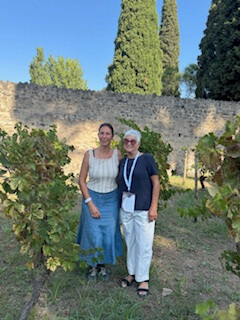
Vineyard Walk in Ancient Pompeii
The ruined city of Pompeii is known for its silent Roman columns, mosaics, and streets frozen in time by the eruption of Vesuvius in 79 A.D.
Yet during the Old Vine Conference in Pompeii, what struck me most was the quiet resilience of the ancient vineyards.
To walk among the vines with expert Viviana Malafarina—herself celebrated as an Old Vine Hero—was to feel the heartbeat of history through the soil.
Viviana reminded us that this Feudi di San Gregorio project (to study the vines) is still young but already it carries the weight of centuries. Its goal is simple: to give wine its rightful place in the historical narrative of Pompeii.
Too often, the story of Pompeii is dominated by ruins, frescoes, and artifacts. But the role of wine in daily life, culture, and trade is just as essential. Reviving these vineyards is not only about preservation. But rather, about re-establishing the cultural and human connection that vines have always carried through time.
Viviana spoke passionately about the landscape, pointing out that modern vineyard design often forgets its roots in mixed agriculture. The ancient Pompeians grew vines grew within Pompeii’s city walls and even in the courtyard of private villas, so as to keep them safe from theft.
In the fullness of time, Viviana hopes to recreate the ancient vines, produce wine from them, and serve the wine right in the vineyards where they once grew. That day might be years away, but the idea is in the works.
While walking in the vineyards it was easy to imagine myself in an ancient wine bar of Pompeii, outdoors, as the weather is usually lovely.
And that is what Viviana wants us all to think. “When we walk into this vineyard,” she said, “we enter an open-air museum of the Mediterranean.” These vines are living witnesses, and their survival is both an economic challenge and a cultural responsibility.