
Wines of Talosa
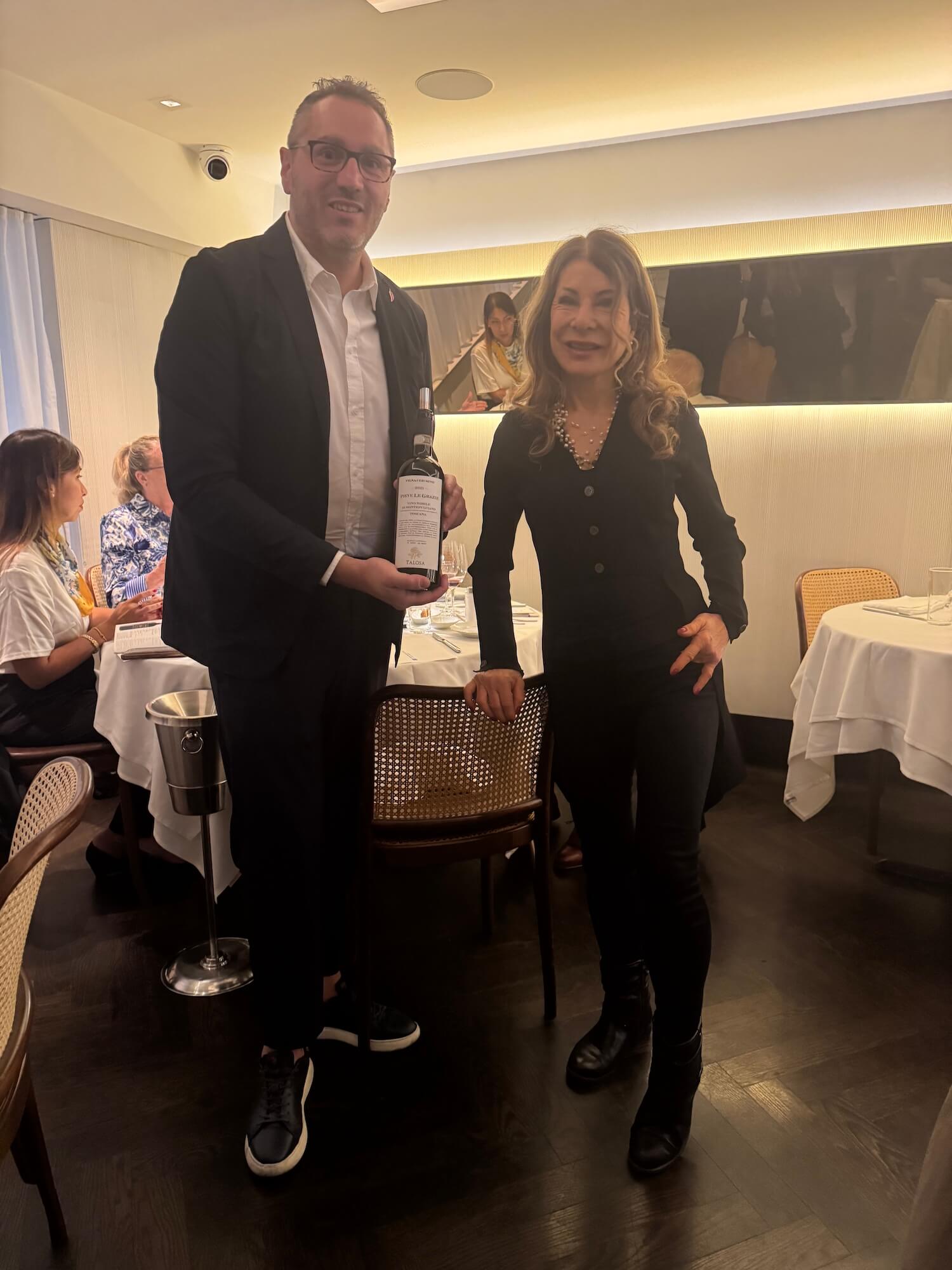
Fattoria della Talosa, one of the finest wine estates in Montepulciano, showcased its wines in Manhattan today. Representing the wines was Cristian Pepi, export manager of the company.
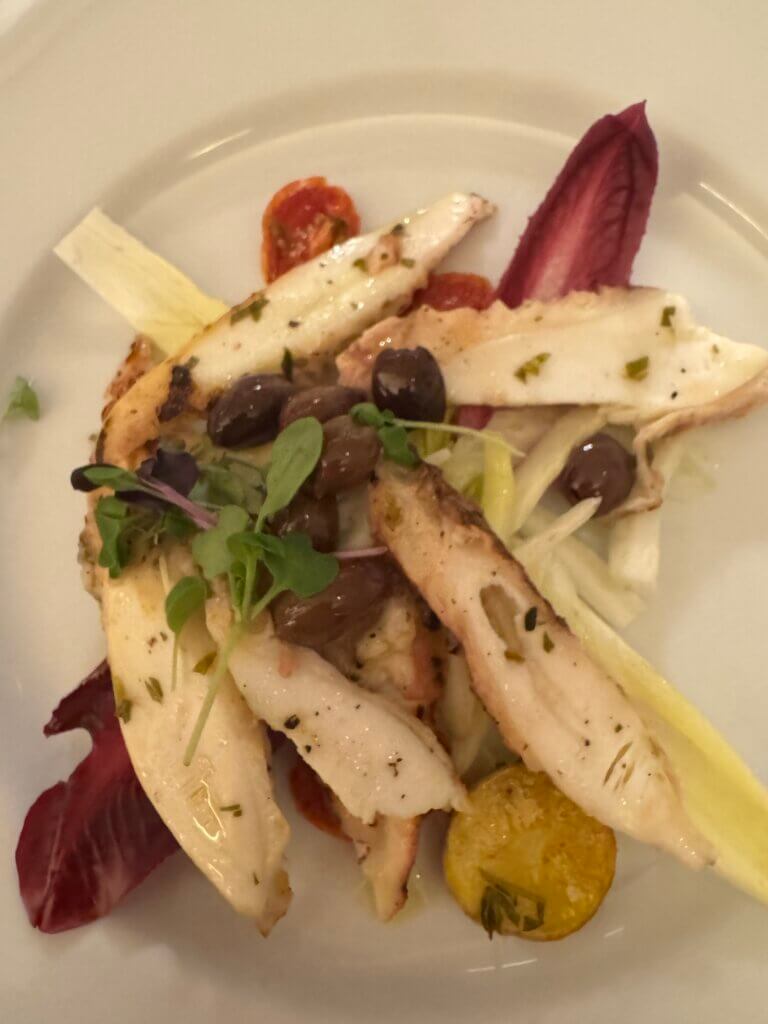
Il Gattopardo, an exclusive Italian restaurant, provided an excellent pairing to the five wines, some of the finest Talosa has to offer.
The lunch began with a look at the estate and its history. I had heard some of it last February when I attended a dinner at the famous Fortress of Montepulciano.
It turns out that Eduardo Mottini Jacorossi, grandson of Talosi’s founder, was sitting at my table.
Mr. Pepi explained the winery’s high values, including careful attention to organics and hand-picking.
Talosa farms 33 hectares of vines at 350–400 meters above sea level in one of Montepulciano’s prime growing zones.
The focus is Sangiovese, known locally as Prugnolo Gentile.
What makes Talosa distinctive, however, is not just the vineyards but its historic cellars beneath Montepulciano’s Piazza Grande.
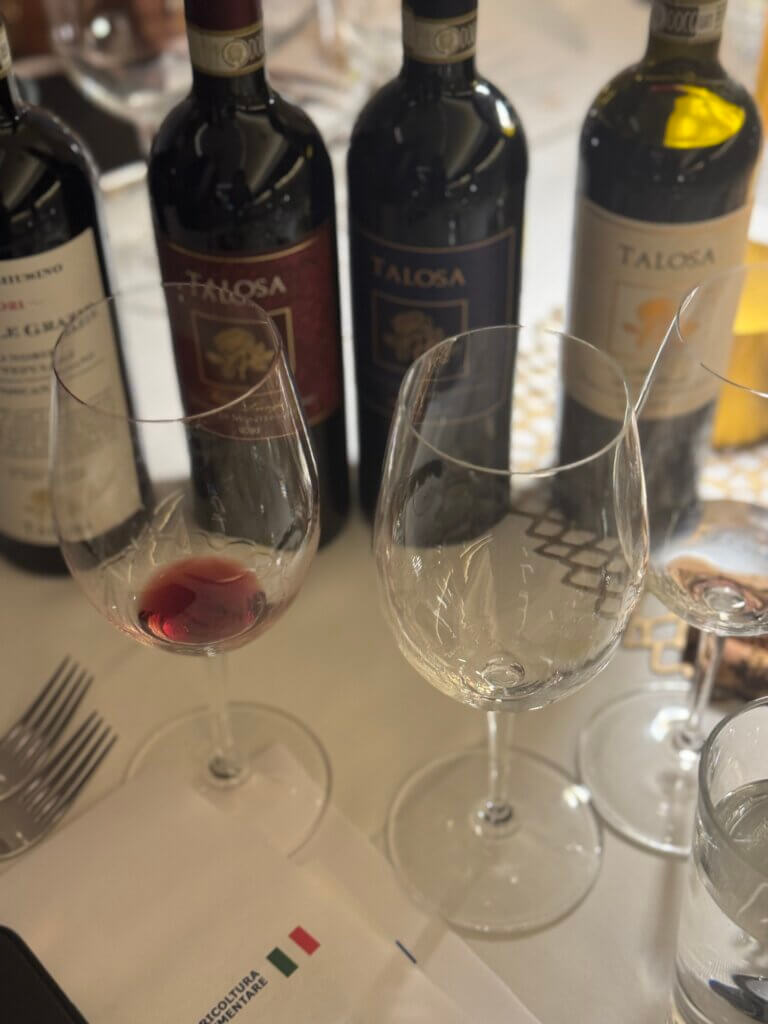
A Lineup of Talosa’s finest Vino Nobile
The tasting features five wines that reflect Talosa’s range and philosophy.
- Alboreto Vino Nobile di Montepulciano DOCG 2022
This wine was savory and dry, yet with a hint of vanilla from a percentage of the wine undergoing French oak aging. - Riserva Vino Nobile di Montepulciano DOCG 2020 – deeper structure, built to age. Slightly heavier on the palate with a long finish
- Filai Lunghi Vino Nobile di Montepulciano DOCG 2021 – a single-vineyard cru bottled only in the best years. You can taste the uniformity of flavor in this wine, marked by somewhat chalky tannins and a long finish
- Pieve Le Grazie Vino Nobile di Montepulciano DOCG 2021 – the estate’s newest release, launched at Anteprima and soon to debut at Vinitaly. The high quality of this wine was apparent in its rich texture and long finish.
- Vin Santo Occhio di Pernice 1996 – a rare bottling, concentrated and long-aged, that shows how patient craftsmanship defines Tuscan sweet wine.
Each wine represents a balance between precision in the vineyard and a long view of tradition.
The Maturation Cellar
The main aging cellar sits in the basements of Palazzo Tarugi and Palazzo Sinatti, two Renaissance-era buildings.
Walking through the brick galleries lined with oak barrels is a reminder that wine here is part of a continuous story going back to the 16th century.
The estate has made these cellars accessible to visitors, offering guided tours and tastings that go beyond a standard winery visit.
Thank you Christian Pepi and Talosa for your excellent wines and this exclusive tasting.