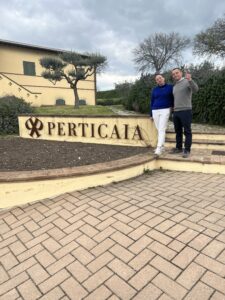

Colle Ciocco – Montefalco Traditional Winemaking
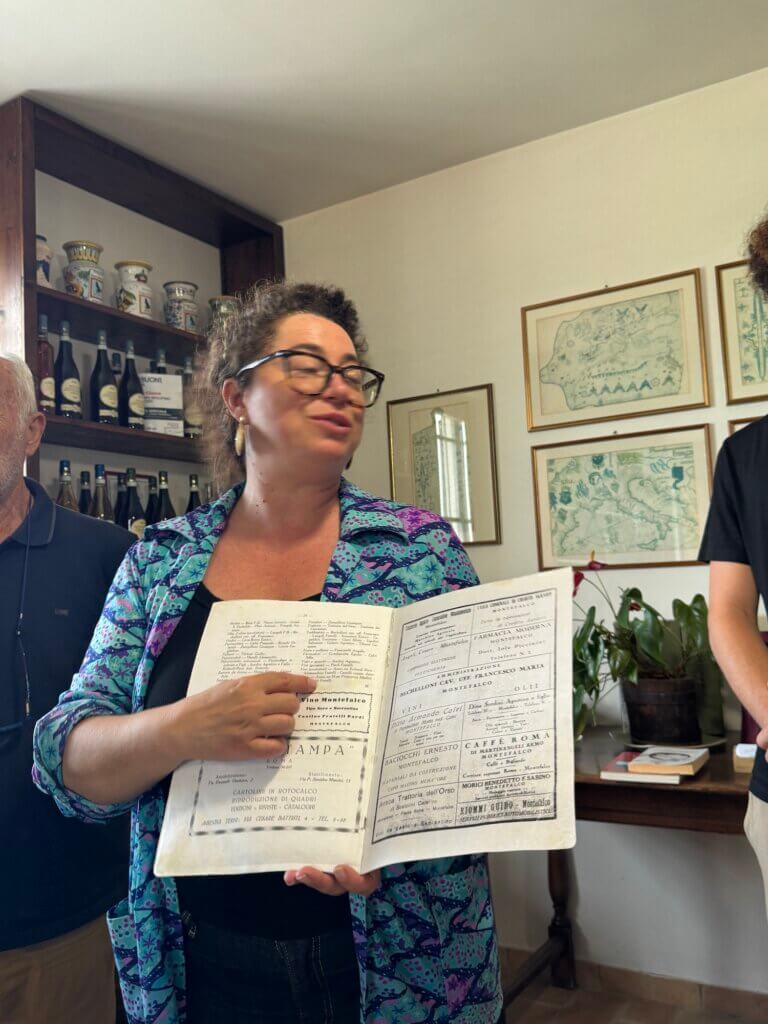
As wine writers, we’re often hosted by people who talk about family legacies. Yet visiting the Spacchetti family, just outside Montefalco’s historic center, I could feel something different.
It wasn’t only about lineage or names on bottles. It was about texture — the lived experience of a multigenerational household still shaping wine together, every vintage, every day.
The aroma of a home-cooked meal hit me first. We entered through the old family residence, the century-old living room arranged with framed black-and-white photos, mementos from past travels …
…filled with the warmth of generations who hosted guests long before wine tourism was an industry category.
Nothing felt designed for Instagram. This was real.
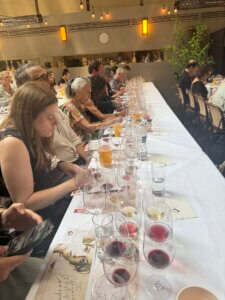
Our tasting was set in what could have easily doubled as a family dinner setup — placemats, breadsticks, neatly arranged glasses, and a few well-placed antiques on the sideboard.
Guiding us through the wines was not just one face of the winery, but several: the grandfather elegant and charming, who’d picked up his English serving abroad in the military decades ago; The mother, who steered the conversation with clarity and ease.
And Matteo, their teenage son, who carried a quiet confidence that made us all lean in to hear more.
It was a full tableau of who they are and what they’ve built.
The story of Colle Ciocco—the Spacchettis’ winery—goes back to 1870.
Grapes were turned into wine here long before Sagrantino had its DOCG title or Trebbiano Spoletino had its revival.
What began as a polycultural farm has now become a focused but diverse operation: 12 hectares of vineyards and 8 hectares of olive trees, perched around 400 meters above sea level.
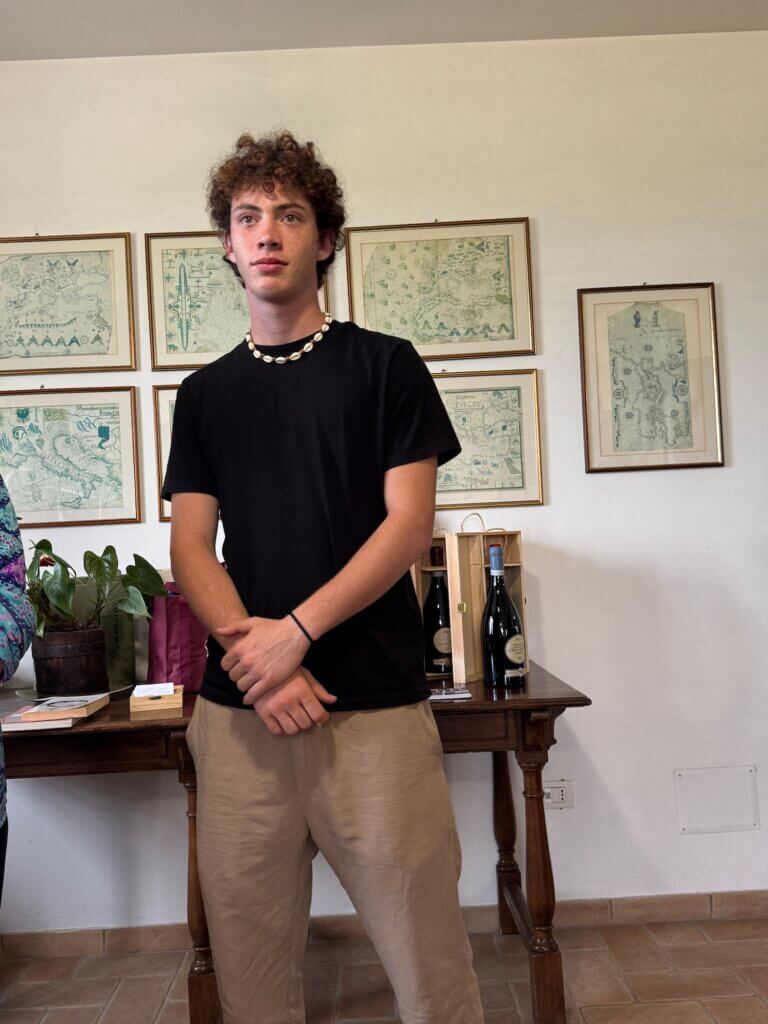
The family still farms by hand. Yields are low by choice. Vinification is traditional but clean. They bottle about 30,000 wines a year, keeping things small enough to stay personal.
The core of the production is centered on the two key grapes of the region: Sagrantino and Trebbiano Spoletino. Some of the Trebbiano vines here are among the oldest in the area, and the family treats the variety with clear respect.
There’s a sparkling version, a Metodo Ancestrale made from Trebbiano Spoletino and refermented in bottle using reserved must. The lineup also includes still white wines like Tempestivo — a perfumed, textured expression of Trebbiano Spoletino that shows its freshness when young and expands into something broader and more structured with time.
Sagrantino, Montefalco’s signature red grape, gets a long runway at Colle Ciocco. The family sits on each vintage for at least five years before release — a serious commitment in a region that requires only three. The wines see long maceration — as much as 45 days — and age in French oak, followed by extended bottle time.
The result is a style that’s unmistakably Sagrantino: bold, rich, and structured, but with a clarity that suggests intention over intensity. We tasted several vintages, from 2016 through 2019, skipping no steps, glossing over nothing. They don’t chase trends here. The goal is durability.
The next evening, I spoke more informally with Matteo at a local Montefalco celebration. He had just turned 17. We talked about his experience growing up in this pocket of Umbria, surrounded by vineyards and family continuity.
Matteo told me he had spent some time in Germany and traveled elsewhere, but what struck me was that what he wanted most was to return — here, to the winery, back into the rhythm of the family business.
It wasn’t just him.
Throughout my visit to Montefalco, I met several sons and daughters just like him. Teenagers and young adults who already work harvests, pour at tastings, and speak about their family vines with genuine pride.
These aren’t forced successors. They speak about winemaking like artists who’ve already chosen their medium. There’s something grounding about growing up with wine not as “product,” but as part of the landscape, the pantry, the dinner table.
The Spacchetti family is six generations in, and you get the sense that they’re on solid footing for a seventh. What keeps it going seems to be less about expansion and more about living well with what they have. The wines reflect that. Clean, vivid, expressive — wines that feel like they’ve been made with both care and patience.
If you’re visiting Montefalco, Colle Ciocco is just outside the town walls. You can walk here if you feel like stretching your legs. The tasting will likely include three generations of storytellers, and maybe even some breadsticks laid out with pride.
And as you swirl your glass of Sagrantino or take the first sip of Trebbiano Spoletino, you’ll realize this isn’t just a tasting. It’s a summary of the family that made it — in wine form.