
Burgundy may be steeped in centuries of winemaking tradition, but that hasn’t stopped its producers from exploring new ideas.
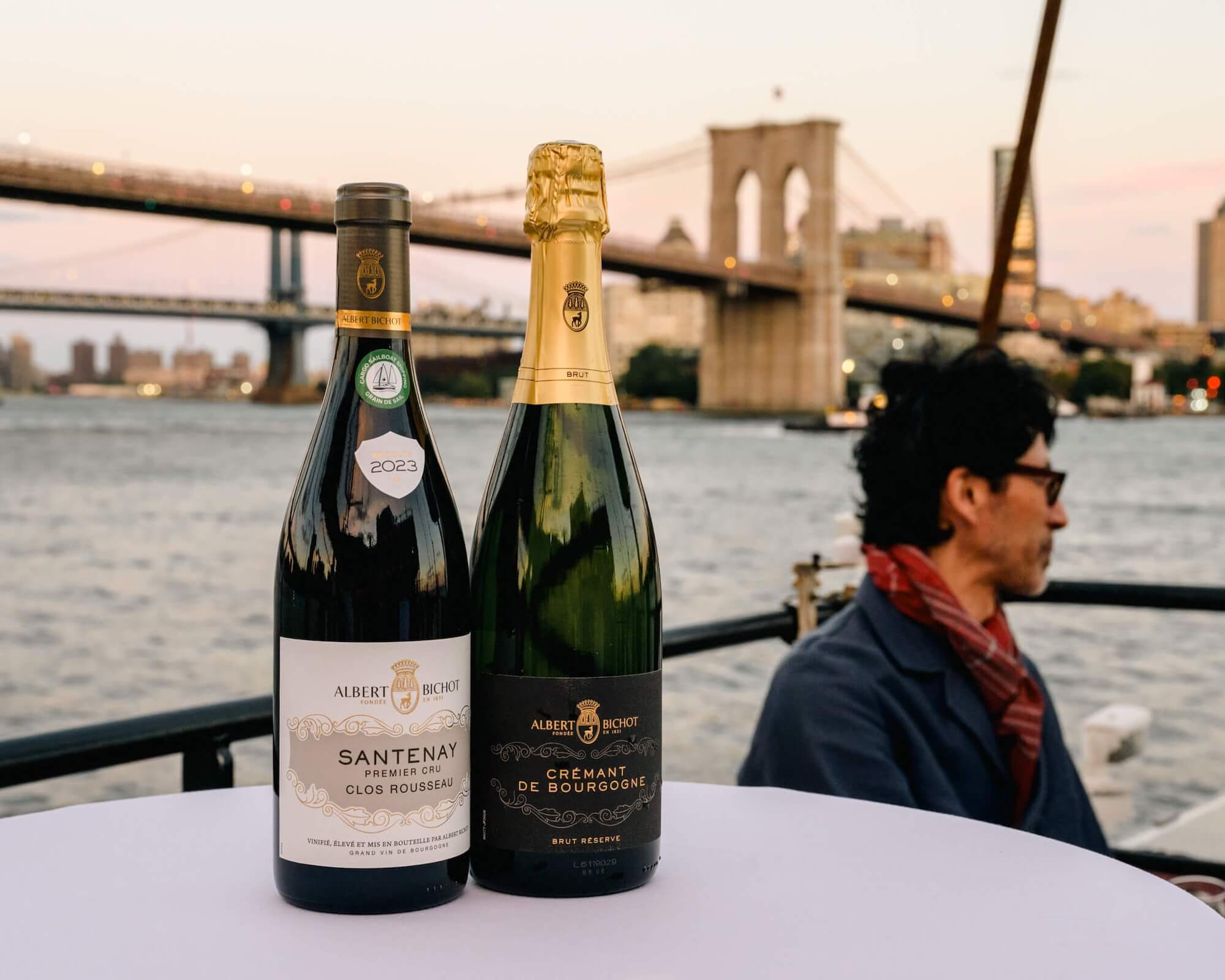
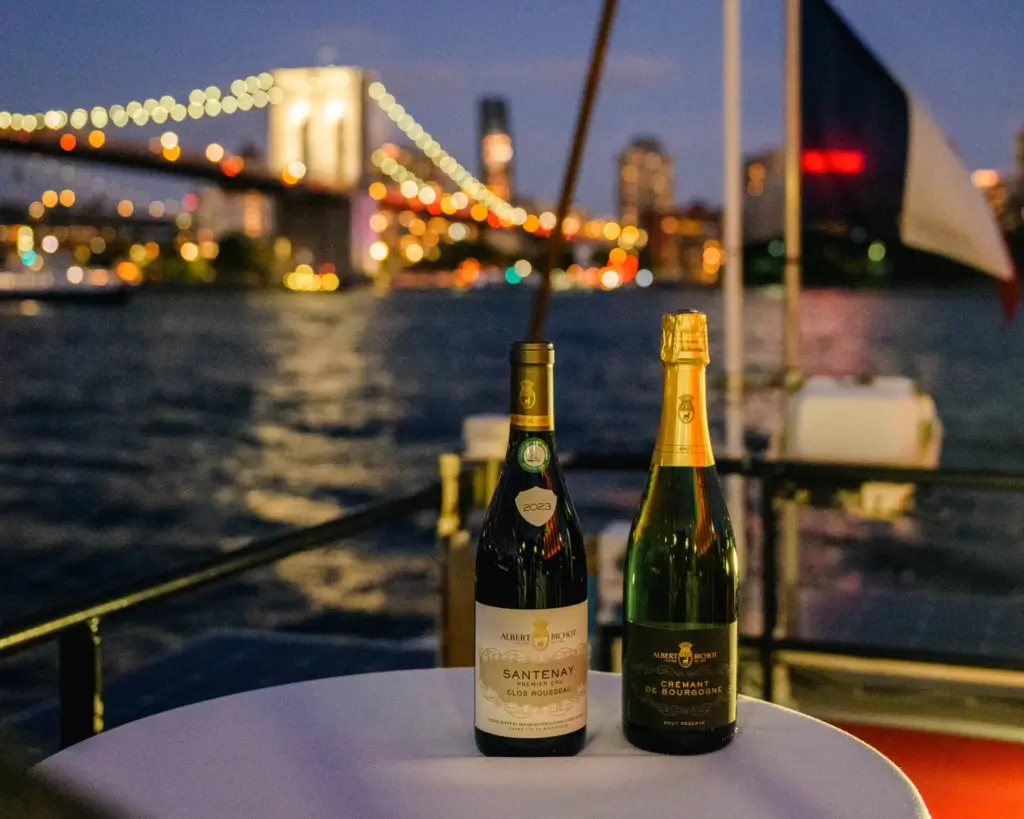
Recently, I attended a tasting hosted by Albert Bichot, the historic Burgundy wine house, aboard a sailing cargo ship docked in New York City. The vessel belonged to Grain de Sail, a French company that is reviving wind-powered shipping as a more sustainable way to transport goods across the Atlantic.
The occasion offered an opportunity to explore two developments. One was Albert Bichot’s commitment to reducing the environmental impact of transporting its wines. The other was a rather unusual experiment involving a barrel of Chardonnay that had spent several weeks traveling across the Atlantic.
Burgundy Under Sail
Shipping wine internationally presents an environmental challenge. Bottles are heavy, and transporting them thousands of miles contributes to the industry’s carbon footprint.
Albert Bichot has partnered with Grain de Sail to explore an alternative to conventional freight. The company’s purpose-built sailing cargo vessels use wind power to transport goods across the Atlantic while maintaining temperature-controlled conditions for their cargo.
According to the companies, shipping aboard Grain de Sail’s vessels can reduce transport emissions by as much as 95 percent compared with conventional freight.
For a Burgundy producer with an international customer base, the potential benefits are considerable. Wine can reach overseas markets without relying entirely on the fossil fuels traditionally associated with maritime shipping.
The New York event gave guests an opportunity to see the vessel firsthand. We toured the ship in small groups, getting a closer look at the sailing cargo operation that had brought Burgundy wines across the ocean.
But Albert Bichot had another reason to invite us aboard. One particular barrel had made a rather more interesting journey than the bottles destined for American wine shops and restaurants.
A Chardonnay Takes to the Sea
Among the wines poured during the event was the 2024 Albert Bichot Bourgogne Côte d’Or Chardonnay “Secret d’Océan,” the result of an experiment in aging wine aboard a sailing vessel.
A barrel of the 2024 Chardonnay had traveled aboard Grain de Sail II, crossing the Atlantic from France and returning home again.
During the voyage, the wine experienced conditions quite different from those in a traditional Burgundy cellar. The movement of the vessel, variations in temperature and humidity, and the constant motion of the ocean introduced a new set of variables into the aging process.
For comparison, wine from the same production remained in the cellar in Burgundy.
The question was whether the journey would produce noticeable differences in the finished wine.
According to the producer’s reported tasting and analysis, the ocean-aged Chardonnay developed delicate saline notes, pronounced freshness and a distinctive richness compared with its cellar-aged counterpart.
Of course, the relationship between the conditions experienced during an ocean crossing and the characteristic of the finished wine is not necessarily straightforward. A salty impression on the palate, for example, does not establish that the wine absorbed salt from the sea.
Nevertheless, the experiment raises interesting questions about the influence of movement and environmental conditions during maturation.
Regardless, the resulting Chardonnay was certainly delicious and the evening at sea memorable.