Cocchi Vermouth Loves Chocolate
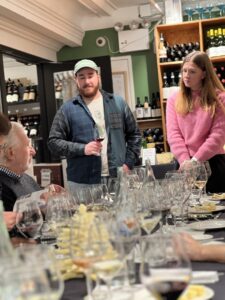
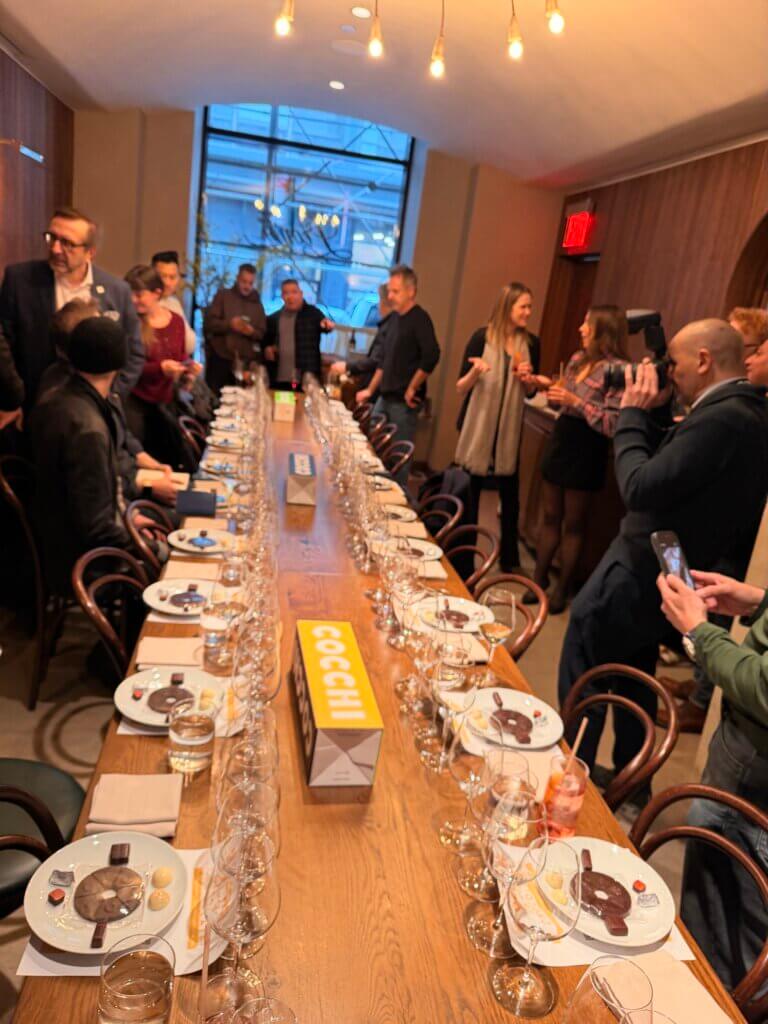
On March 6, about twenty bartenders, journalists, and trade professionals gathered at Leon’s on Broadway for a lively and unexpectedly illuminating seminar titled “Cocchi Loves Chocolate.”
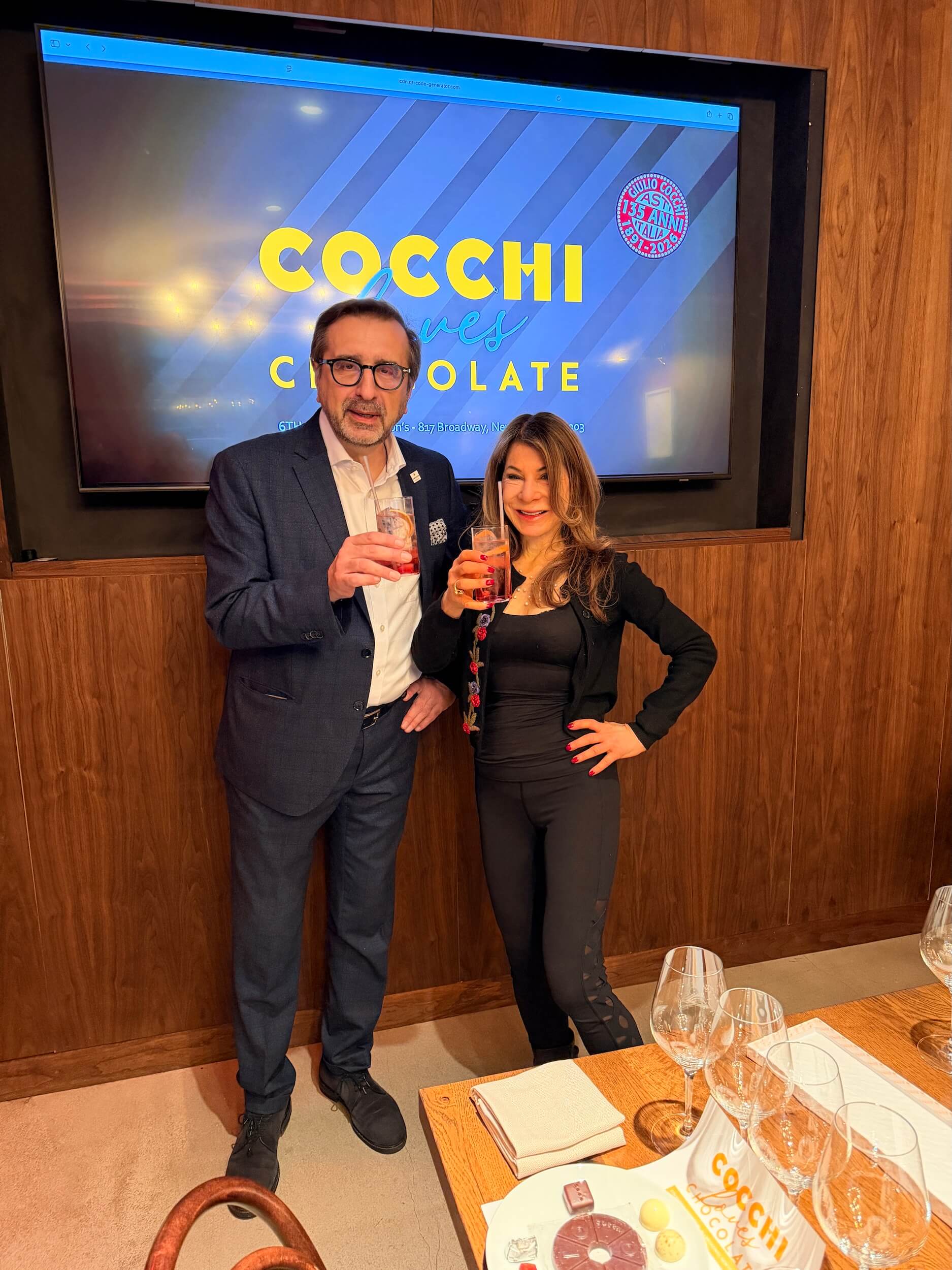
What might have sounded like a simple tasting quickly turned into something far more memorable—a spirited masterclass led by Roberto Bava, the principal of the historic Cocchi house in Asti, Piemonte.
For two hours Bava guided the group through a series of vermouths and aromatized wines paired with exceptional chocolates sourced from some of the world’s finest chocolatiers.
What surprised me most was Bava himself. He describes himself modestly as “a farmer,” yet he appeared every bit the elegant European host—pocket square, easy humor, and an astonishing depth of knowledge that ranged from botanicals to fine chocolate.
And yes, chocolate.
A Vermouth Refresher
Before the tasting began, Bava offered a brief explanation of vermouth for those who know it only as a cocktail ingredient.
Vermouth is essentially wine infused with botanicals—herbs, roots, flowers, and spices. By law at least 75% of the bottle must be wine, and the flavors come from tinctures extracted from those botanicals. The modern style originated roughly three centuries ago in Piemonte, particularly around Turin, which is why the designation Vermouth di Torino appears on many classic labels.
Cocchi itself dates back to 1891 in Asti, and today the house is considered one of the world’s reference points for premium aromatized wines and vermouth.
Vermouth Meets Chocolate
The heart of the seminar explored a pairing most people have never considered: vermouth with chocolate.
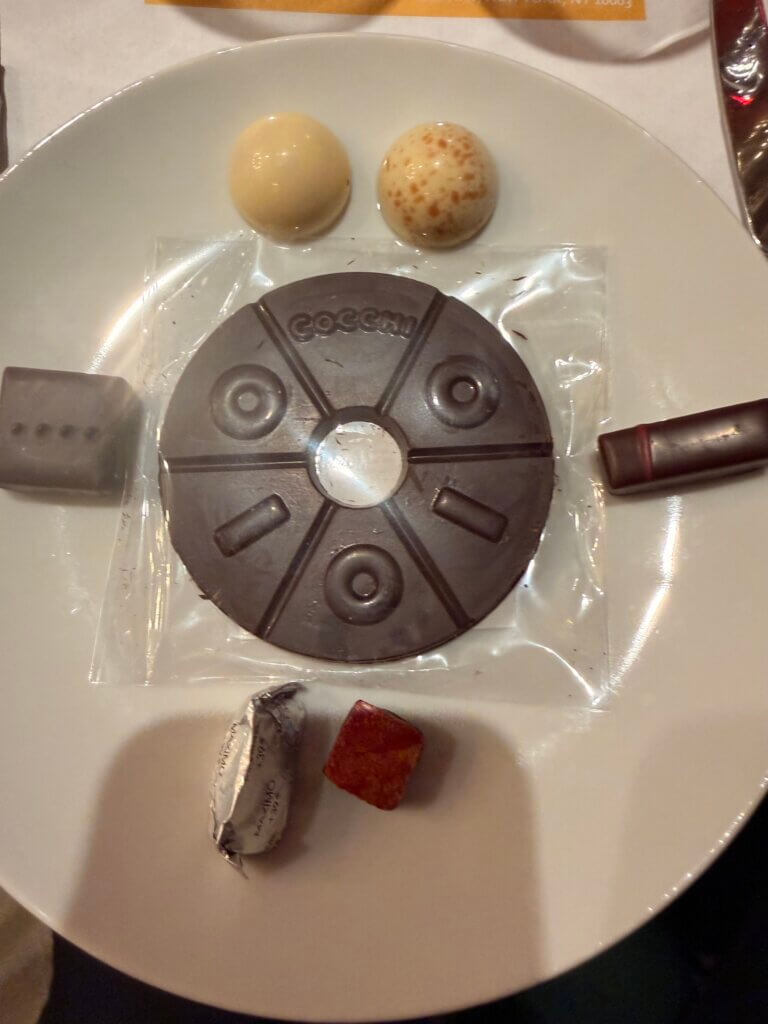
Bava selected five pralines to demonstrate how the aromatics and bitterness of vermouth can interact with cocoa in surprisingly elegant ways.
Cocchi Americano + White Chocolate Bombolas (Orange & Almond)
The first pairing featured Cocchi Americano, served neat. The vermouth’s bitter orange character was matched with white chocolate bombolas flavored with orange and almond, created by Spanish chocolatier Enric Rovira.
The citrus oils in the chocolate echoed the aromatics of the Americano, producing a bright, refreshing opening to the tasting.
Cocchi Rosa + Salvador Ganache
Next came Cocchi Rosa, paired with Salvador ganache, a chocolate developed from one of the legendary recipes of Robert Linxe of Paris’ Maison du Chocolat.
The delicate fruit tones of the Rosa softened the intensity of the dark ganache, producing a pairing that felt remarkably balanced.
Cocchi Storico Vermouth di Torino + Vermouth Ganache and Giandujotto
For many in the room—including me—the highlight was Cocchi Storico Vermouth di Torino, paired with two chocolates from Piemonte:
- a ganache infused with Cocchi vermouth
- giandujotto, the classic Piedmont chocolate made with hazelnuts.
The vermouth’s complex herbal notes and the silky hazelnut richness worked together beautifully. Of all the pairings, this one stood out as the most electrifying.
Dopo Teatro Vermouth Amaro + Oioio Mexico Superior Chocolate
The tasting continued with Cocchi Dopo Teatro Vermouth Amaro, paired with Oioio Mexico Superior, a dark chocolate designed to complement bitter spirits.
The chocolate’s elegant bitterness and tropical notes mirrored the amaro’s herbal complexity.
Barolo Chinato + Wine Praline
Finally, the group tasted Cocchi Barolo Chinato alongside a historic praline created by Italian chocolatier Andrea Slitti, one of the earliest examples of a chocolate designed specifically to pair with wine.
The pairing demonstrated how fortified wine and dark chocolate can amplify one another’s depth.
The Chocolate Hunt
One of the most entertaining moments came when Bava described how he sources these chocolates. On a recent trip to Paris he visited Maison du Chocolat intending to buy enough pralines for seminars like this one.
Instead, he discovered the boutique would sell them only in small gift boxes—exactly as they would to any other customer.
The chocolates on our tasting plate, he joked, probably cost the equivalent of one of his cars.
After tasting them, I almost believed him.
Cocktails Close the Evening
The seminar began with an aperitivo cocktail and ended with a classic Negroni, reinforcing an important point: while vermouth is often overshadowed by gin or whiskey in cocktails, it is the aromatic backbone that gives these drinks their character.
A Practical Lesson for Bars
The takeaway for the hospitality world was clear.
Vermouth is not just a cocktail modifier. In the hands of producers like Cocchi—and in the imagination of creative bartenders—it can be a star ingredient capable of standing alongside fine chocolate, complex cocktails, and sophisticated aperitivo culture.
If I were stocking a bar or wine shop, these aromatized wines would absolutely deserve a place on the shelf—and perhaps even a tasting event of their own.