Talosa Cellar Lunch
On February 15, I stepped into the historic cellar of Talosa, just off Piazza Grande in the heart of Montepulciano’s old town, for a presentation and lunch dedicated to the wines of Montepulciano producers.
The entrance on Via Talosa leads down into an underground world of stone and silence, dramatic contrast to the lively gathering of journalists and producers I will discover at the end of the stairs.
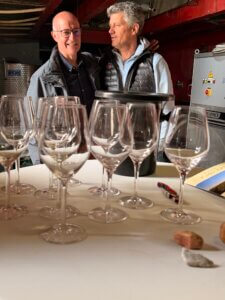
In a space that once held only barrels and darkness, contemporary music now floated against ancient cave walls as glasses of white and rosé were raised in aperitif.
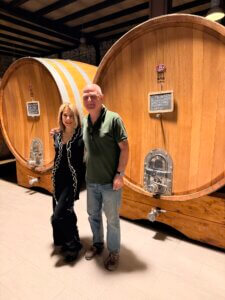
The cellar itself is an experience. Carved beneath the historic center, it maintains the cool, steady temperature that has preserved wine for centuries.
Thick stone cave-like walls surround you on every side. The light is soft but sufficient, illuminating long aging tunnels and vaulted ceilings that feel both architectural and natural.
Standing there with a glass in hand, it was impossible not to consider the generations who once used this space purely for production and storage. Today, it serves another purpose as well: education, exchange, and hospitality.
We began with fresh white and rosé wine served before lunch. The contemporary music playing in the background created a subtle contrast to the historic setting, reinforcing how Montepulciano continues to evolve while respecting its foundations.
The lunch brought together six important producers: Boscarelli, Il Molinaccio, Montemercurio, Poliziano, Talosa, and Tiberini. Each represents a distinct interpretation of Vino Nobile di Montepulciano, unified by Sangiovese yet shaped by philosophy and terroir.
Boscarelli is often cited as a benchmark estate, known for precision and age-worthy elegance. Their wines consistently show balance and restraint, reflecting decades of refinement. Il Molinaccio, a smaller producer, brings strong territorial expression, emphasizing structure and clarity of fruit. Montemercurio continues a family tradition rooted in Montepulciano’s historic center, combining classic vineyard work with careful cellar practices.
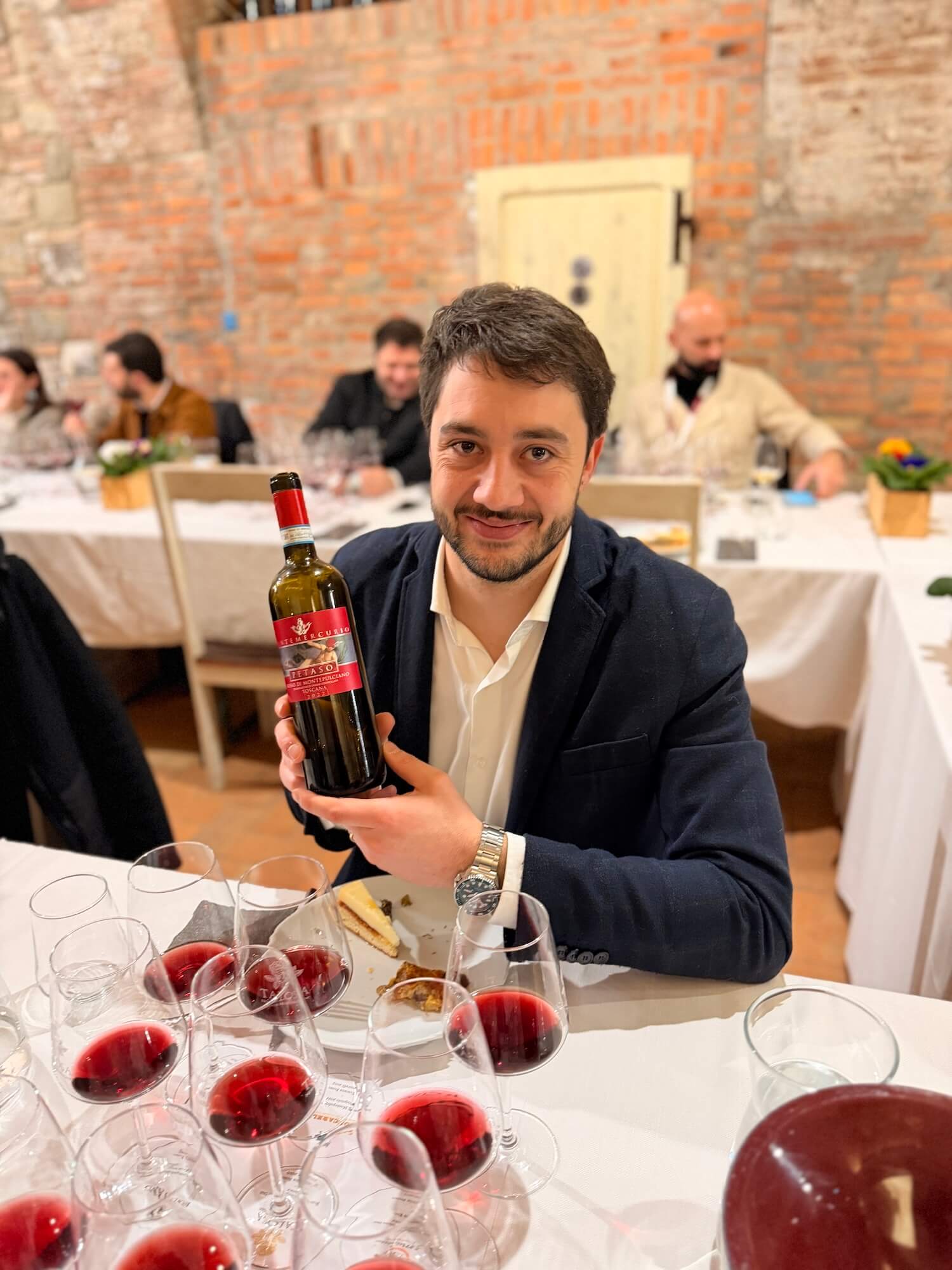
I spent part of the lunch speaking with Andrea from Montemercurio, discussing vineyard exposure and how site selection influences the aromatic profile of Sangiovese. These conversations are often the most valuable aspect of such gatherings. Sitting beside the people who farm and vinify the wines provides insight that no technical sheet can replicate. A few seats away, fellow producers compared impressions of the recent vintage, reinforcing the sense of shared regional identity.
Poliziano represents another dimension of Montepulciano: internationally recognized, polished, and forward-looking. Their wines tend to express depth with clarity, appealing to both traditionalists and newer markets. Tiberini, with its organic commitment, highlights purity of fruit and a transparent approach to farming. And as host, Talosa demonstrated how heritage and modern presentation can coexist seamlessly—its cellar both historic monument and functional winery.
As we moved into the seated portion of the lunch, Vino Nobile took center stage. The wines showed the hallmark structure of Sangiovese grown on Montepulciano’s clay and sandy soils: firm yet refined tannins, bright acidity, and layered red fruit. Tasted underground, in the very environment where many of these wines age, the connection between place and product felt immediate. The stone surroundings seemed to amplify the sense of continuity.
Beyond the technical aspects, what stood out most was accessibility. The producers were open, engaged, and eager to explain not only vineyard practices but broader questions of positioning and market evolution.
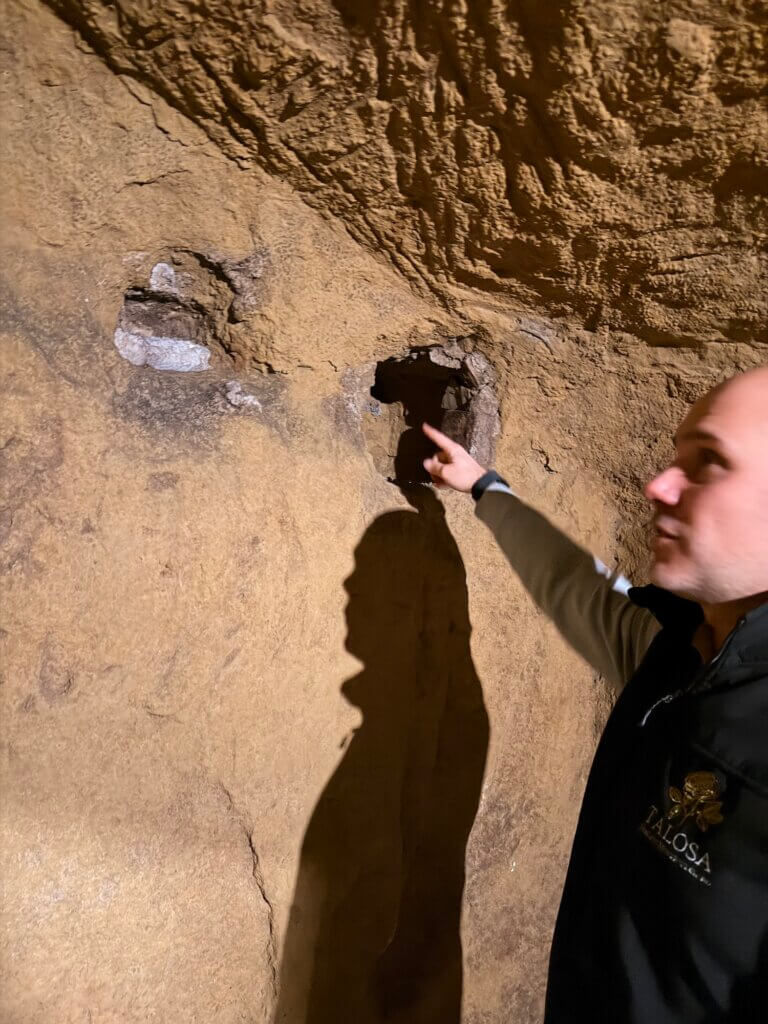
As a special treat, Eduardo Mottini Jacorossi, grandson of the founder, took be to a special corner of the celler where he had discovered an Etruscan tomb. Very cool.
When we finally emerged back onto Via Talosa, the contrast was striking. Above ground, Montepulciano continued its daily rhythm.
Visitors crossing Piazza Grande, locals moving between shops and cafés.
Beneath it, however, lies a network of cellars that has supported the town’s identity for centuries.