
Add Your Heading Text Here
It was a pleasure to visit the La Veneranda winery—a place rooted so deeply in its land and heritage that the charm just happens naturally.
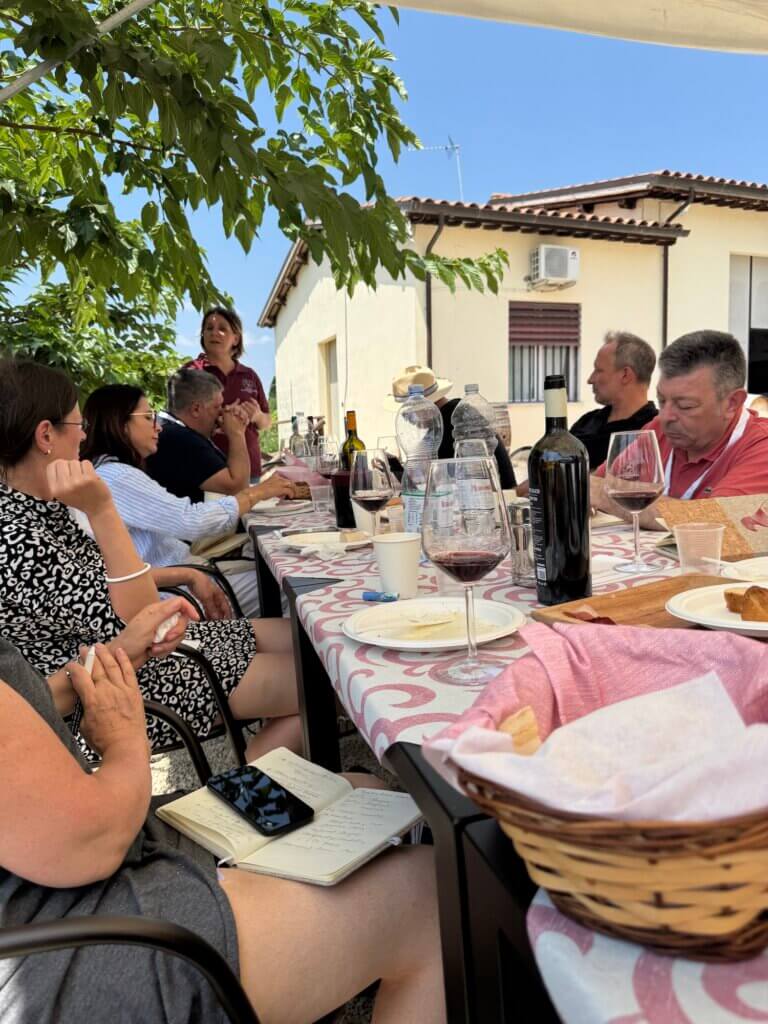
I arrived with a small group on a bright, easygoing Montefalco afternoon. A long table had been set under the awning outside the tasting room. Very country Italian.
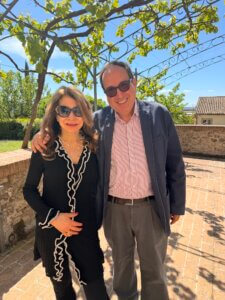
Leonora Alessandrelli, one of the estate’s current proprietors, stopped briefly with her husband to greet us—both warm, relaxed, and exuding the quiet pride of those who are deeply tied to their land.
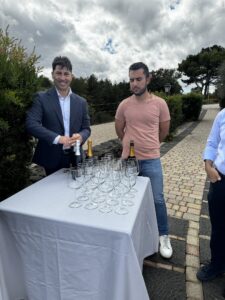
Our guide that day was Valeria Gasparri, who ran the show with the ease and confidence that comes from experience. Nothing felt rehearsed or overly polished.
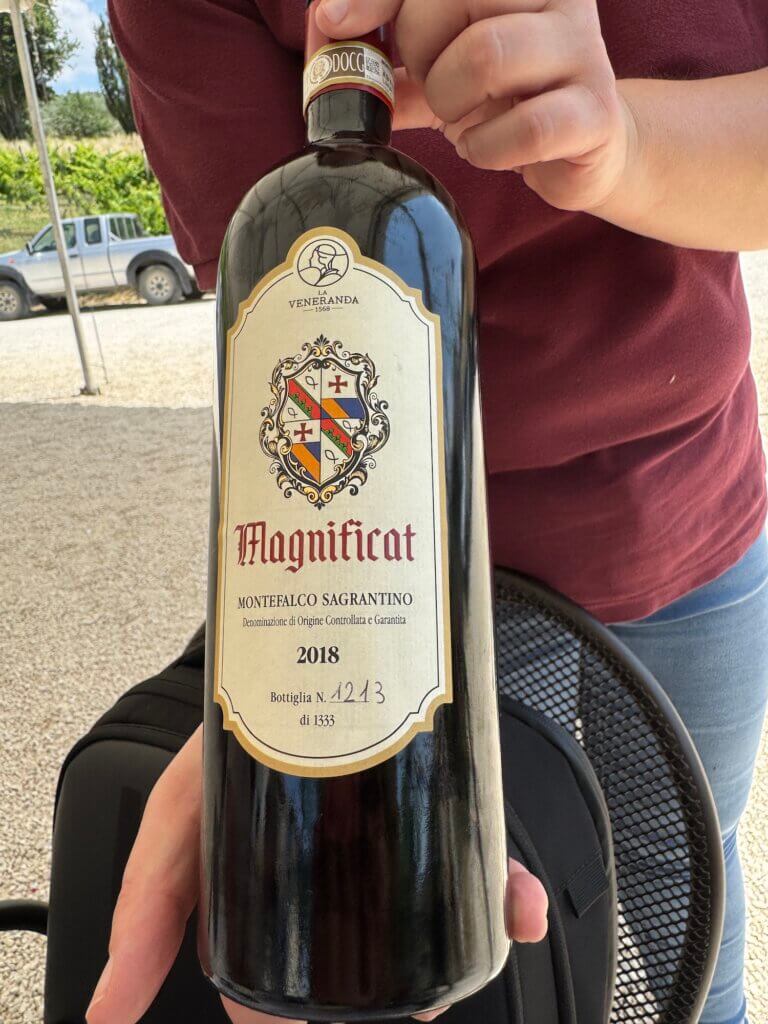
He described each of the wines as they arrived, offering just enough context to make the pairings meaningful. Between pours, assistants brought out small plates—dishes chosen to complement the wines without overshadowing them.
The whole experience was conversational and relaxed. No pageantry, no pressure. Just food, wine, and place, working in harmony.
Montefalco is not short on stories, but La Veneranda’s roots run unusually deep. The family traces its connection to this land back to 1568, a detail that could come off as poetic embellishment if it weren’t documented in the municipal archives.
By 1827, Maria Aloisa Moncelli was managing the estate—an educated and forward-thinking figure whose passion for agriculture earned her the nickname “La Veneranda,” or “the venerable one.”
That piece of history still feels alive here, not in any museum-like way, but in the continuity of care and stewardship over centuries.
The winery itself officially began marketing bottled wines in 2005, but this is not upstart. Fourteen hectares of vines in Montefalco at roughly 300 meters elevation, plus two more between Foligno and Spoleto.
The vineyards are sustainably farmed, with attention to biodiversity, climate realities, and stewardship of native varieties like Sagrantino, Sangiovese, and Grechetto.
And while we tasted through the full lineup—whites, reds, and the region’s signature Sagrantino—I’ll admit that, for me, the wines themselves took a back seat that day. Not because they lacked quality, but because the atmosphere of the visit said more than any tasting notes could.
Yes, the wines were well-made. Yes, the grapes were harvested by hand and vinified with care. But what stood out more was how naturally those elements folded into the rhythm of the place.
La Veneranda isn’t trying to reinvent the region. Instead, they’re continuing to represent it with quiet clarity. Clean energy powers their cellar. Pruning and harvesting are done by hand. The team is small but focused, and everything from production to bottling and sales happens here. It’s efficient without ever feeling rushed.
It struck me that while many wineries talk about “connection to the land,” this place doesn’t have to push it.
It simply shows it. Sustainable practices aren’t a talking point as much as a habit. History isn’t romanticized—it’s remembered. And everyone involved, from the family owners to the staff pouring the wine, seems to know and value that continuity.
As we sat at the table, plates and glasses in rotation, there was no formality in the experience, Just the type of easy hospitality that lingers long after you leave. A few stories about vintages, an occasional digression into regional customs, and plenty of wine in the glass.
And that’s what made La Veneranda worth remembering—not because any one wine jumped out, but because everything came together in a way that felt organic and honest. The kind of visit that gives context, without ever trying too hard.
Montefalco is full of producers worth knowing. La Veneranda quietly reminds you that the past still matters. And that the future doesn’t have to be loud to be meaningful.