Italian PDO Wine & Cheese Masterclass
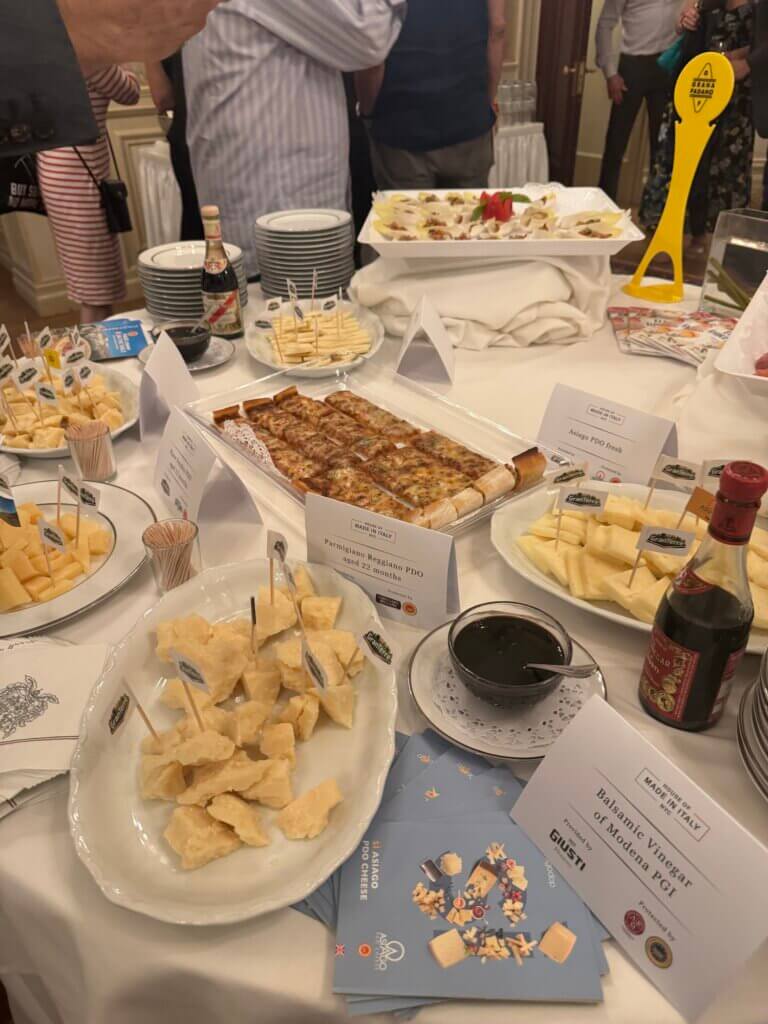
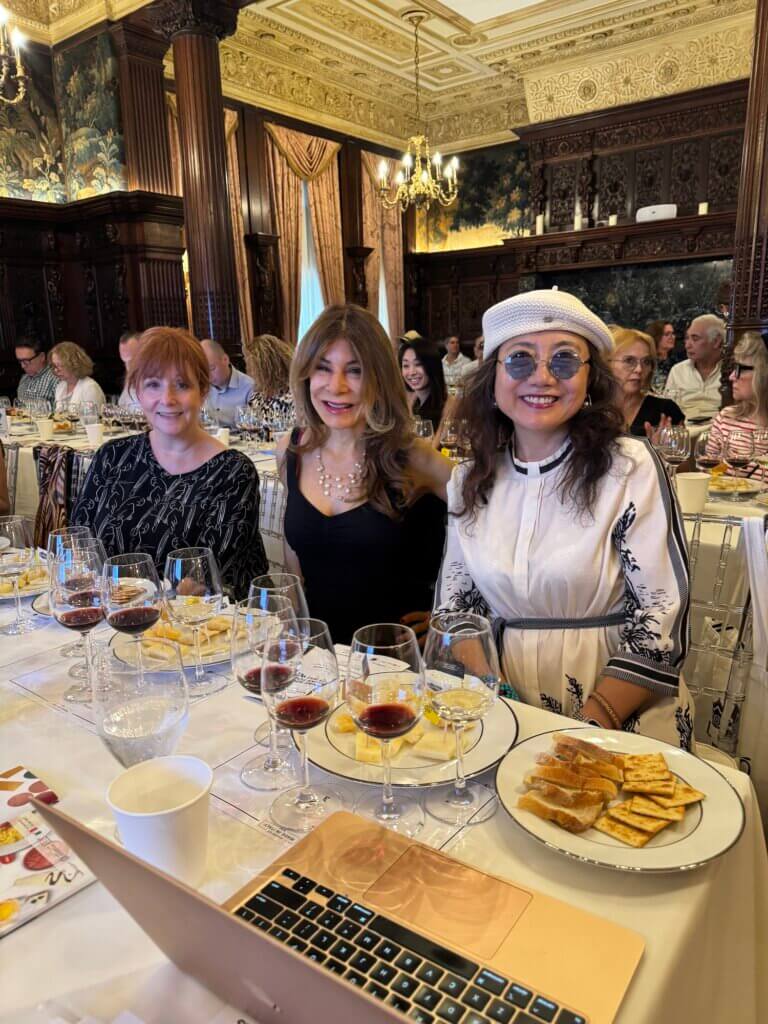
Love Italian wine and cheese? The rich history and flavor of Italy were uncorked today at a fabulous tasting held at the Columbus Citizens Foundation designed to showcase and promote Italian culture.
Led by experts Robert Campana and Paola Pavan, the event explored one of Italy’s most culturally profound unions: wine and cheese.
This well-run Masterclass illuminated the power of place through the lens of the PDO—Protected Designation of Origin. This is a European Union trademark that guarantees a product’s authenticity, from the soil and climate to the cows (or sheep) and cellars. It was less a class and more a passport to centuries-old traditions.
Each pairing during the event was a sensorial journey through some of Italy’s most renowned PDO cheeses and regional wines, highlighting the importance of not just what we eat, but where and how it’s made.
Asiago PDO: A Gentle Beginning
Marked by its signature red and yellow logo, Asiago PDO is a cheese that tastes like the Italian highlands from which it hails.
It begins with cows milked in strictly controlled conditions within specific Alpine zones. These cows graze on local forage, imbuing the milk with a gentle sweetness that matures into a delicately nutty finish. The version we tasted, aged about 20 days, was elastic in texture and dotted with small eyes—a visual cue known as occhiatura.
Paired with a white wine from Piedmont—Roero Arneis DOCG from Podere Moretti—this early course set the tone for pairing intensity with intensity. The “Little Rascal,” as Roero translates, echoed the subtle complexity of Asiago with tender fruit notes and a clean finish.
Piave PDO: Sweetness by the Dolomites
Named after the Piave River in the province of Belluno, Piave PDO is a cheese shaped as much by geography as by craft. Aging for a year in the Dolomites’ cool, dry air gives it a dense, chewy texture and a flavor reminiscent of toasted nuts and caramel.
Its partner, Poggio al Mandorlo I.G.T. Toscana Rosso from Petraio Winery, was a playful, youthful Sangiovese—fermented for only 15 days, then aged in stainless steel. The wine didn’t take itself too seriously, nor did it need to; its tart berry brightness stood up to Piave’s caramelized notes, adding freshness to every bite.
.
Grana Padano PDO: The People’s Cheese
If Asiago whispers and Piave croons, then Grana Padano sings opera.
One of Italy’s most exported cheeses, and one of its oldest—dating back to Cistercian monks in the 12th century—it’s a hard, slow-aged cheese from the Po River Valley, made from raw cow’s milk.
Aged for a minimum of nine months, it develops those tell-tale tyrosine crystals: tiny crunchy flecks from protein breakdown that signal age and flavor depth.
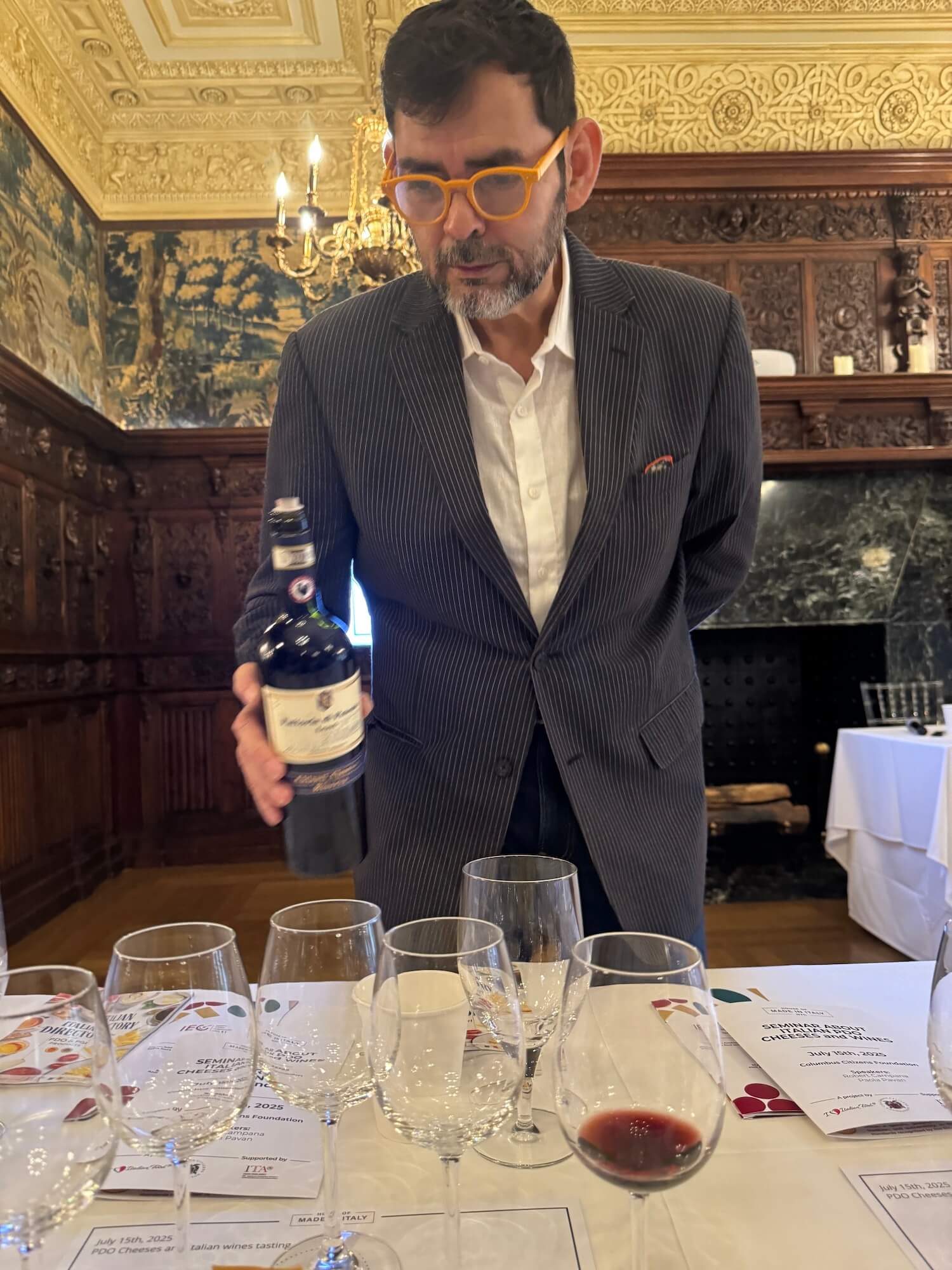
Robert Campana invited guests to “look, smell, break it in half” and appreciate its granular beauty. Paired with Chianti Classico Riserva DOCG from Tuscany’s Fattoria di Petroio—aged over two years in varying barrels—the duo sang with roasted walnut notes and aged fruit undertones.
Pecorino Romano PDO: Rome’s Ancient Gift
Known for its firm texture and piercing salinity, Pecorino Romano is a cheese of strength and storied past. Made mostly in Sardinia from sheep’s milk, this hard cheese was once carried by Roman legions alongside dried figs and olive oil—not unlike an ancient protein bar.
Aged between five and nine months, Pecorino was served in chunks and paired cleverly with mandrolisai superiore DOC red wine, Kent’Annos Bio.
The wine name means “100 years,” a poetic nod to the longevity of Sardinian culture—and its citizens. This bold red made from Cannonau, Bovale Sardo, and Monica grapes hails from high-altitude vineyards with dramatic day-night temperature swings, lending it both power and elegance to match the cheese’s salt-kissed intensity.
Parmigiano Reggiano PDO: The King of Cheese
This beloved cheese—often referred to as the “King of Cheeses”—is made exclusively in a small area between Parma and Reggio Emilia.
Aged for 15 to 22 months, our tasting sample was sharp yet creamy, perfect for shaving onto risotto or eating in robust chunks drizzled with balsamic vinegar.
Paired with Rosso Piceno DOC from Marche’s Donna Eugenia winery—made from Montepulciano and Sangiovese grapes grown in high elevation vineyards—this pairing was as historic and refined as the noble family who oversees the estate. A wine, like the cheese, built to last.
The Significance of the PDO Mark
What thread connects Asiago to Pecorino, Piave to Parmigiano? It’s the PDO designation—a rigorous European Union certification that guarantees every step in production occurs in the specified terroir.
This includes farming practices, animal feed, and traditional techniques. Each PDO cheese is a living piece of Italy’s landscape and culture, not just a product but a story told in taste.
As Paola Pavan put it during the masterclass, “PDO cheeses are like eating a piece of Italy.” And when artfully paired with regional wines, they become a bridge between the past and the present—between the Italian hillsides and the New York table.