Visiting Cantina Tudernum
A visit to Cantina Tudernum represented a rare opportunity to observe one of the few remaining “old school” wineries in existence.
The experience began with a sense of continuity.
Founded in 1956 as a cooperative, the winery still reflects that origin in both spirit and setting.
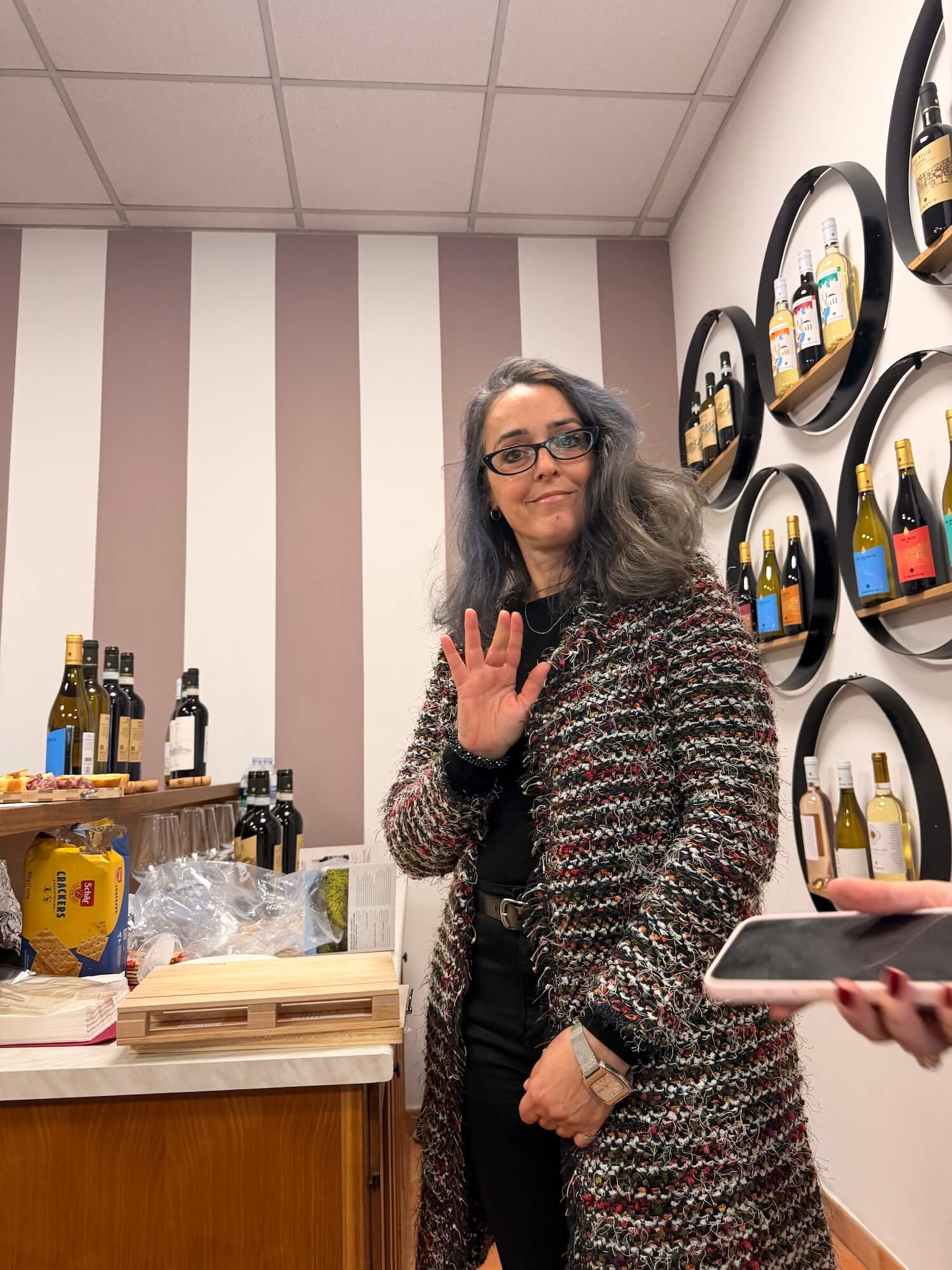
The tasting room feels almost unchanged—simple, functional, and quietly rustic, more reminiscent of a mid-century community space than a polished modern showroom.
And yet, that lack of artifice becomes part of the point.
This is not a place trying to impress through design. It speaks through the wines, the people, and a steady connection to the land around Todi.
Our visit was arranged through Coldiretti, whose role in supporting regional producers adds another layer of context.
Here, the cooperative model remains active, representing the work of many small growers across the surrounding hills.
The wines reflect a broader agricultural community rather than a single estate vision. That collective identity comes through clearly in the glass.
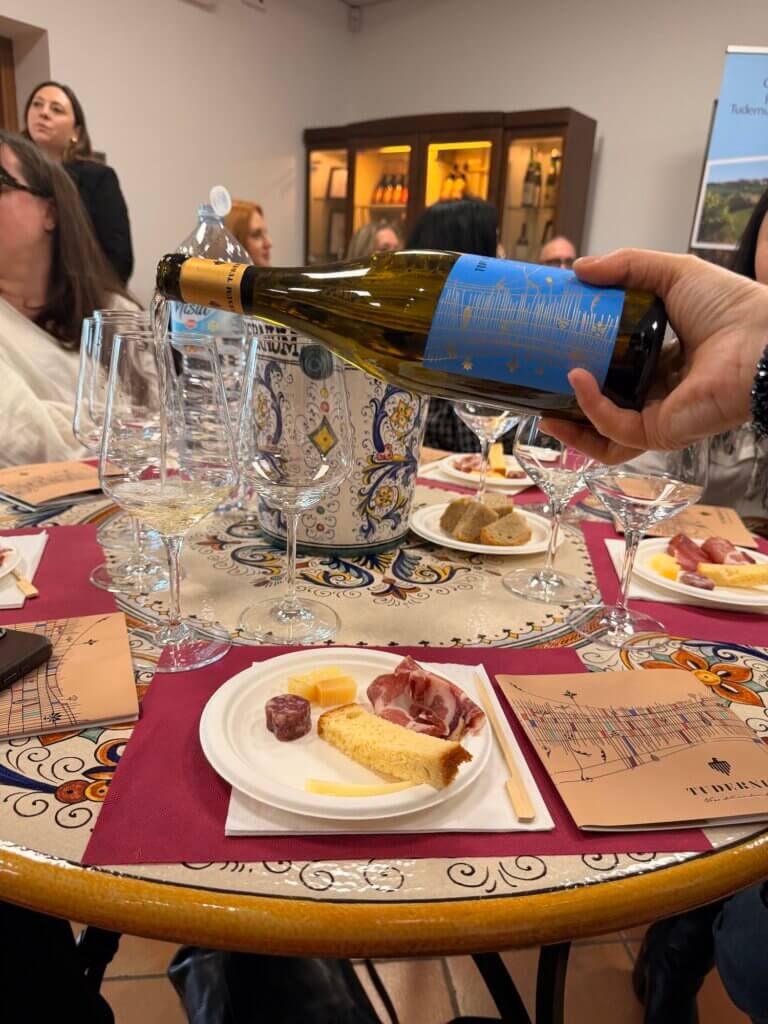
The Grechetto 2025 set the tone for the tasting.
Aromatically, it leans into softness, with honeysuckle and peach rising immediately from the glass. Yet the palate tells a different story.
Completely dry, with high acidity, it moves between a gentle roundness and a more linear structure, never settling too far in either direction.
What stands out most is the finish: distinctly saline, with that characteristic almond note that defines the variety in Umbria.
It’s a wine built on contrast. Though dry, it presents a subtle impression of sweetness from the fruit. The wine is held together by freshness and a mineral core that reflects the soils beneath it.
A second wine offered a more structured expression, yet I preferred the first wine’s lighter, more aromatic profile.
Moving into reds, the Todi Superiore 2023 provided a transitional step: approachable, composed, and rooted in the region’s Sangiovese-driven style.
It led naturally into the Montefalco Rosso 2023, where the profile deepened.
Here, the fruit turned darker but remained restrained—less about immediate expression and more about integration. The tannins were smooth and well-managed, supporting rather than dominating the wine.
This is a food wine—built for the table rather than standalone contemplation, and it succeeds in that role through balance rather than power.
The Sagrantino 2018 brought the tasting to its most structured point.
Known as one of Italy’s most tannic grapes, Sagrantino often presents itself with formidable intensity.
Here, the nose was markedly inky, signaling depth and concentration, but the texture told a more nuanced story.
The tannins, while firm, were notably firm without crossing into dryness or abrasion.
There was density, certainly, but also a sense of control, suggesting that time in bottle has begun to soften the variety’s more aggressive edges without diminishing its character.
Throughout the tasting, the setting reinforced the wines’ identity. The cooperative nature of the winery was reflected in the atmosphere. The welcome was knowledgeable and sincere, without ceremony.
Bread and cheese were thoughtfully chosen, simple but clearly of quality, echoing the same philosophy found in the wines themselves.
Nothing felt curated for effect. Everything felt consistent with a long-standing way of doing things.
This is where the role of Coldiretti becomes especially relevant.
In highlighting producers like Tudernum, the organization underscores the importance of preserving these cooperative structures within Italy’s wine landscape.