Dionigi Winery Montefalco
Within the Montefalco appellation, Dionigi offers an elevated kind of winery experience.
One where attention to detail, hospitality, and design are as carefully considered as the wines themselves.
In a region known for structure and tradition, Dionigi distinguishes itself through how those elements are presented.
The estate traces its origins to 1896, when Gabriele Dionigi moved his family from the Assisi countryside to this area.
Why?
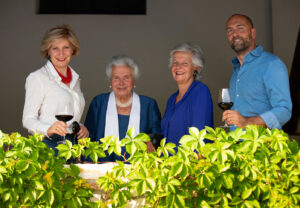
He recognized the region’s potential for viticulture. Today, four generations later, the winery remains family-owned.
The winery sits on approximately 12 hectares of vineyards and a production of around 50,000 bottles annually.
The vineyards surround the cellar, extending across both north- and south-facing slopes.
This creates varied exposures that contribute to the character of the wines. Olive groves remain part of the estate, reinforcing its agricultural continuity.
From my experience, I sensed the objective at Dionigi is to produce wines that reflect Montefalco’s identity, yet also to create an environment where that identity is experienced with precision and care.
This extends beyond the vineyard and cellar into how visitors are received, guided, and immersed in the estate.
The focus is on ensuring that every element, from the wines to the setting, feels intentional.
That intention is evident in both vineyard practices and winemaking.
The estate cultivates native varieties including Sagrantino, Sangiovese, Grechetto, and Trebbiano Spoletino, alongside a limited number of international grapes.
The soils, composed of clay and limestone, support structured wines, while organic farming practices emphasize balance and long-term sustainability.
Work in the vineyard is carried out manually, from pruning through harvest, allowing for careful selection and preservation of fruit quality.
In the cellar, the wines follow a traditional path, with controlled fermentations and aging designed to preserve both structure and clarity.
Sagrantino remains central—firm, expressive, and built with the region’s characteristic depth. The white varieties provide contrast, offering freshness and texture that align with more contemporary styles of consumption.
What distinguishes Dionigi, however, is how these elements are framed.
The visit feels less like a formal tasting and more like being received into a private home.
And though I did not see any of the rooms available to rent on the property during my visit, when I saw their pictures on their website.
They looked phenomenal. Very luxurious and resting on this gorgeous property with the vineyards within reach.
What a fantasy.
I could just imagine spending a long weekend here, walking through the vines and living like I’m in the middle of one of those movies where people where people give up the crazy city life for idyllic luxury among the vines
The Tasting Visits
You will need to check with the website to find the latest visits, but they all include the wine tasting where you will notice an attention to detail in the wines.
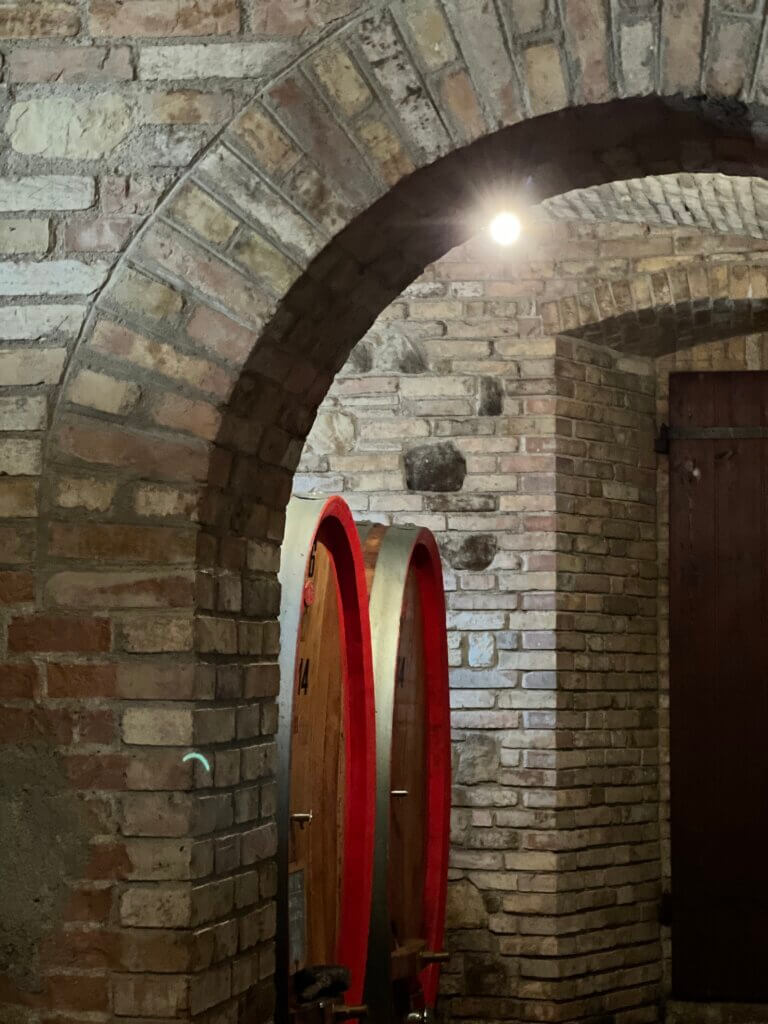
Then if you are able to visit the barrel room on you tour, you will be surprised.
The barrel room, typically a purely functional space, is transformed into something more layered.
The room is filled with art, much of it connected to a story. It seemed a deliberate choice. An acknowledgment of the parallels between wine and art.
Dionigi is a winery that invites engagement beyond the consumption of wine. It encourages observation, conversation, and a different view of life through the lens of wine.
Dionigi’s approach reflects a broader shift within Montefalco. As the region gains visibility, the experience of visiting wineries is becoming as important as the wines themselves.
Consumers are increasingly drawn to producers who offer not only quality, but a clear sense of identity and place.
Dionigi wines remain grounded in the structure and character of the region. Yet the way they are presented—through hospitality, design, and narrative—expands how that identity is understood.
Organic farming, attention to sustainability, and the integration of clean energy all point toward a forward-looking approach and successful future ahead.