
Antonelli San Marco
Montefalco is a place where tradition defines the landscape.
Antonelli San Marco stands as one of the region’s most established and influential estates. Family-owned since the 19th century, it remains a reference point for how Montefalco wines are made. And how they continue to adapt to a changing world.
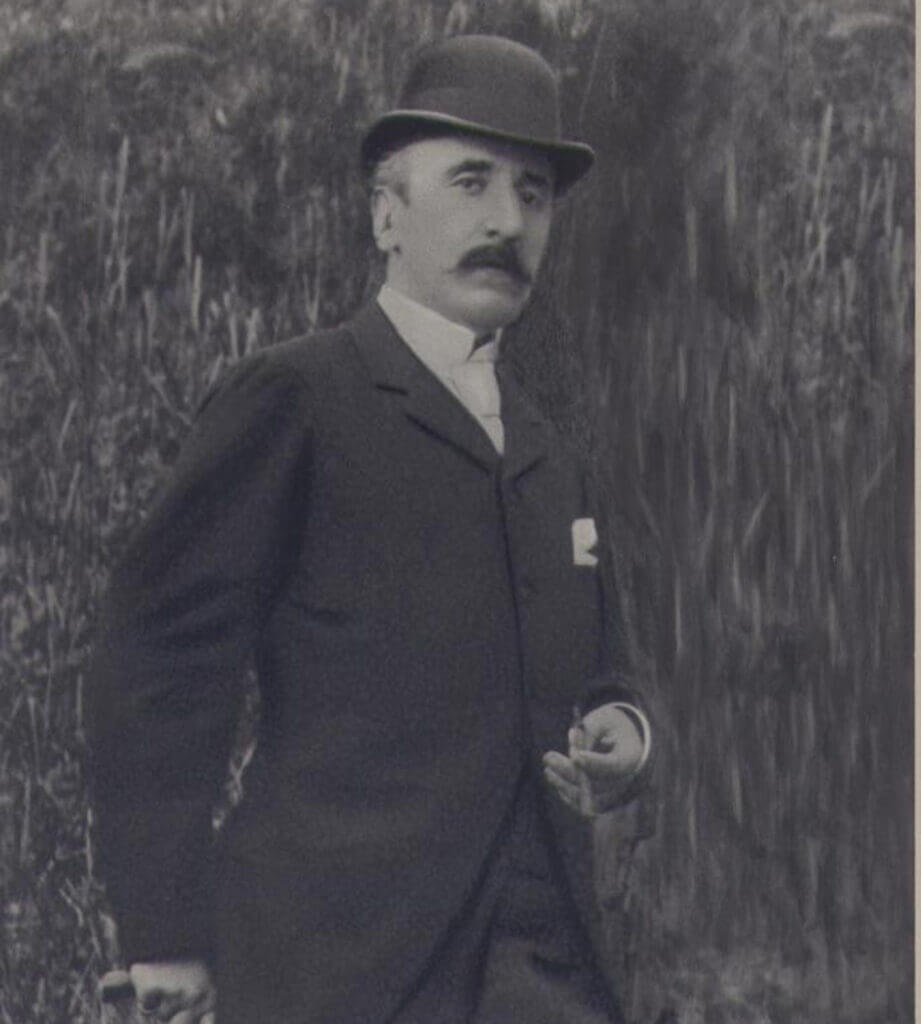
The Antonelli family has owned the estate since 1883, when Francesco Antonelli, a lawyer from nearby Spoleto, acquired and transformed the property.
Today, the estate spans approximately 190 hectares in a single, continuous parcel, with around 60 hectares under vine and 13 dedicated to olive groves.
Farming has been fully organic since 2009, with certification completed in 2012.
The vineyards are planted primarily to native varieties: Sagrantino and Sangiovese for reds, and Grechetto and Trebbiano Spoletino for whites.
The objective at Antonelli San Marco is consistent and clearly defined: to produce wines that express the identity of Montefalco with precision, balance, and longevity.
This is particularly evident in their approach to Sagrantino, a grape known for its structure and intensity.
Rather than amplifying its power, the focus is on control—managing extraction, refining tannins, and allowing the wine to develop gradually over time.
The result is a style that emphasizes elegance and clarity without compromising depth.
This philosophy is supported by both vineyard management and cellar design.
The estate’s clay and limestone soils, combined with varied exposures, provide a strong foundation for structured wines.
Harvesting is entirely manual, ensuring careful selection of fruit at optimal ripeness.
In the cellar, gravity-flow vinification—achieved through an underground, low-impact design. This eliminates the need for pumps, preserving the integrity of the grapes during fermentation and maceration.
Aging takes place primarily in large-format oak, reinforcing a traditional approach that favors balance over overt influence from wood.
The wines reflect this discipline. Sagrantino is structured but composed, with firm tannins supporting layers of dark fruit, earth, and spice.
Montefalco Rosso offers a more immediate expression, driven by Sangiovese, with versatility at the table.
The whites, particularly Trebbiano Spoletino, provide a contrasting profile—textural, savory, and increasingly relevant in a region historically defined by its reds.
This range underscores a broader shift within Montefalco. While Sagrantino remains the defining grape, producers are responding to changing consumer behavior.
This is especially true in key export markets such as the United States. There is growing demand for wines that can be approached earlier, with greater emphasis on drinkability and flexibility.
At the same time, white varieties like Trebbiano Spoletino are gaining recognition, expanding the region’s identity beyond a single style.
Antonelli San Marco operates within this evolution without departing from its foundations.
The wines remain rooted in tradition, but they are aligned with how people are drinking today—less rigid in pairing, more open in context.
The estate’s role in shaping the region extends beyond the vineyard.
Filippo Antonelli, who has led the winery since 1986, has also played a significant part in the governance and promotion of Montefalco wines. He has served multiple terms as president of the Consorzio Tutela Vini Montefalco.
His work reflects a broader commitment to defining and protecting the region’s identity while supporting its continued growth.
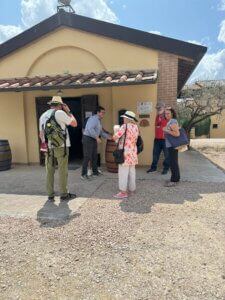
A visit to the estate reinforces this sense of continuity. The experience moves through vineyards, cellar, and table, often culminating in a structured tasting that allows for comparison across vintages and styles.
The presence of the next generation is also increasingly visible. Filippo’s daughters are now active in the business, representing the estate at trade events and contributing to its ongoing development. Their involvement signals continuity, but also evolution, as the estate adapts to new audiences and new expectations.
Beyond wine, Antonelli San Marco maintains a broader agricultural identity.
Olive oil production remains central, alongside other products such as cured meats and legumes, all tied to the estate’s land.
Plans for expanded hospitality—including accommodations and culinary experiences—point toward a more integrated visitor offering in the future.
The strength of Antonelli San Marco lies in its coherence. Every element—vineyard, cellar, and hospitality—supports a clear and consistent objective.
The estate continues to refine what it has always done, with attention to detail and a long-term perspective.
That consistency extends beyond the estate itself. Recently, while dining in Verona, I noticed a bottle of Antonelli on the wine list and ordered it without hesitation.
Everyone at the table loved the wine, and asked about it. I was able to proudly explain my recent visit to the estate and its quality.
Montefalco’s reach is expanding, and that producers like Antonelli are helping define how the region is perceived beyond Umbria.