Nearly 2,000 years ago, the Romans living in what is now Tarragona, Spain, enjoyed their wine, sometimes flavored with aromatic herbs and spices.
They didn’t call it vermouth, of course. But their practice of infusing wine with botanicals, including bitter wormwood, was an early forerunner of the drink we know today.
Fast-forward two millennia, and the Tarragona region remains an important center of aromatized wine production, particularly around the nearby city of Reus, which developed a thriving vermouth industry during the nineteenth century.
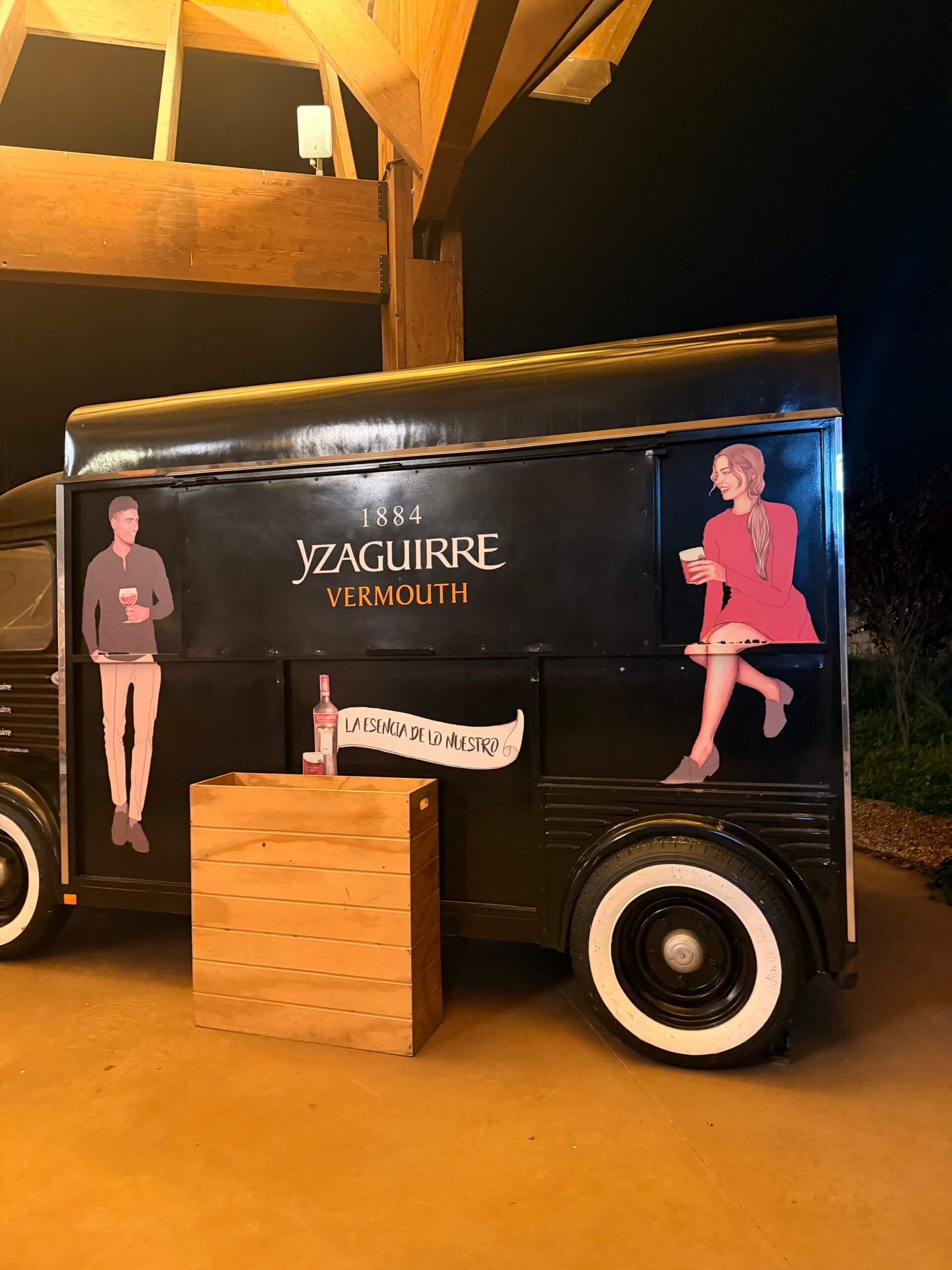
I discovered this fascinating connection during a recent visit to Bodegas Yzaguirre, a historic vermouth producer founded in 1884.
Until that evening, I had never given much thought to vermouth as a beverage in its own right.
I knew it was an ingredient in a classic Martini, and I certainly enjoy a good Negroni. But what exactly was vermouth, and why had it become such an important part of Catalan drinking culture?
I was about to find out.
Welcome to Bodegas Yzaguirre
The first thing that struck me about Bodegas Yzaguirre, located in El Morell between Reus and Tarragona, was the architecture.
The enormous wooden structure, with its soaring ceilings, exposed beams and expansive interiors, was unlike any vermouth production facility I had imagined.
The building combines traditional architectural elements with modern industrial design, allowing for natural ventilation and plenty of light.
Inside the brightly decorated shop, colorful displays showcased Yzaguirre’s extensive range of vermouths.
Beyond the shop, an enormous production area housed row after row of wooden barrels, including some imported from Italy.
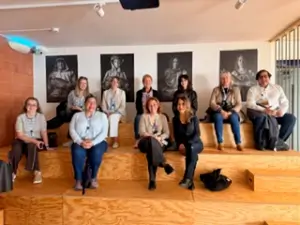
Our group had a choice of two guides who jokingly introduced themselves as “Old Dave” and “Young Dave.”
There couldn’t have been more than twenty years between them, but I chose Young Dave, who turned out to be a wonderful guide.
What Exactly Is Vermouth?
As Young Dave explained, vermouth is an aromatized, fortified wine made by blending wine with alcohol, herbs, spices, roots and other botanicals.
The most important ingredient is wormwood, the bitter herb that gives vermouth its name, derived from the German word Wermut.
The tradition of flavoring wine with herbs goes back thousands of years.
Ancient Greek physicians, including Hippocrates, were associated with herbal wine preparations. The Romans also experimented with aromatic wines, sometimes adding honey and spices for flavor or preservation.
During the Middle Ages, monasteries continued developing herbal wine recipes.
However, the modern commercial vermouth tradition is generally traced to eighteenth-century Turin, Italy, where Antonio Benedetto Carpano began producing his celebrated formula in 1786.
From Italy, vermouth spread to France and eventually Spain, where it became deeply connected to Catalan drinking culture.
The nearby city of Reus became particularly famous for its vermouth industry, developing numerous producers during the nineteenth and twentieth centuries.
Bodegas Yzaguirre dates to 1884 and continues to produce vermouth using traditional methods combined with modern technology.
Its closely guarded recipes incorporate more than 80 herbs and spices, including ingredients such as cinnamon, vanilla, cardamom, gentian and nutmeg.
Each contributes its own aromatic character, creating the balance of sweetness, bitterness and spice that distinguishes vermouth from ordinary wine.
Inside the Barrel Room
Our tour continued through the enormous production area, where wooden barrels illustrated the scale of Yzaguirre’s operation.
Some of the Italian barrels hold approximately 5,000 liters.
Young Dave explained that the company prefers previously used barrels, sometimes in their second, third or even fourth life.
Rather than allowing new oak flavors to dominate, these seasoned barrels provide an environment in which the wine and botanical extracts can develop together.
One particularly interesting detail concerned the way the barrels are maintained.
When vermouth is withdrawn, the company may remove no more than approximately 60% of the contents, leaving the remainder inside.
This helps keep the wooden barrels hydrated and protects them from the damage that can occur when they are allowed to dry out.
Different vermouths spend different lengths of time aging.
Yzaguirre Rojo Reserva, for example, spends twelve months in oak, developing richer aromas and more complex flavors.
The premium Selección 1884 ages for approximately two to three years, resulting in a more concentrated expression with pronounced notes of wood, herbs and spices.
The company also produces younger, fresher styles intended for more casual enjoyment.
Two Centuries of Vermouth History
Another fascinating stop was the small museum, where historical machinery and artifacts illustrated the evolution of vermouth production.
Among the exhibits were two boilers representing successive generations of technology.
The first operated from 1984 until 2010, while its successor remained in service from 2010 until 2024.
Today, larger and more advanced equipment has taken their place.
There were also curious pieces of antique furniture, including a chair and bureau, along with other objects recalling the people and traditions associated with the company’s history.
I found it fascinating to see how much production methods had changed while the essential concept of blending wine with aromatic botanicals had remained remarkably consistent.
The Tasting That Changed My Mind
Finally, we entered a private tasting room.
At each place setting was an inviting assortment of Catalan snacks: what appeared to be homemade potato chips, local cheese, cured ham, anchovy-stuffed olives and several other tempting bites.
Before tasting anything, however, I found myself captivated by the presentation photographs accompanying each vermouth.
The images were beautifully composed, emphasizing the colors and personalities of the different styles.
The white vermouth, for example, appeared alongside a striking yellow-orange citrus composition that made me want to reach into the screen and take a sip.
The photography was almost as seductive as the beverages themselves.
We initially tasted the vermouths straight, without ice.
I approached the tasting cautiously, taking only the tiniest sips.
Although vermouth is wine-based, its higher alcohol content made me conscious of not drinking too much before understanding how it might affect me.
Even in those tiny sips, however, the flavors were delicious.
What surprised me most was discovering that my favorites were the white and, later, the rosé.
In my everyday wine drinking, I normally prefer red wine to white, and certainly red to rosé, unless the rosé has a particularly assertive, structured character.
Yet here I was, thoroughly enjoying these lighter vermouths.
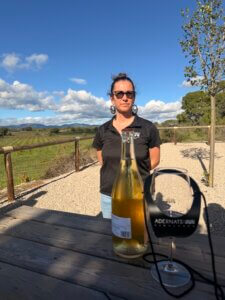
Yzaguirre Clásico Blanco was particularly delightful.
Light, lively and exuberantly refreshing, it had an inviting aromatic quality that made me imagine sipping it on a warm summer afternoon.
Or even during winter!
The rosé was an even bigger surprise.
I had been somewhat wary of tasting it, but found it delicious and attractive, with a lovely interplay of fruit and subtle spice.
Both styles seemed wonderfully approachable, even for someone who had never considered drinking vermouth on its own.
When the formal presentation ended, the ice came out.
Suddenly, the vermouth looked more like a cocktail.
There were none of the elaborate garnishes one might expect in a $25 Manhattan cocktail, but even the simple addition of ice made the drinks more visually appealing.
I also appreciated how the ice chilled and gradually diluted the vermouth, softening its strength and making it more comfortable to sip slowly.
It was a completely different experience from tasting the wine straight.
A New Appreciation for Vermouth
I arrived at Yzaguirre thinking of vermouth primarily as an ingredient in cocktails.
I left understanding that it has a fascinating history, considerable craftsmanship and a personality worthy of appreciation on its own.