Campagna Market Dinner & 'tasting
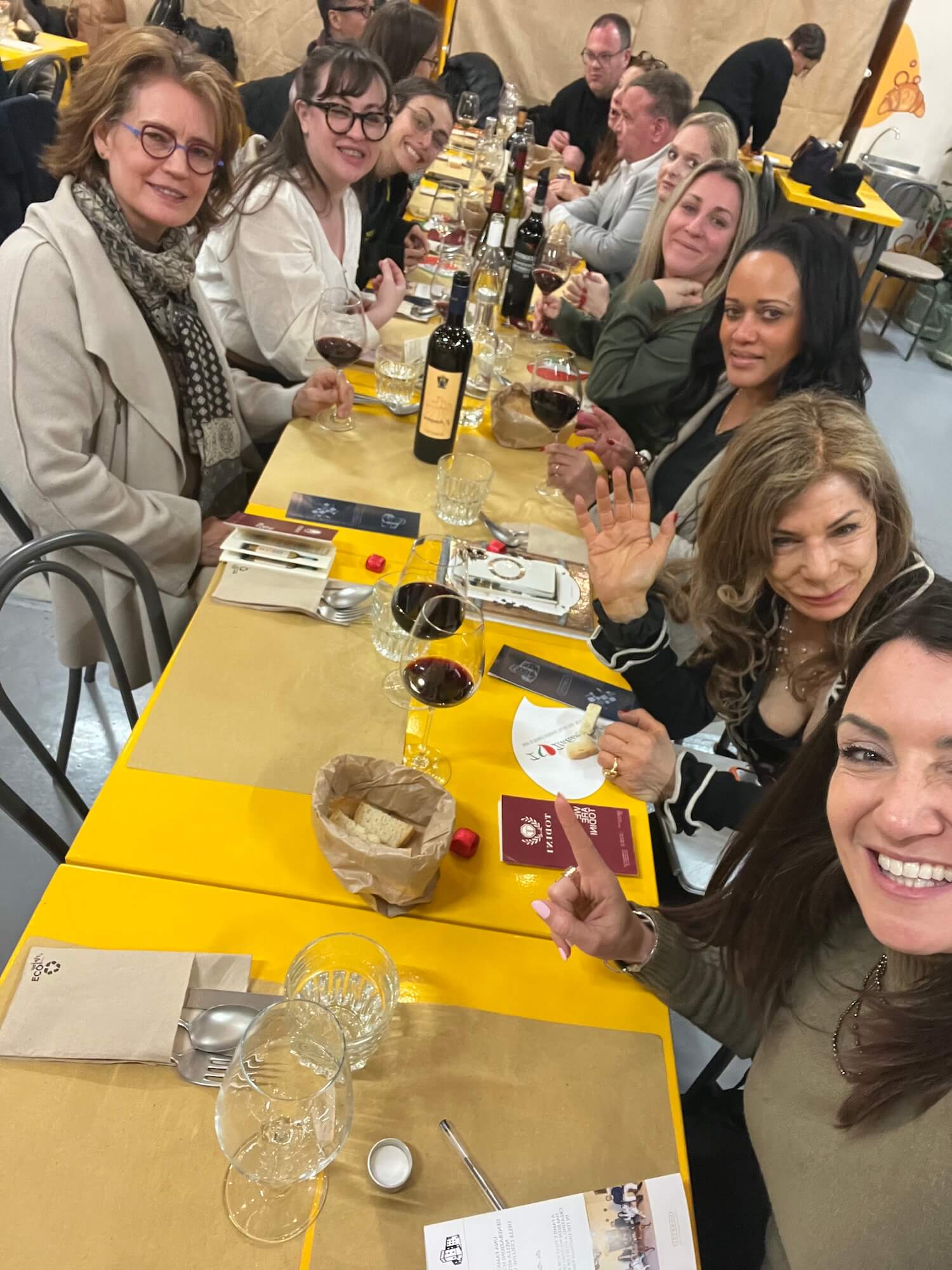
At the end of a long day of visiting producers, we stopped for a presentation and light dinner in the city of Terni.
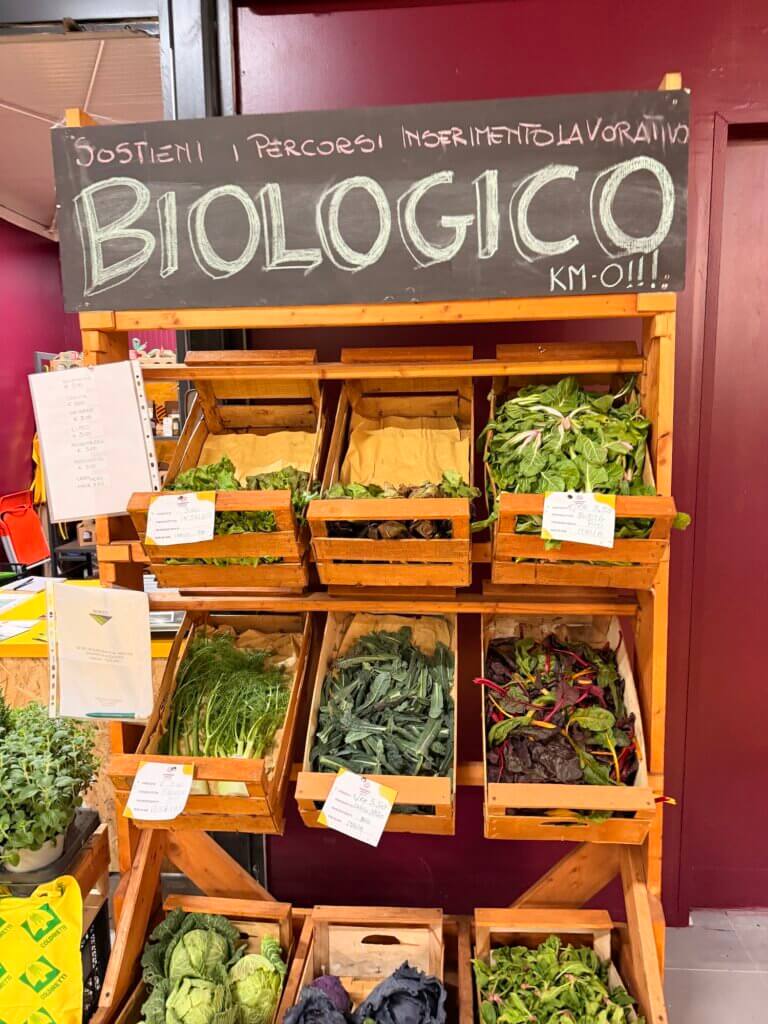
This is home to a project called Campagna Amica, created by Coldiretti to connect farmers directly with consumers through local, seasonal products.
Authentic food. Fresh ingredients. A clear sense of where things come from.
Stepping inside the clean, modern, Campagna Amica warehouse-style space painted in bright colors, I wasn’t quite sure what to expect.
The answer became clear a moment later when a group of women approached and welcomed us. They were women from the region and had made it part of their life’s mission to support Campagna Amica.
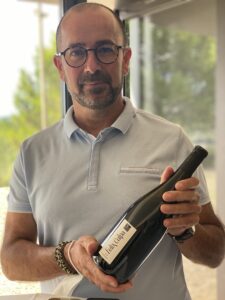
Each woman poured a wine from her estate and spoke about her work. There was no script and no formality.
As they spoke, I found myself picturing their daily lives, so different from the pace most of us know in cities like New York, Chicago, or Miami.
Ms. Goretti, from a long-established estate near Perugia, took the podium with quiet confidence and spoke of her winery’s historic roots.
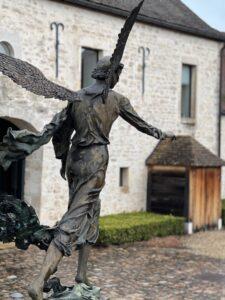
She told a fascinating story. Centuries ago, an ancient statue was unearthed in the vineyard and taken to the museum. Today, a copy stands in the family winery, attesting to its place in history.
Good Food, Good Life
That’s the rule of Campagna Amica.
The idea of living a “slow life” with good food and wine resurfaced again and again during the presentation, with each woman telling her own unique story.
These women work long days in their vineyards and in their homes. They choose to spend time at the market because they believe in what it represents. From their earnest talk, they saw it as more of a shared mission than an obligation.
Or a trend.
The day before, at a Coldiretti talk, speakers emphasized the importance of a natural diet built around unprocessed food and wine, in contrast to the speed and convenience of modern eating.
Here, that idea was no longer theoretical. It was being lived.
When asked about her favorite vineyard, one of the women said it would be like choosing a favorite son.
The vineyards, she explained, are all part of the same family.
The whites moved quickly during the tasting, but they were confident and clear in style. Grechetto stood at the center. When she drinks Grechetto, one producer said, she drinks Umbria.
The statement was simple, but it stayed with me.
A rosé made from Sangiovese with a portion of Merlot carried more structure than expected, with firm acidity and a slight grip on the finish. The reds were steady and composed, including a Sangiovese with a round texture and a Montefalco Sagrantino that felt grounded rather than heavy.
By the end of the evening, what stayed with me was not a specific wine, but the feeling of the room.
The women knew one another. They spoke about the market as part of their daily lives. Even in a quiet moment, it felt active and connected.
The dinner that followed, produced with organic vegetables, was delicious.