Terre di San Felice
On a bright Umbrian afternoon, Terre di San Felice looks almost too perfect to be real.
The small winery sits among rolling hills of Montefalco, with vines falling away toward the horizon and butterflies drifting through the air like something from a technicolor Walt Disney film
It is a place that feels both secluded and deeply connected to its surroundings. After hearing the story, it seemed a place where family history and local tradition intersect in unexpectedly modern ways.
Okay. The story begins in 1909, when the ancestors of present-day owner Carlo Mancini bought these vineyards in Montefalco, what was then a rural outpost.
The land had once been tied to the Church, and like many properties in the area at the time, it passed into private hands.
For decades, Terre di San Felice was a remote family residence for relaxation. A place to visit on weekends but not run as a full‑time business, a thread in the background of family life.
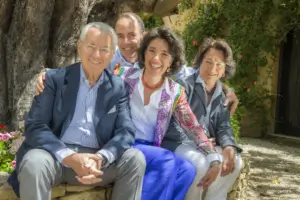
Today, Carlo Mancini and his wife, Douchanka, still live in Rome but are increasingly present in Montefalco’s wine world.
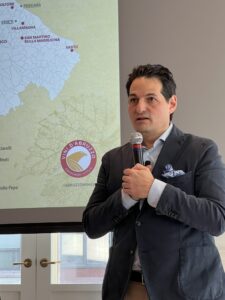
The couple devote time and energy to the winery and to the local association of producers. Outgoing and gregarious, Carlo moves easily among fellow vignerons at regional events, greeting colleagues whose families have been rooted in Montefalco for a century or more.
Douchanka, French by birth, is at ease in several languages. Warm, elegant and practical, she bridges cultures in the same way the winery now bridges city and countryside.
The couple met in their twenties when she was working in Rome. Their lives for many years were defined more by medicine and urban careers than by pruning schedules and harvest dates.
Yet the old family property in Montefalco remained a constant point on their shared map. The estate wines themselves are the product of a deliberately small, artisanal approach. All grapes are harvested by hand, with careful selection of bunches in the vineyard to favor quality over volume.
In the cellar, the team combines modern and traditional methods: some wines mature in stainless‑steel tanks, others in oak barrels, all in spaces where temperature is kept constant to promote steady, graceful maturation and aging.
Even the labels carry a personal touch: each wine is associated with a different animal, something common in the local landscape, chosen to express the wine’s character and to root the bottle firmly in this particular patch of Umbria.
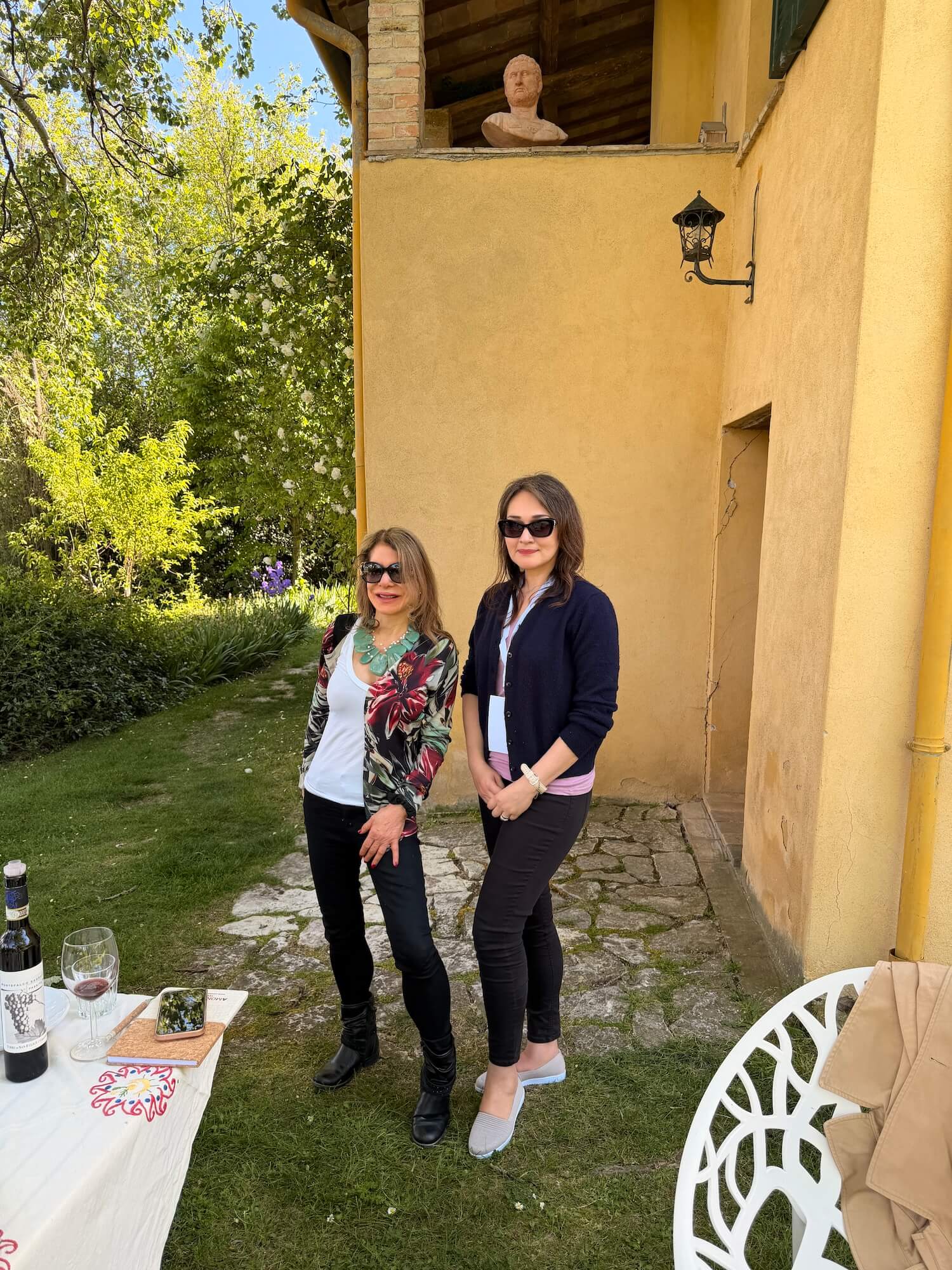
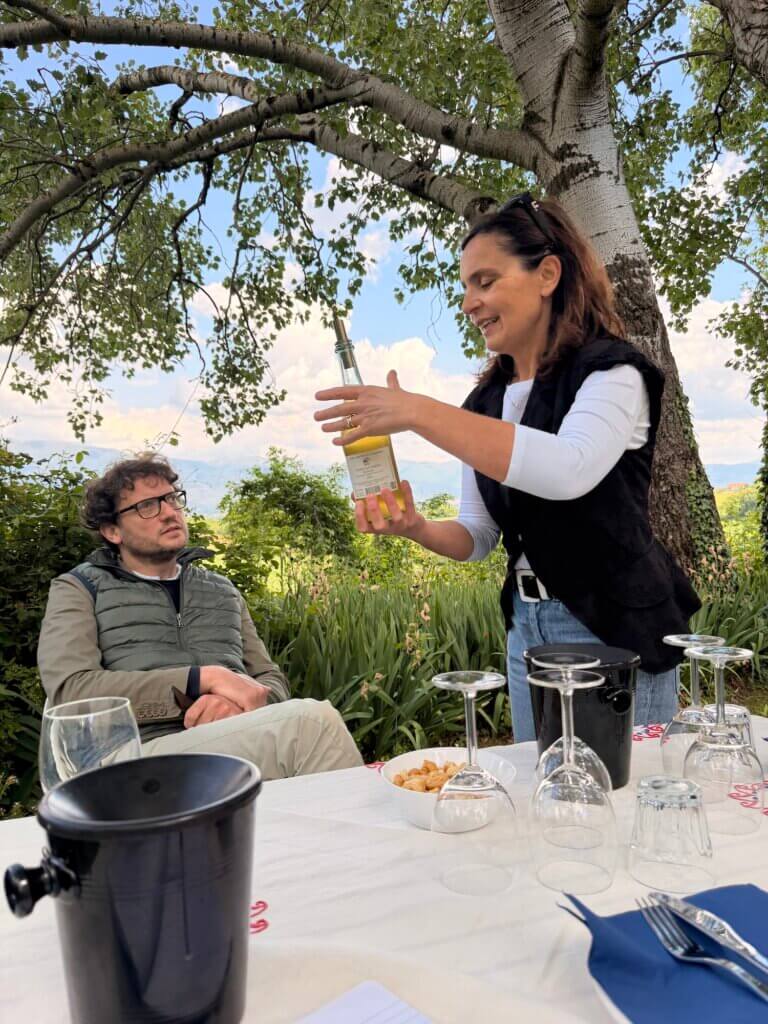
My own visit unfolded as a laid‑back, quietly generous tasting. Plates of local cheese appeared alongside small, traditional, pretzel‑like snacks, simple bites that spoke of Umbrian kitchens rather than restaurant tasting menus.
Two friendly small dogs wandered through the scene, clearly delighted by the extra company. Family friend Luca helped bridge the language gap. The effect was more like being invited into someone’s home than entering a formal tasting room; conversation wandered from wine to life and back again.
Among the wines poured was a Trebbiano Spoletino DOC, both in its still form and as a sparkling wine. Then we tasted through the range until ending with Montefalco Sagrantino passito.
This is the sweet wine that once defined Sagrantino long before dry versions became the norm.
Historically, Sagrantino grapes were used exclusively for passito, and until the early 1970s there was hardly a farmhouse in what is now the Sagrantino DOCG zone that did not produce its own Sagrantino passito for Easter and for major family occasions such as weddings.
Terre di San Felice makes its passito according to old local customs that aim to preserve an incomparable fragrance and a sweetness balanced by structure and freshness.
It was served with the classic local biscuit meant to be dunked into the wine. Doing this made the biscuit feel less like a dessert and more like a ritual.
What a fun visit to a great family winery.