Coldiretti Italian Wine Tasting
Coldiretti Wine Tasting in Rome
Can anything be more exciting than visiting a wine tasting in a famous Roman palace?
Last week I was a guest at an Italian wine tasting hosted by Coldiretti at Palazzo Rospigliosi. In addition to the tasting, Coldiretti organized a conference focused on the future of Italian wine.
The event started with a closed-door tasting in the morning, where we American members of the trade had face time with the producers.
A National Snapshot in One Room
The tasting pulled together a wide range of producers, from small family estates to larger, internationally recognized names.
In many cases, the wineries are still run by the same families that founded them. I met many members of the 4th generation now running the wineries. Some estates date back to the 17th century.
The range of wines reflected how diverse the Italian wine category has become. On one palace floor, you could move from a high-alcohol Amarone to a non-alcoholic sparkling wine. From 100% native varieties to blends.
That contrast felt intentional. Tradition is still the backbone, but producers are clearly thinking about new categories and new consumers.
The most interesting moments were the informal ones.
Conversations with producers often came back to the same themes: family continuity, export markets, and how to stay relevant without losing identity.
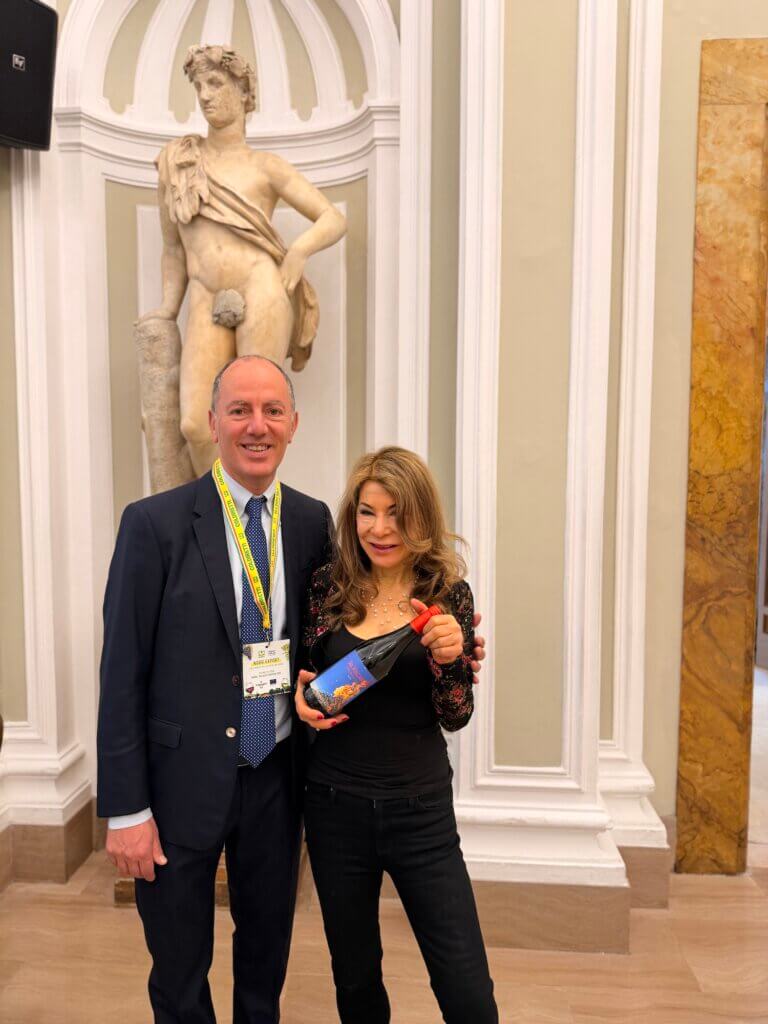
Antonio Rallo of Donnafugata in Sicily
I spent some time speaking with Antonio Rallo of Donnafugata, whose perspective stood apart.
He spoke about Donnafugata’s ongoing collaboration with Dolce & Gabbana—a relationship that goes back to his parents’ generation. Now it is moving into a more active phase. The project was delayed during COVID and is expected to move forward this summer.
What was more interesting than the partnership itself was how he described distribution.
In markets like Asia, particularly Tokyo, the sparkling wines are being positioned in high-end Dolce & Gabbana boutiques and restaurants, not just restaurants or traditional wine shops.
The boutique approach isn’t possible in the U.S. due to current regulations. Yet Donnafugata’s strategy reflects a fresh, “futuristic” way of thinking about where wine belongs.
In that context, wine becomes part of a broader luxury environment—closer to fashion and design than to classic on-premise consumption.
For Donnafugata, it’s a way to expand visibility without changing the core product.
It’s also a signal. Italian wine is starting to explore channels that go beyond its traditional structure.
“Free the Wine” — The Real Conversation
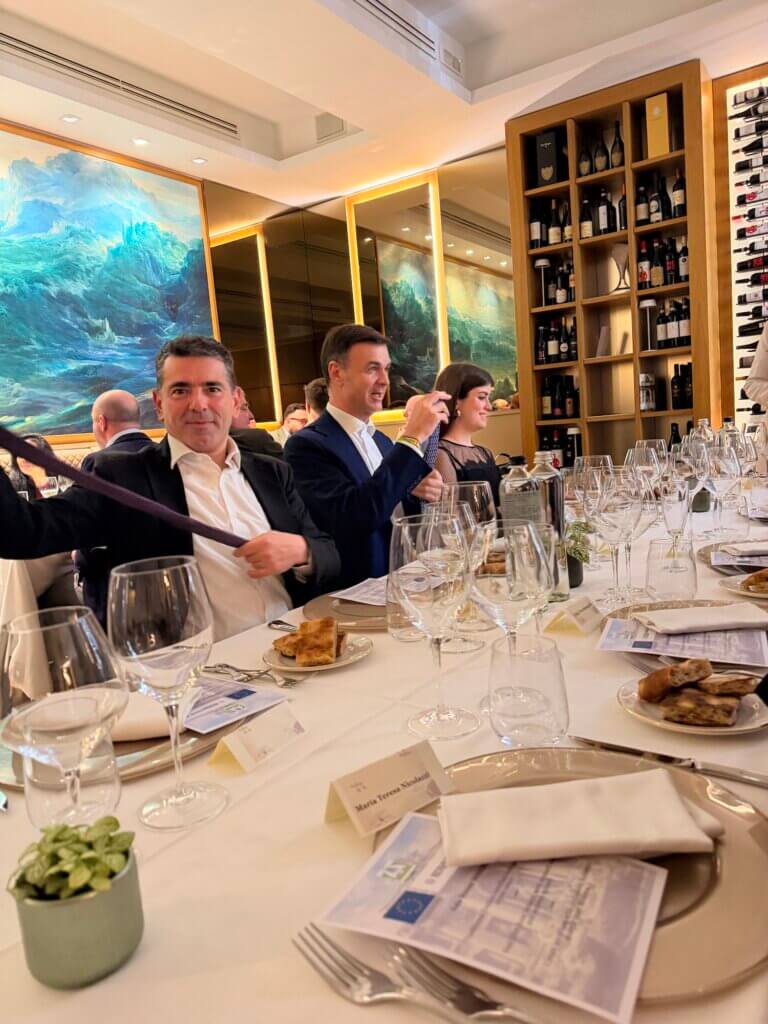
Then, after a light lunch, there was a two-hour seminar on the U.S. market and broader challenges facing Italian wine.
Italian producers also joined the seminar, which was of great value to all.
This seminar focused on the U.S.–Italian relationship in the wine market, with a mix of Italian and American speakers addressing policy, perception, and long-term demand.
Health messaging was one of the main points. The discussion pushed back against blanket warnings, emphasizing moderation and the cultural role of wine rather than excess.
The concern wasn’t regulation itself, but how simply the message is often communicated.
The question of motivating younger consumers to drink wine came up repeatedly. The issue isn’t lack of interest, but access.
Some speakers said that restaurant pricing, in particular, is a barrier. Bottles are often priced at levels that discourage experimentation.
Some speakers proposed that more flexible pricing and by-the-glass options could address this.
Tariffs and trade were also discussed, but without resolution, as so much remains uncertain.
The Role of Coldiretti
As the organizer, Coldiretti positioned the event as both a showcase and a working discussion. The mix of producers, trade representatives, and policy voices made that clear.
More than anything, the event highlighted Coldiretti’s role in connecting these groups—supporting producers while also engaging directly with the issues shaping export markets.
Where It’s Heading
Across both the tasting and the conference, the direction felt consistent.
Producers are holding onto identity—family, land, regional character—but they are also adjusting how and where their wines are presented.
Whether that’s through new distribution models, pricing strategies, or messaging, the goal is the same: stay relevant without losing what makes Italian wine distinct.
Thanks to Coldiretti for providing this window into the link between Italian producers and the U.S. market.