Diversity of the Roussillon
Are you curious about what makes the Roussillon such an exciting wine region?
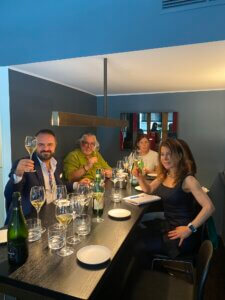
Here it is: In the space of one day, I saw three distinct models of how a winery can be built, sustained, and grown.
Each different in origin, philosophy, and execution, yet all clearly working within the same region.
Domaine Treloar
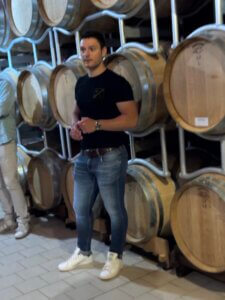
One might call this the “outside model.” At Domaine Treloar, Roy Hesford, originally from New Zealand, presented a version of Roussillon that is constructed instead of being inherited..
He took over what he described as a “hippie-era winery” and reshaped it into something more structured and financially viable, while preserving its informal spirit.
His background in finance and technology informs everything he does. He spoke openly about the realities of building a business here—navigating export markets, dealing with economic pressure, and establishing a presence in a region where tradition often defines identity.
There was no attempt to simplify the process.
Instead, he outlined the challenges directly, along with the incremental steps required to move forward.
What distinguishes his approach is not just transparency, but adaptability.
Initiatives such as inviting food trucks to the estate for exciting evening tasting events, themed with music, create a casual, consumer-friendly environment.
One that encourages people to engage with the wines in a relaxed setting.
It is a small but telling shift away from more formal tasting models. His wines reflect that same clarity—well-made, focused, and aligned with a long-term vision that is still evolving.
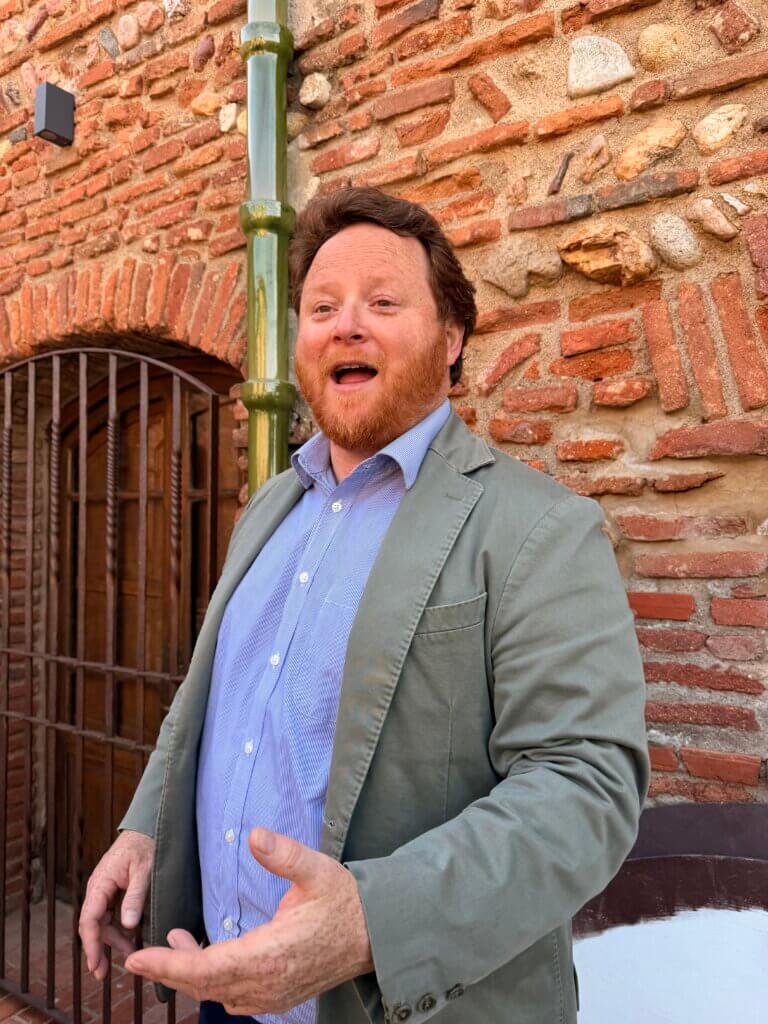
If Treloar represents construction, the second visit represents continuity.
Château de Corneilla
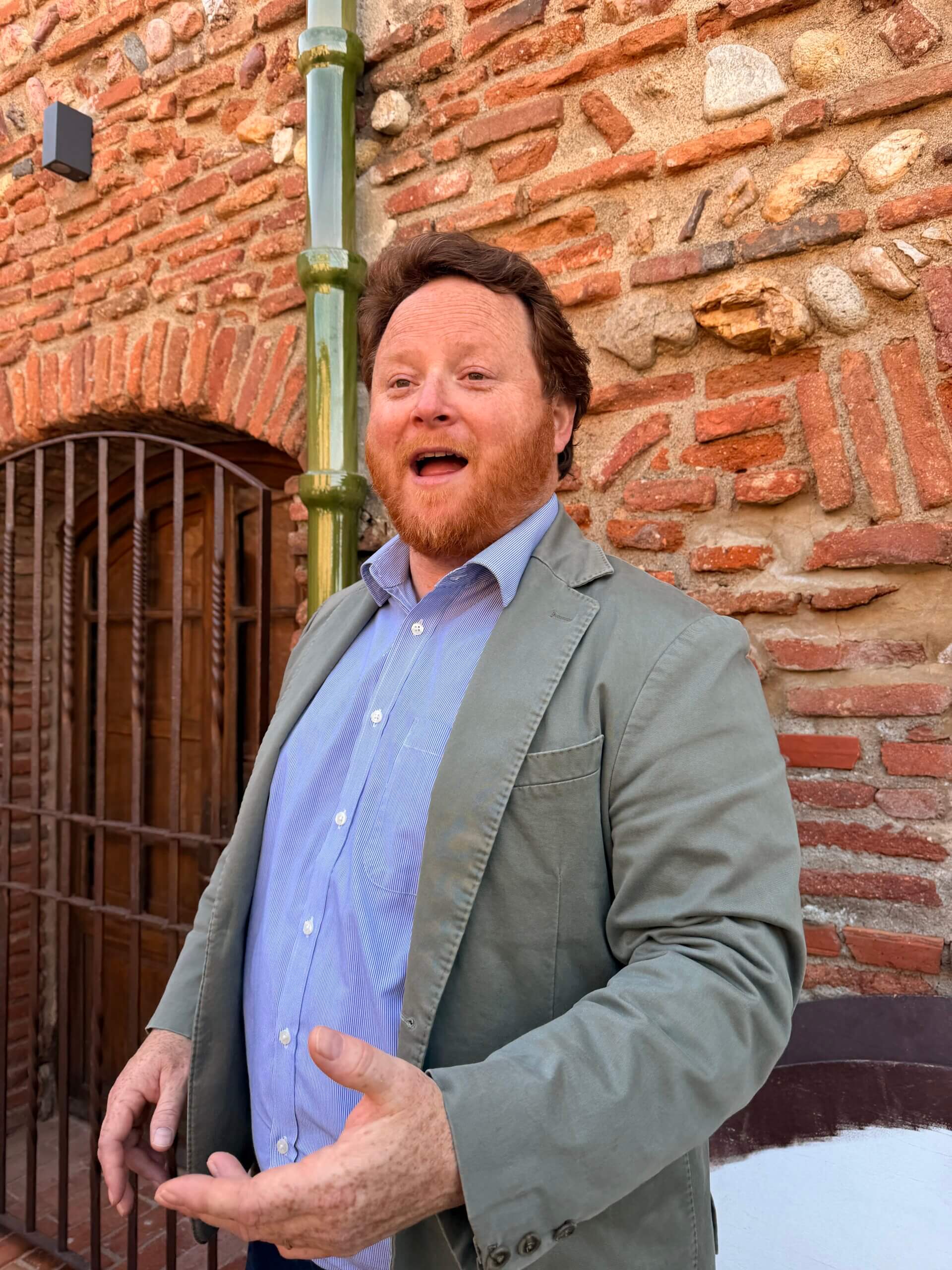
At Château de Corneilla (Jonquères d’Oriola), William Jonquères d’Oriola operates within a family history that dates back to 1410.
The difference is immediate. This is not a winery being built, but one being maintained and advanced across generations.
Despite his aristocratic background, his manner is direct and grounded. He describes his approach in terms of discipline and leadership, shaped in part by his experience as a rugby captain.
The principle is simple: he does not ask anyone to do what he would not do himself.
That philosophy is evident during harvest, when he stations himself at the grape reception area and works alongside his team through the night.
It is not presented as symbolic, but as a standard of management. In a short visit, he conveyed both the historical depth of the estate and the practical realities of running it today.
The setting reinforces this continuity.
The estate includes a castle where he lives with his family, anchoring the operation in a physical and historical context. Yet the visit did not feel static.
The focus remained on maintaining quality, managing people effectively, and ensuring that the estate continues to function at a high level.
If the first model is built and the second is inherited, the third is scaled.
Lafage
At Domaine Lafage, Jean-Marc Lafage and his son Nicolas present a version of Roussillon that is outward-facing and highly developed in terms of both production and presentation.
Jean-Marc’s background includes extensive travel across Europe before returning to Roussillon to expand on the work of previous generations.
His approach combines regional identity with a broader commercial perspective.
The goal is to position it effectively in a competitive, international market.
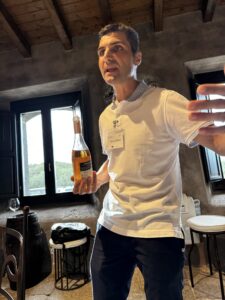
Nicolas, who led the tasting, reflects the next stage. Having worked in multiple wine regions, he brings a global understanding while remaining closely tied to the family estate. His presentation was direct and accessible, explaining both the wines and the thinking behind them without unnecessary formality.
The estate itself is designed to receive visitors. A well-organized shop, carefully packaged wines, and a steady flow of customers create an environment that is both professional and approachable.
People make the effort to come, taste, and purchase.
The wines follow the same pattern. The whites emphasize acidity and precision, while the reds show careful handling, particularly where extended oak aging has been used to build structure and depth. The overall impression is one of consistency and control.
Seen together, these three visits form a clear picture of a region accommodating a tapestry of producers as well as grape varieties and maturation techniques. who expand and refine with a global perspective.
What connects them is not style, background, or scale, but commitment. Each producer operates with a clear sense of direction and an understanding of the challenges involved. There is no single formula for success here, but there is a common requirement: the ability to adapt that vision to the realities of the region.
That is what makes Roussillon compelling.