Beyond the Food Tour
Can a bottle of wine become a lifelong reminder of a wonderful vacation?
Years ago, while studying for my Wine & Spirit Education Trust diploma, I heard a story about tourists who visited Tuscany and returned home convinced that Chianti was their favorite wine.
They remembered the sunshine, the beautiful countryside, and the pleasure of drinking wine during their Italian holiday.
Back home, every time they opened a bottle of Chianti, those delightful memories returned. And when they served it to friends, they had another opportunity to talk about their wonderful vacation in Tuscany.
The wine had become more than a beverage. It was a souvenir of an unforgettable experience.
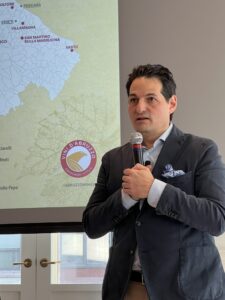
That was one of the intriguing business opportunities discussed by Peter Syme during the International Food Tourism Conference (IFOODTC), held in Cambrils, Spain, in November 2026.
Syme, an experienced travel entrepreneur and founder of Tourpreneur, challenged conventional thinking about culinary tourism in his presentation, Understanding the Food Tourism Market: Trends, Opportunities & Challenges.
His message was relevant not only to tour operators but also to wineries, restaurants, and hospitality businesses hoping to attract today’s travelers.
Beyond the Plate
Syme explained that travelers often remember relatively simple meals more vividly than expensive restaurant dinners.
What makes those meals special?
The people they meet, the setting, and the stories surrounding the experience.
He also discussed travelers planning entire trips around a particular food or ingredient.
According to research cited in his presentation, 57% of surveyed travelers expressed interest in traveling specifically for an ingredient.
Consider a traditional Catalan calçotada, where visitors gather to eat charred spring onions dipped in sauce.
During our IFOODTC press trip, I attended one of these leisurely celebrations. Wearing bibs, learning the traditional eating ritual, and sharing an afternoon around the table made the occasion memorable.
Syme’s point was that businesses should think beyond the food itself and consider the entire experience they’re selling.
Meet the Producer
Another trend Syme identified was the growing importance of personal encounters with food producers.
A conventional tasting might introduce visitors to several excellent wines or local products.
But meeting the person who produces them can transform the occasion.
He encouraged tourism businesses to build experiences around the producer, the production process, and the place, rather than concentrating exclusively on the final tasting.
During our press trip, I met Cristian Francès, a winemaker from Priorat whose parents and grandparents had supplied grapes to a cooperative for generations.
Cristian became the first in his family to produce wine independently.
His Garnacha and Carignan wines were excellent, but his family story made the encounter particularly interesting.
For wineries, olive oil producers, and other agricultural businesses, such personal connections offer something conventional tastings cannot.
They give visitors a story to remember long after they’ve returned home.
And when travelers take home a bottle of wine or locally produced olive oil, that story can continue every time they open it or share it with friends.
As Syme pointed out, a local food product can become a lasting form of destination marketing.
The Booking Problem
Perhaps Syme’s most practical observation concerned the difficulty of purchasing culinary experiences.
He described researching local travel operators and finding websites that offered appealing activities but made booking unnecessarily complicated.
Some lacked clear prices. Others didn’t display available dates or provide a straightforward way to reserve.
In one example, he examined 55 websites while trying to arrange travel experiences. The process proved frustrating despite his extensive experience in the industry.
His argument was straightforward.
Creating a wonderful experience is only half the challenge. Customers must also be able to discover it and purchase it.
This becomes especially important as travelers increasingly research activities before leaving home.
Syme also discussed the growing influence of artificial intelligence in travel planning.
Travelers are using AI tools to discover destinations, compare experiences, and develop itineraries.
For smaller businesses, maintaining accurate online information about their offerings, prices, and availability is becoming increasingly important.
An exceptional culinary experience that potential customers cannot find or book represents a missed opportunity.
Protecting the Experience
Syme also sounded a warning about the success of culinary tourism.
As destinations attract larger numbers of visitors, there is a temptation to standardize experiences, increase group sizes, and replace small local producers with more commercially convenient alternatives.
Eventually, destinations risk losing the distinctive qualities that attracted travelers in the first place.
His advice was to develop experiences that remain commercially viable while preserving the involvement of local people and producers.
For food and wine businesses, the lesson extends beyond tourism.
A memorable product, an interesting story, and an enthusiastic customer are valuable assets. But businesses must also understand how customers discover, evaluate, and purchase what they’re offering.
Peter Syme’s presentation made one thing particularly clear: the future of culinary tourism isn’t just about what’s on the plate.
It’s about giving travelers a compelling reason to come—and making it easy for them to say yes.