
Alzatura Winery in Montefalco
Montefalco may be famous for big, age‑worthy reds, but the first impression at Tenuta Alzatura is intimacy rather than grandeur. You arrive not at a showpiece château, but at a home‑stylewinery tucked into an ordinary neighborhood, where the winemaking equipment sits almost casually outside and the tasting room is lined with books instead of designer furniture. It feels like stepping into someone’s living room who happens to make very serious wine.
Tenuta Alzatura is part of the Cecchi family’s broader wine story, an Umbrian outpost of a dynasty best known for its estates in Chianti Classico. In the mid‑1990s, Andrea Cecchi and his father Luigi fell for Montefalco and its flagship grape, Sagrantino, recognizing in this corner of Umbria the same ingredients that had underpinned quality in Tuscany: a native grape firmly rooted in local culture, a “favoured” terroir and a community whose identity has been shaped by viticulture for generations. Between roughly 1995 and 1997 they assembled three prized vineyard sites and, by the end of the decade, the project that became Tenuta Alzatura was fully underway.
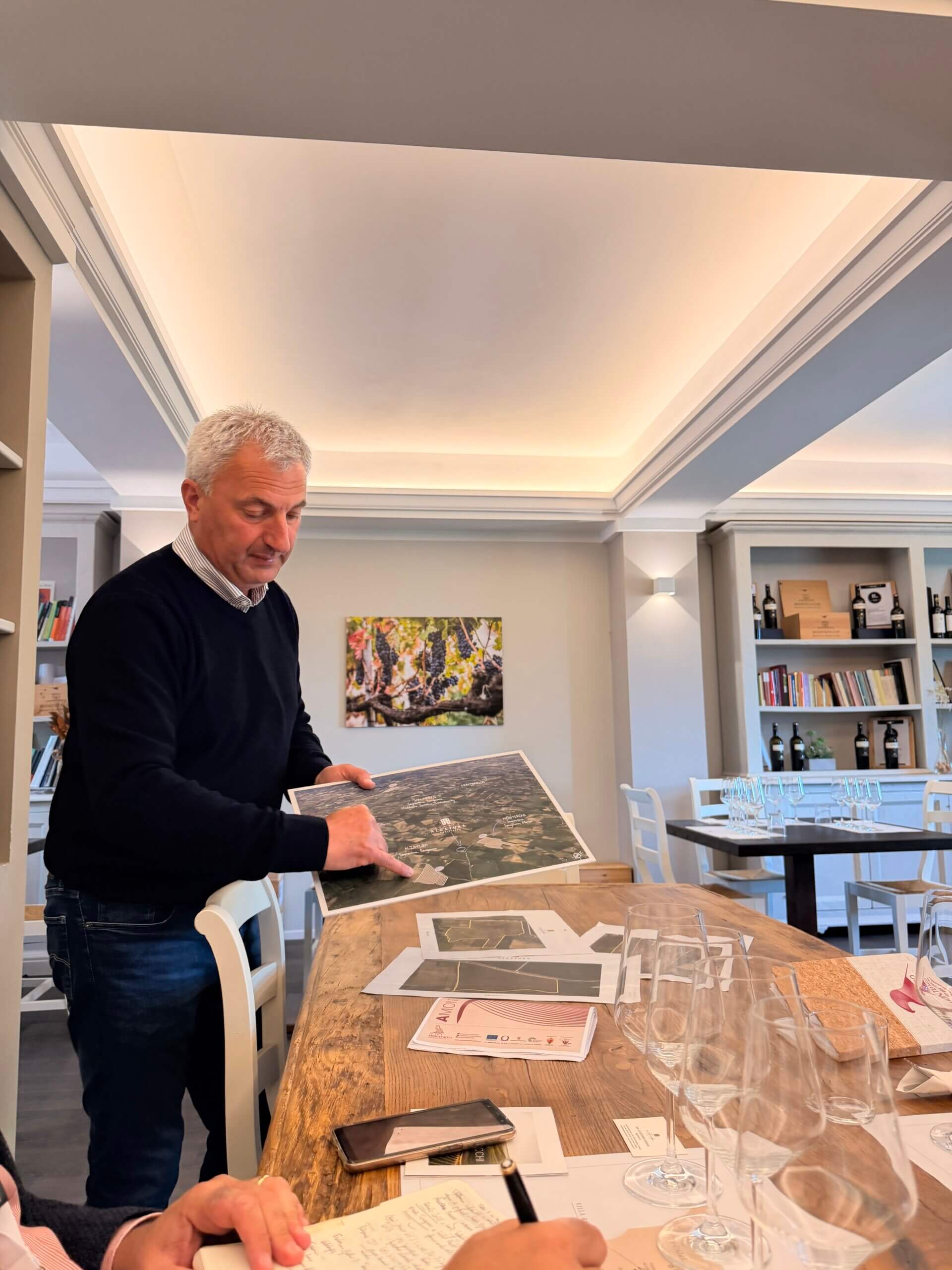
Unlike the Cecchi estates in Tuscany, which are essentially single blocks of vines, Tenuta Alzatura is deliberately fragmented. The estate is made up of three separate vineyards—Monterone, San Marco and Alzatura—spread across about 29–30 hectares, each with its own soils and exposures. Alessandro Mariani, the estate’s long‑standing agronomist and director, explains how this mosaic of parcels allows them to fine‑tune expression, vinifying each plot separately and only blending after fermentation to build complexity and balance.
The San Marco zone, Alessandro notes, is planted to both red and white varieties, with Sangiovese and the local white Grechetto growing side by side in the same vineyard. In most wine regions of the world such mixed plantings would be an odd curiosity; here, it feels like a snapshot of older, more pragmatic farming traditions, when families planted what they needed rather than what marketing plans demanded. It is another reminder that in Montefalco, vines are woven into everyday life, not confined to postcard‑perfect blocks.
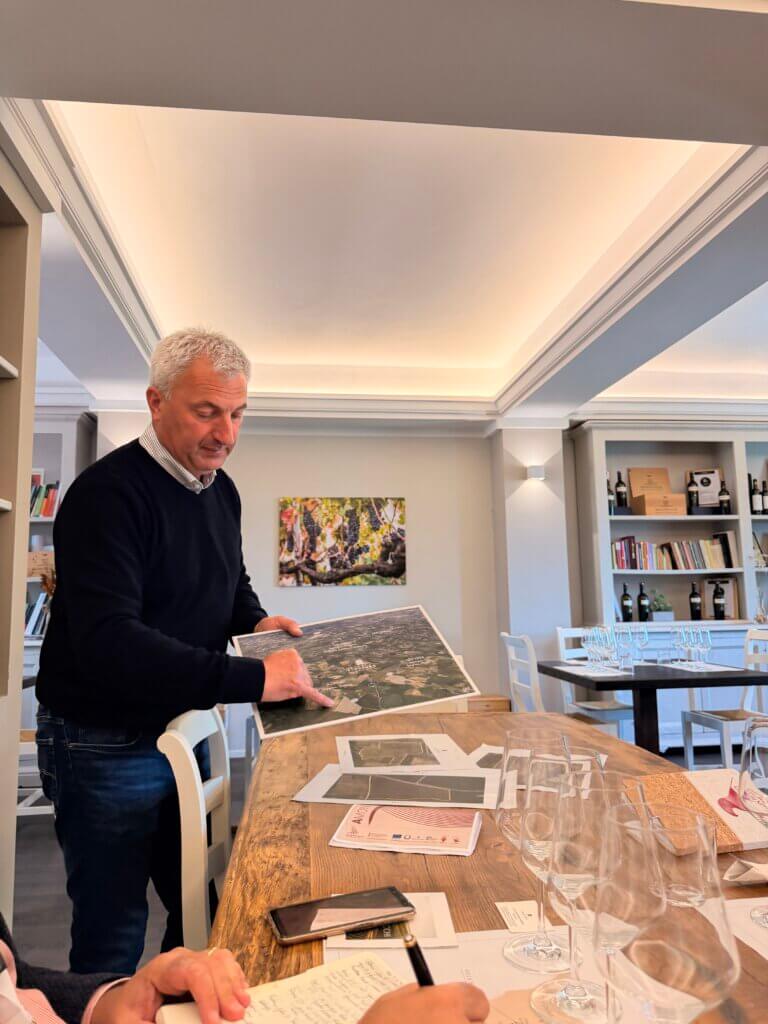
Monterone, by contrast, is dominated by heavy clay—argilla in Italian—and alluvial soils that have washed down over time.
Clay‑rich soils tend to hold water and, in warmer climates, they can protect vines from drought while also giving wines deeper color, firm tannins and high extract.
In Montefalco, that suits Sagrantino particularly well, a variety already renowned for its tannic power and capacity to age.
At Tenuta Alzatura, careful vineyard work—choice of rootstocks and clones, attention to each vegetative stage, and low yields—aims to channel that natural strength into wines with depth and substance rather than mere heaviness.
From these vineyards come the estate’s key wines: Montefalco Sagrantino DOCG and Montefalco Rosso DOC. Sagrantino, made from the local grape in pure form, is the most emblematic, a dark, structured red shaped by long macerations and extended aging that soften its formidable tannins into a more velvety, savory frame.
Montefalco Rosso, led by Sangiovese with a supporting share of Sagrantino and sometimes international varieties, offers a more immediately approachable expression, with bright red fruits, spice and a distinctive Umbrian grip.
Both styles, Alessandro suggests, are rooted in the same philosophy: wines that speak clearly of their varieties and soils, rather than of heavy‑handed winemaking.
More recently, the estate has become a reference point for Umbrian whites based on Trebbiano Spoletino, adding another layer to Montefalco’s story. Cortili Montefalco Bianco DOC shows the grape in a fresher key, while Aria di Casa Montefalco Bianco DOC—100% Trebbiano Spoletino, fermented and aged in barrique—is the jewel of the white range, combining structure, spice and saline freshness.
With the 2021 vintage, both wines are now certified organic, marking the completion of a conversion that began in 2018 and underlining Tenuta Alzatura’s commitment to preserving local resources rather than depleting them.
That idea of “home” is more than marketing. Alessandro has described Aria di Casa—literally, “the air of home”—as a tribute to the way viticulture has shaped generations in Montefalco, a bridge between local culture and what ends up in the glass.
Sitting in the book‑lined tasting room, with stainless‑steel tanks visible just outside and a patchwork of vineyards only minutes away, it is easy to see what he means: Tenuta Alzatura feels less like a polished visitor center and more like a working family winery that happens to sit on three carefully chosen pieces of land.
In a region where power and rusticity were once the calling cards, Tenuta Alzatura quietly argues for nuance: Sagrantino with polish, Sangiovese with depth, Trebbiano Spoletino with seriousness.
The combination of diverse soils, thoughtful agronomy and a deeply rooted local culture has created a portfolio of wines that are unmistakably Montefalco, but distinctly Cecchi in their precision and focus.
For visitors, the reward is not only in the glass, but in the experience of discovering all of this in such a modest, lived‑in setting.