Scacciadiavoli Winery in Montefalco
Montefalco doesn’t lack for history. But every now and then, a winery manages to carry its past into the present in a way that feels completely alive. That was the feeling at Scacciadiavoli, one of the oldest estates in the region and still among the most distinctive—not just because of what they make, but because of how they share it.
The name itself, Scacciadiavoli, translates to “banish the devils.” It comes from a 14th-century legend involving a local exorcist—and a young woman said to be freed from an evil spirit after drinking Montefalco’s red wine. But no supernatural force is needed to explain the appeal of this estate. With its deep Umbrian roots, intergenerational ownership, and quietly creative energy, Scacciadiavoli blends a very old foundation with a very current vibrancy.
Founded in 1884 by Prince Ugo Boncompagni Ludovisi, the estate was modeled after French winemaking principles and was considered a technological marvel of its time. The prince invested heavily, planting 150 hectares of vines across gently sloping hills in Montefalco, Gualdo Cattaneo, and Giano dell’Umbria. His use of guyot-trained vines was a first for the region. Today, Scacciadiavoli remains one of Montefalco’s largest contiguous estates—its core holdings essentially unchanged in size or structure for more than a century.
Since 1954, the winery has been in the hands of the Pambuffetti family—now in its fourth generation. Several family members are involved, but the public face, at least on the night I visited, was Liù Pambuffetti. Young and energetic, she met our group of visiting journalists with confidence, warmth, and that distinctly Italian ability to balance casual ease with unspoken elegance.
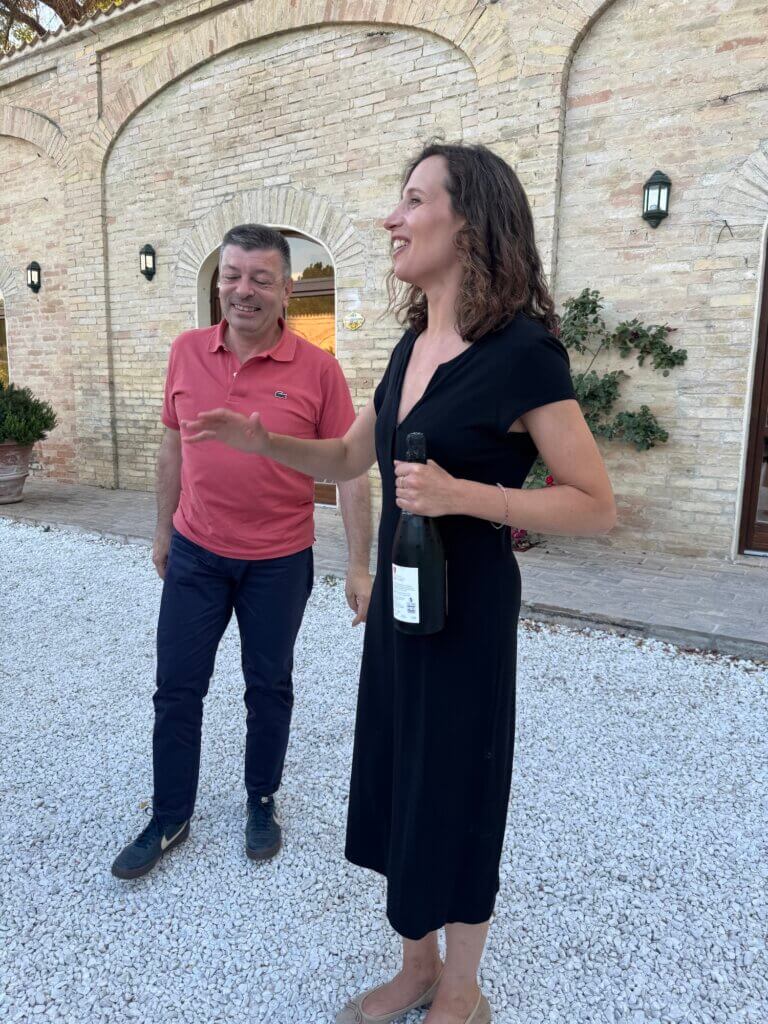
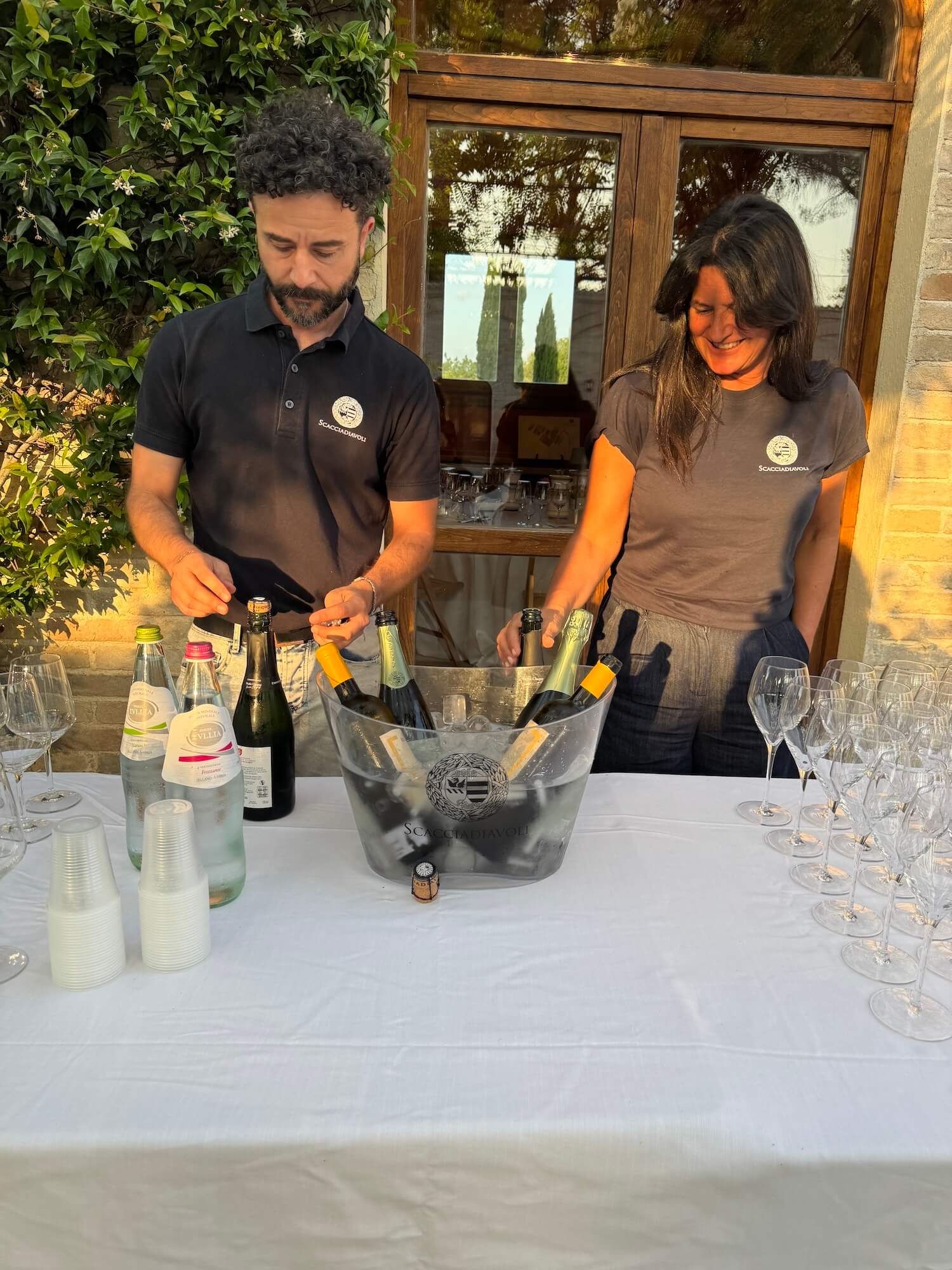
We began the evening with a garden cocktail hour beside the villa. Glasses of Scacciadiavoli’s metodo classico Sagrantino sparkled in the golden light. This wasn’t my first tasting of Sagrantino bubbles, nor my first visit to the winery—but it’s always a vivid reminder that this famously tannic grape can surprise you. The Sagrantino character is still there—in the dark fruit and savory base—but softened into something lively and refreshing, with a structure that meets the moment.
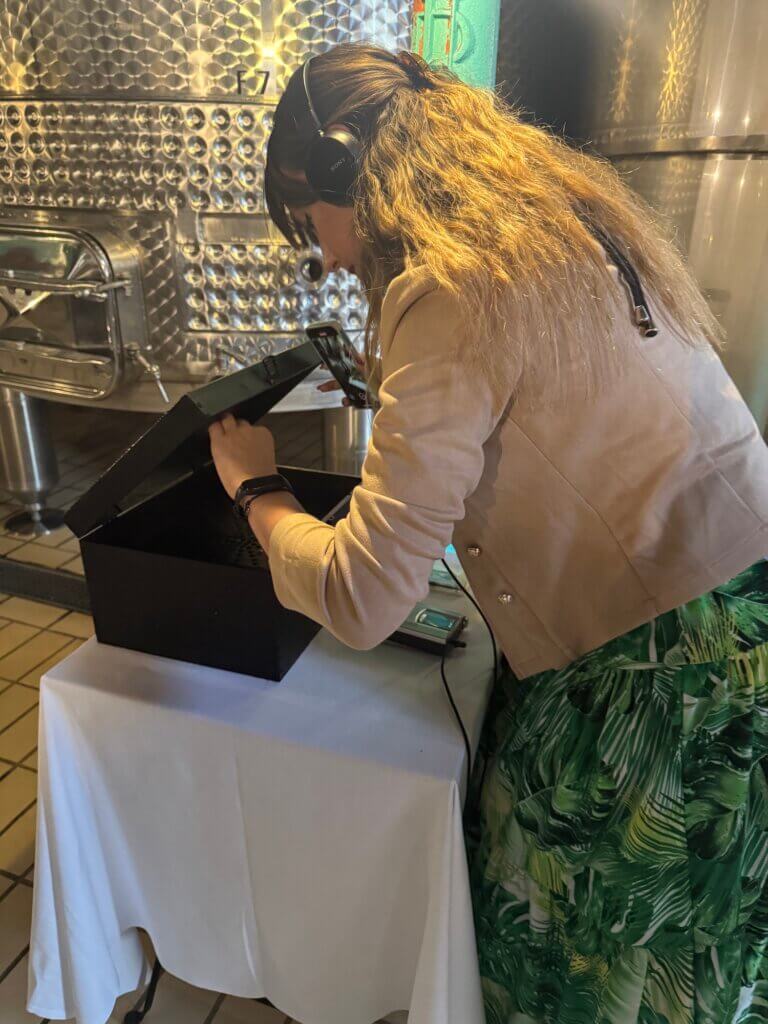
Before dinner, Liù surprised us with a brief tour of the winery—including the aging cellar—and something none of us expected: a multimedia art installation conceived by her partner. In the barrel maturation area, each guest was invited to lean into a handcrafted box to experience a blend of scent, poetry, and music. A kind of sensory bubble. Difficult to describe, but undeniably engaging—like a quiet message that this winery doesn’t just make wine; it wants you to feel it, too.
The production spaces still show their age, in the best way: tall wood rafters, textured walls, an aesthetic more sincere than stylized. These aren’t nostalgia pieces. They’re just older spaces still doing their job, speaking through their material presence of the years and labor behind every vintage.
Then came the communal highlight: dinner. After touring and tasting our way across Montefalco for days, this evening pulled many threads together. Just as our group began to settle into conversation, a number of other Montefalco producers began arriving—bottles in hand, pouring their wines personally. It was a generous and unexpected addition. Familiar faces from the week’s previous tastings now became hosts themselves. With no panel agenda or pre-scripted sessions, we mingled table-to-table, enjoying the wines with enough context to start real conversations.
It was here that Scacciadiavoli’s quiet impact came into focus. Yes, they make elegant, balanced Montefalco Sagrantino and Montefalco Rosso. Yes, they are among the few with a legacy old enough to trace the transformation of the region. But behind this heritage is a personality that keeps it modern.
And in Liù, that torch is clearly lit. Though she never met her ancestor who finded the estate, who steered the winery through much of the postwar period, she speaks of him with both affection and clarity. She seems to share his mindset: grounded, future-facing, and adaptive without pretense.
In a region filled with small, family-owned estates, each with strong identities, Scacciadiavoli stands out by not trying to stand out. They’re gracious hosts, confident in their place, and always listening for a new way to deepen the experience—whether through traditional wines or experimental sensory art.