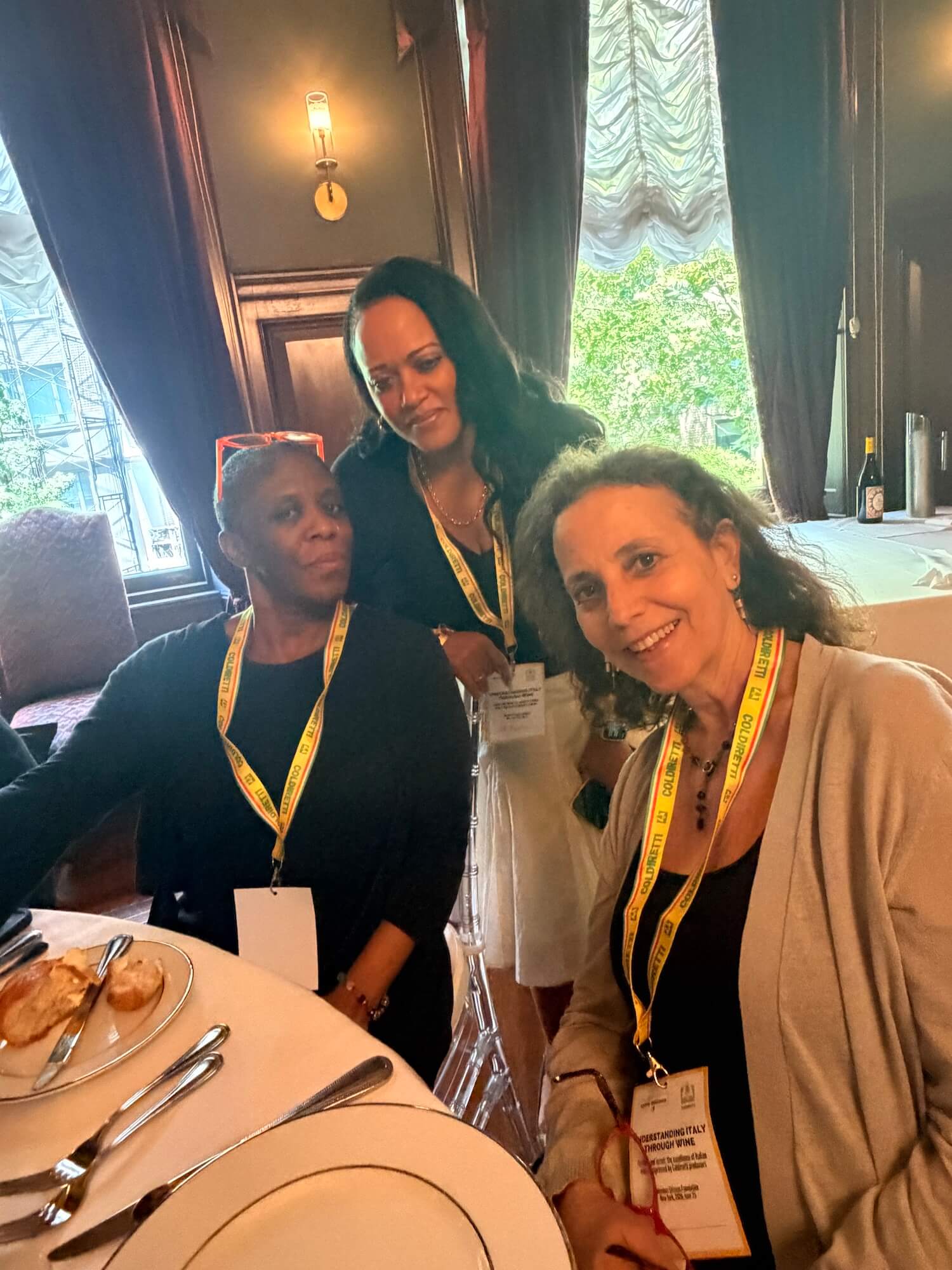
Hosted by Coldiretti at the Columbus Citizens Foundation, Understanding Italy Through Wine brought together members of the wine trade for a seminar, followed by a leisurely lunch that encouraged everyone to do what Italians do best: break bread together over good food and wine.
Coldiretti Italian Wine Producers
A few months ago, I met several producers during a Coldiretti press tour in Rome. This week, many of those producers and wines returned to Manhattan for a press lunch introducing wine journalists to the Coldiretti portfolio.
Hosted by Coldiretti at the Columbus Citizens Foundation, Understanding Italy Through Wine brought together members of the wine trade for a seminar, followed by a leisurely lunch that encouraged everyone to do what Italians do best: break bread together over good food and wine.
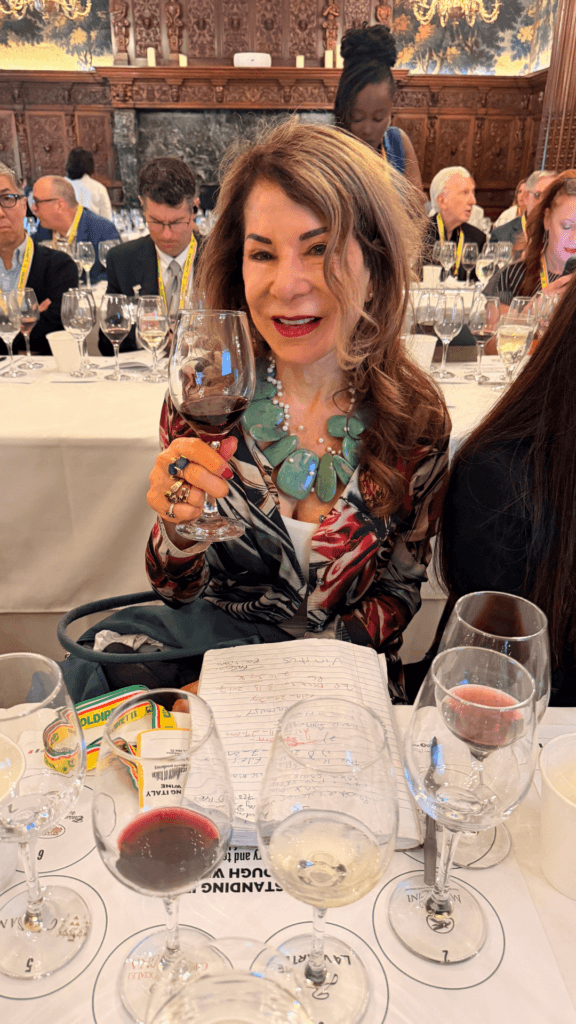
The Masterclass led by Audrey Frick, began with the message that for the Italians, wine is never just about what’s in the glass. It’s about the people, the places and the stories that travel with every bottle.
Rather than delivering a highly technical masterclass, speaker Audrey Frick encouraged guests to think about a broader question: what makes Italian wine unlike any other in the world?
Her answer was simple. You cannot separate Italy’s wines from the places they come from or the people who produce them.
That philosophy came alive through six wines that spanned the length of the Italian peninsula.
We began in Sicily with Donnafugata Sul Vulcano Etna Rosso 2022, produced from Nerello Mascalese grown on the volcanic slopes of Mount Etna.
Having visited Sicily a few times over the years, I always appreciate how these wines express both elegance and energy.
Audrey described Nerello Mascalese as a wonderful bridge for Pinot Noir lovers, combining bright fruit with the subtle tannic grip that has become a hallmark of Etna’s finest reds.
It was an ideal reminder of how volcanic soils create wines with remarkable freshness and character.
From Sicily we crossed the Tyrrhenian Sea to Sardinia for Piero Mancini Vermentino di Gallura Superiore “Cucaione.”
Here the discussion shifted to granite soils, sea breezes and constant coastal winds that shape the island’s only DOCG wine.
A representative from the winery explained how Sardinia’s isolation has preserved its unique identity, while the proximity to the Mediterranean imparts the vibrant salinity that makes Vermentino di Gallura one of Italy’s great summer whites.
Our next stop was Friuli-Venezia Giulia with La Viarte Friulano. Friulano remains one of Italy’s most underrated white varieties, and the presentation highlighted its remarkable texture, minerality and versatility at the table.
The winery’s owner shared how low vineyard yields and the region’s distinctive ponca soils contribute to wines capable of both immediate enjoyment and graceful aging.
It reinforced why Friuli continues to produce some of Italy’s most compelling white wines.
The seminar then moved south to Abruzzo with Coste di Moro Montepulciano d’Abruzzo from Cantina Sociale Orsogna, one of Italy’s leading cooperatives.
Rather than focusing solely on the wine, the discussion emphasized the important role that cooperatives play in supporting growers and sustaining rural communities. It served as an excellent reminder that behind many successful Italian wines is a collaborative effort that benefits hundreds of farming families while preserving local traditions.
Returning to Tuscany, we tasted Cesani Vernaccia di San Gimignano Riserva “Sanice” 2023, a wine that showcased one of Italy’s oldest and most historic white appellations.
Vernaccia often lives in the shadow of Tuscany’s famous reds, yet this beautifully structured example demonstrated why it deserves greater recognition. Extended lees aging gave the wine impressive texture while preserving the herbal and mineral qualities that make Vernaccia such a natural partner for food. It was a fitting tribute to Italy’s first DOC.
The tasting concluded with Casanova di Neri Tenuta Nuova Brunello di Montalcino 2019, one of the country’s benchmark expressions of Sangiovese.
The producer spoke briefly about the estate’s site-specific philosophy, while Audrey highlighted the exceptional quality of the 2019 vintage.
The wine offered a powerful reminder that Brunello continues to rank among the world’s greatest age-worthy reds, combining depth, structure and remarkable balance.
As enjoyable as the seminar was, I found myself equally appreciating what followed. Sitting around a table over lunch, sharing these wines alongside thoughtfully paired dishes, captured something essential about Italian wine culture.
Later, during the walk-around tasting that followed, I had the opportunity to reconnect with several producers I had met during my Coldiretti visit to Rome earlier this year.
The event reinforced something I have come to appreciate over many years of traveling throughout Italy.
The country’s greatest strength isn’t simply that it produces outstanding wines. It is that every region tells a different story through its indigenous grapes, landscapes and traditions.
And that, ultimately, was Coldiretti’s message: understanding Italy through wine means understanding the people and places that make each bottle uniquely Italian.